 Sudden Valley Siding
 Bellingham's Coastal Climate Is Hard on Roofs
A roof in Bellingham doesn't fail the same way a roof in a dry inland climate fails. Homes here sit close enough to Bellingham Bay and the Salish Sea that salt-laden air is a constant, low-grade stressor on fasteners, flashing, and metal roof components. Layer on driving rain that comes in sideways off the water during fall and winter storms, and you get wind-driven moisture finding its way into laps and seams that would stay dry in a calmer climate. Then there's the moss. Whatcom County's wet season runs long, and shaded, north-facing slopes can stay damp for months at a stretch, which is exactly what moss and algae need to get established and start working their way under shingle edges.
None of this means a roof in this area is doomed to fail early. It means the repair work has to account for how water actually moves and sits on a roof here, not just patch the spot where a leak showed up inside the house. That distinction is the difference between a repair that holds for years and one that reopens the first hard rain.
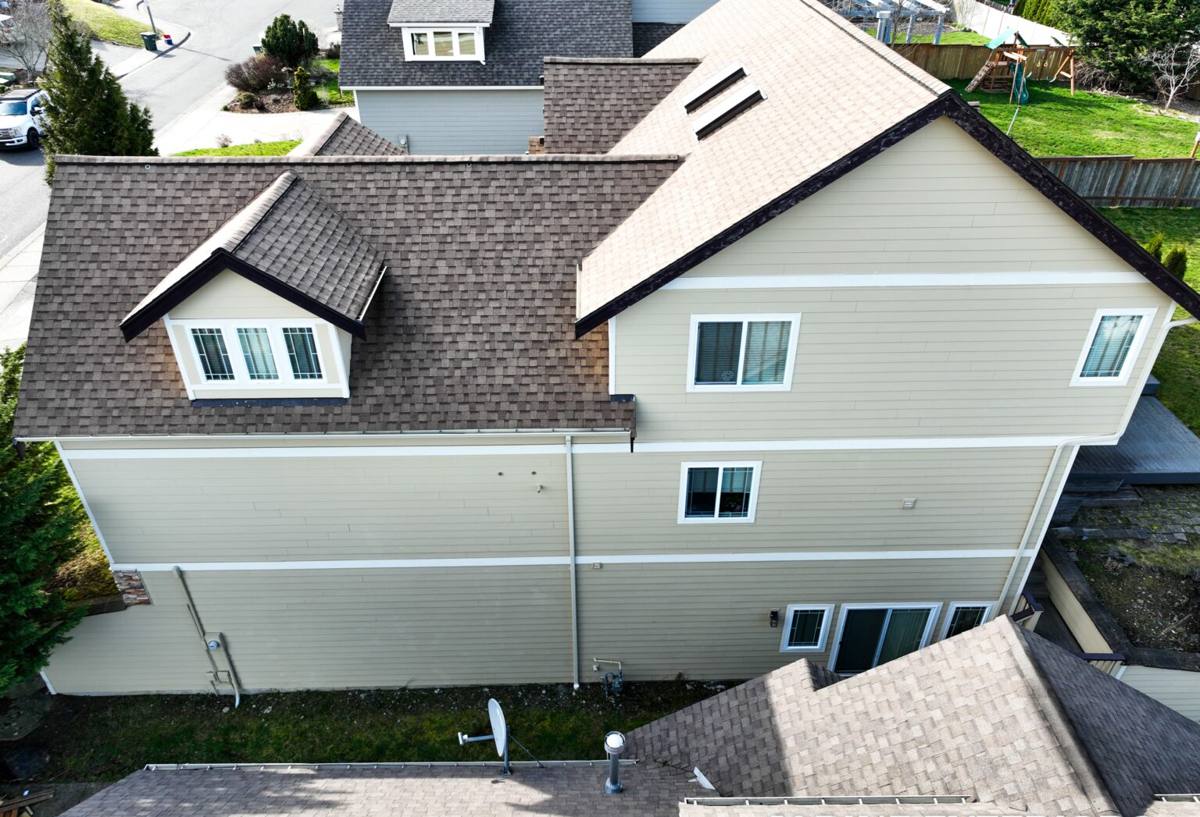
Common Roof Problems We Find on Bellingham Homes
Most of the repair calls we run in this area fall into a handful of recurring categories. Recognizing which one you're dealing with helps set expectations for the scope of work.
Moss and Organic Growth
Moss doesn't just look bad — it holds moisture against the roof surface, lifts shingle tabs as it grows, and can work granules loose over time. Left unaddressed through a full wet season, it accelerates wear well beyond what the shingles are rated for.
Flashing and Transition Failures
Chimneys, skylights, dormers, and roof-to-wall transitions are where the vast majority of leaks actually originate — not in the open field of shingles. Flashing that was installed thin, under-lapped, or without proper counterflashing is a common failure point, and it's often invisible until water has already gotten behind it.
Wind-Driven Rain Intrusion
Storms coming off the water can push rain uphill under shingle edges, especially at rakes, eaves, and low-slope sections. This shows up as staining or soft spots on interior ceilings well before any shingles look visibly damaged from the ground.
- Cracked or curling shingle edges from repeated wet-dry cycling
- Nail pops and lifted fasteners after wind events
- Rusted or deteriorated flashing around penetrations
- Clogged valleys and gutters trapping standing water
- Soft or spongy decking felt underfoot during inspection
What a Correct Roof Repair Actually Involves
Diagnose Before You Patch
An honest repair starts with tracing the leak to its actual source, which is not always directly above the interior stain — water travels along rafters and decking before it drips. A surface patch over the visible symptom without finding the entry point is one of the most common reasons homeowners end up paying for the same leak twice.
Flashing Is Where Most Leaks Start
Any correct repair touching a chimney, vent pipe, skylight, or wall intersection means removing and properly re-lapping the flashing, not just caulking over the gap. Sealant has a place as a secondary defense, but it is not a substitute for flashing that is shaped, lapped, and fastened correctly to shed water by gravity.
Matching Materials the Right Way
Shingle color and profile change across manufacturing runs, so a repair patch can be visibly obvious if the match isn't handled carefully — pulling replacement material from a less visible slope, or being upfront with the homeowner about the mismatch, is part of doing the job honestly rather than pretending it won't show.
Repair or Replace? How We Decide
Not every roof problem calls for full replacement, and not every leak is fixable with a patch. We walk homeowners through the same factors every time so the decision is based on the roof's actual condition, not guesswork.
| Factor | Leans Toward Repair | Leans Toward Replacement |
|---|---|---|
| Roof age | Under 12–15 years, single layer | Near or past manufacturer lifespan |
| Extent of damage | Isolated to one section or penetration | Spread across multiple slopes |
| Decking condition | Solid, no soft spots found | Soft, delaminated, or rotted sheathing |
| Repair history | First or second repair in this area | Same spot has been patched repeatedly |
| Granule loss | Minor, localized | Widespread, exposing shingle mat |
When the decking underneath is compromised, a surface repair simply doesn't have anything sound to fasten to, and we'll say so plainly rather than sell a patch that won't hold.
Our Roof Repair Process
Inspection and Written Estimate
We get on the roof (or use a pole camera when access or pitch makes that unsafe) and document what we find, including areas beyond the reported leak that are worth flagging now rather than later. You get a written scope before any work starts — no surprise add-ons mid-job.
The Repair Itself
Work is sequenced to keep the roof weathertight at every stage, not left open overnight during a job that runs more than a day. Old, compromised material is removed rather than covered over, underlayment is replaced where it's been compromised, and flashing is redone rather than resealed when it's the actual source of the leak.
Cleanup and Follow-Up
We clear debris, check gutters and downspouts for anything dislodged during the repair, and walk the completed work with the homeowner before we consider the job done.
Moss, Algae, and the Long Wet Season
Given how much of the year Whatcom County spends under cloud cover and rain, moss control is less a one-time cleanup and more an ongoing maintenance habit. Physically scraping moss off without care can lift granules and shorten shingle life, so removal method matters as much as removal itself.
Zinc or copper control strips installed near the ridge let rain carry trace metal ions down the roof slope, which suppresses new moss growth over time without chemical treatment. They're not an instant fix — they work gradually with each rain — but they meaningfully reduce how often a roof needs manual moss removal. Keeping valleys, gutters, and shaded slopes clear of debris also matters, since trapped organic matter holds moisture against the roof far longer than a clean surface would.
Attic ventilation plays a quieter role here too. A poorly ventilated attic traps warm, moist air against the underside of the roof deck, which can encourage condensation and rot from below — a problem that has nothing to do with the shingles themselves but gets blamed on them anyway.
Materials We Use — and Why
For most Bellingham homes, we default to architectural (laminated) asphalt shingles rated for higher wind exposure rather than basic 3-tab shingles, because the added wind rating and thicker profile hold up better against the driving rain and gusts this area sees in fall and winter storms. Metal roofing and flashing components get a similar consideration for corrosion resistance given the salt air near the water.
We're generally cautious about wood shake and shingle roofing for repair work in this climate — not because the material is inherently flawed, but because it demands consistent maintenance and ventilation to manage moisture and moss in a wet, shaded climate, and a repair patch on an aging shake roof is harder to blend and weatherproof than on composition shingle. That's a maintenance and installation-sensitivity trade-off we're upfront about, not a knock on the product itself.
Whatever the material, we match repair components to the manufacturer specifications already on the roof where possible, since mixing incompatible underlayment or flashing metals can accelerate corrosion rather than prevent it.
Signs Your Bellingham Roof Needs Repair Now
A quick self-check from the ground and attic can catch problems before they turn into interior damage. If you notice any of the following, it's worth getting a professional look before the next storm system rolls through:
- Visible moss buildup, especially on north-facing or shaded slopes
- Daylight visible through the roof deck from inside the attic
- Water stains or discoloration on ceilings after heavy rain
- Granules collecting in gutters or at downspout outlets
- Shingles that look curled, cracked, or are missing entirely
- Rust streaking below metal flashing or vent pipes
- A musty smell in the attic that wasn't there before
Why Hire a Crew That Already Works Bellingham Roofs
A roofer who works this area regularly already knows which slope orientations hold moss longest, which older subdivisions tend to have specific flashing details, and what Whatcom County and City of Bellingham permitting expects for roofing work — none of which a crew from outside the region has reason to know. That familiarity shows up in fewer surprises once a roof is opened up.
As a siding contractor working throughout the Sudden Valley and greater Bellingham area, we also see firsthand how roof and siding failures interact — a leaking roof-to-wall transition often damages siding and trim below it, and vice versa. Handling both trades means a roof repair estimate accounts for what's happening at that junction instead of treating the roof and the wall as two unrelated problems.
If you're dealing with a leak, visible moss, or just want an honest read on your roof's condition before the next wet season sets in, we're happy to take a look. The estimate is free and there's no pressure to move forward — use the form below to get started.