 Sudden Valley Siding
 Roof Repair in Deming: What Local Homes Are Up Against
Deming sits in a part of Whatcom County where roofs work harder than most homeowners realize. The mix of driving rain off the water, damp air that lingers under tree cover, and long stretches of gray, low-sun weather means a roof here rarely fails all at once. It fails one small point at a time — a lifted shingle tab, a cracked pipe boot, a clogged valley — until water finds its way in. Roof repair in this area isn't just patching a leak; it's understanding how the regional climate attacks a roof and fixing the actual weak point, not just the symptom.
We work on homes throughout the Sudden Valley area, including Deming, and the roofs we see share a common pattern: moss buildup in shaded, north-facing slopes, granule loss on older asphalt shingles from years of saturation, and flashing that was fine when it was installed but has since loosened as the house settled or the sealant aged out. None of that is unusual for this part of the state. What matters is catching it early and repairing it correctly.
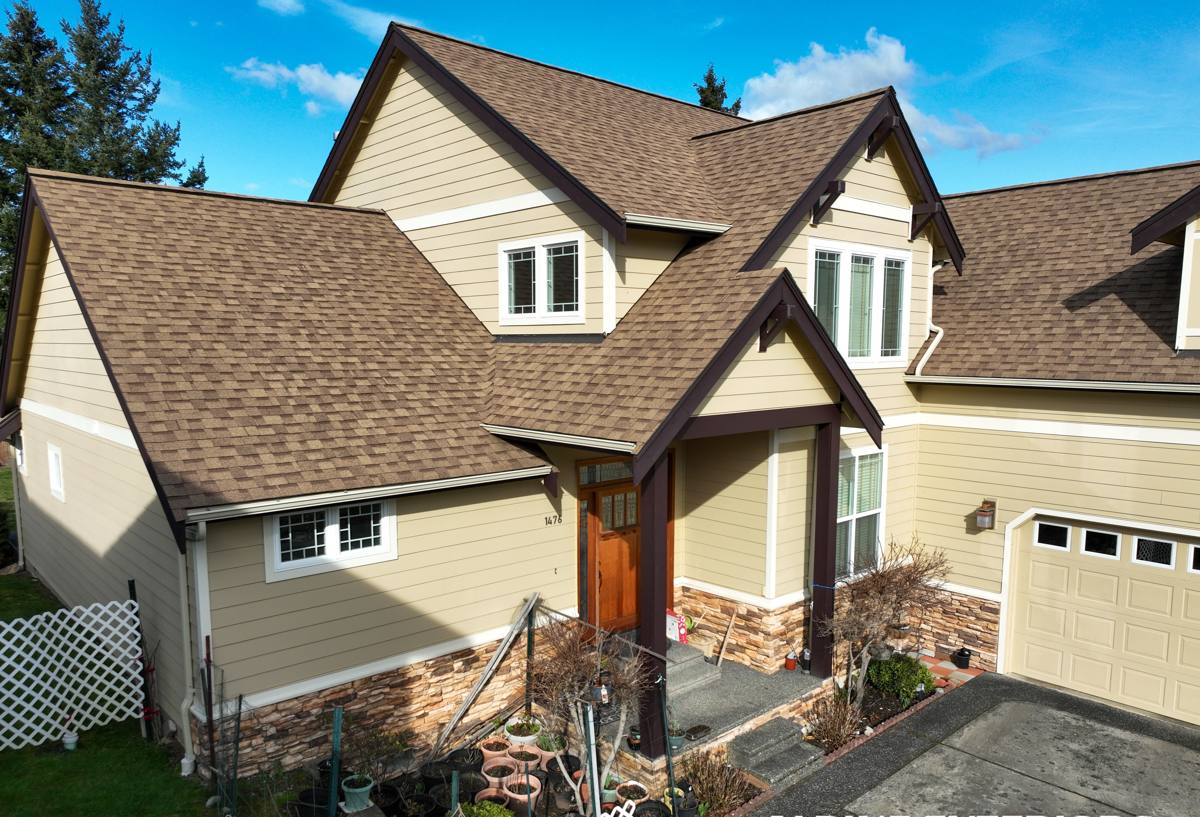
Signs Your Deming Roof Needs Repair
Most roof problems show themselves indoors before they're obvious outdoors. If you're seeing any of the following, it's worth a closer look before the next heavy rain:
- A brownish stain or ring on a ceiling or in an attic, especially after a windy rainstorm
- Shingles that look darker, curled at the edges, or are missing granules (you'll notice grit in gutters)
- Thick moss or dark streaking on shaded slopes, particularly the north or east side of the roof
- Daylight visible through the attic roof deck, or damp insulation near the eaves
- Sagging in a small section of roofline, which usually points to trapped moisture below the surface
- Loose or rusted flashing around chimneys, skylights, or where a lower roof meets a wall
Not every one of these means a full replacement. Roofs are systems made of separate parts — field shingles, flashing, underlayment, ventilation — and most leaks trace back to one part failing while the rest of the roof still has useful life left. That's the whole point of a repair-first approach: fix what's actually broken.
When Repair Isn't the Right Answer Anymore
We'll tell you honestly if a repair is just delaying a replacement you'll need soon anyway. Signs that tip the scale toward replacement include widespread granule loss across most of the roof (not just one slope), multiple past patch jobs stacked on top of each other, or a roof already at or past its expected service life. A repair on a roof with a few good years left is money well spent. A repair on a roof that's structurally tired is money spent twice.
What a Correct Roof Repair Actually Involves
A repair done right starts with finding the real source of the leak, which is often several feet away from where the water actually shows up inside the house — water travels along the roof deck and rafters before it drips. Rushing this step is the most common reason a "fixed" leak comes back.
The Core Steps
- Inspect the roof surface, flashing points, and attic (where accessible) to trace the water path back to its true entry point
- Remove and replace damaged shingles, underlayment, or decking rather than layering new material over compromised material
- Re-flash chimneys, vents, skylights, and wall intersections with new step flashing and counterflashing where the old flashing has loosened or corroded
- Check and clear moss and debris from valleys and gutters, since trapped organic matter holds moisture against the roof surface
- Verify attic ventilation isn't trapping condensation that mimics or worsens a roof leak
- Match repair materials to the existing roof as closely as possible so the patch doesn't stand out or create a weak seam
Skipping the flashing and ventilation checks is the shortcut some crews take because it's faster. It's also why the same leak often reappears a year later.
Moss, Moisture, and the Long Wet Season
Whatcom County's climate is the biggest long-term threat to a roof's lifespan, and Deming's tree cover and shaded slopes make it a prime spot for moss to take hold. Moss isn't just cosmetic — its root structure lifts shingle edges, and the mat it forms holds water against the roof surface far longer than open, sun-exposed shingles ever experience. Combined with the driving rain that pushes water sideways under shingle tabs and around flashing, and the salt-tinged air that moves through this part of the region and accelerates corrosion on metal flashing and fasteners, roofs here age differently than they would in a drier climate.
A proper repair takes this into account. We don't just patch the visible hole — we look at whether moss growth patterns, gutter drainage, and flashing condition are set up to prevent the same failure from recurring next moss season.
Repair vs. Replacement: What Drives the Decision
| Factor | Favors Repair | Favors Replacement |
|---|---|---|
| Age of roof | Under 15-20 years (material dependent) | At or beyond expected lifespan |
| Extent of damage | Isolated to one area or component | Spread across multiple slopes |
| Number of past repairs | First or second repair | Several prior patches already in place |
| Decking condition | Solid, no rot found | Soft or rotted decking discovered |
| Granule loss | Minor, localized | Widespread, shingles look "bald" |
| Moss/moisture history | Manageable with cleaning and flashing work | Chronic trapped moisture with deck damage |
We use this kind of assessment on every inspection so the recommendation is based on what we actually find on your roof, not a default answer.
Our Process, Start to Finish
1. Inspection and Honest Assessment
We look at the roof surface, flashing, gutters, and attic where accessible, and walk you through exactly what we find — including if the answer is "this is a small fix" rather than a bigger job.
2. A Clear, Written Scope
You get a specific description of what will be repaired and why, not a vague line item. If we find something additional once we open up the area (like hidden rot), we tell you before proceeding, not after.
3. The Repair Itself
We remove compromised material back to sound decking, replace it, re-flash as needed, and match shingle color and profile as closely as possible.
4. Cleanup and Final Check
Debris and old material removed, gutters cleared of anything that came loose during the work, and a final walk-through so you can see what was done.
Materials We Use and Why
For roof repairs, matching matters as much as quality. We source shingles and flashing that align with what's already on your roof whenever possible, and where an exact match isn't available, we place new material in a less visible location and shift older matching material to the repair area. On flashing, we favor corrosion-resistant materials given how this region's air and moisture treat exposed metal over time — a detail that's easy to skip and expensive to regret later.
Why Hire a Crew That Already Works in Deming
Roofing crews who don't work this specific area regularly tend to treat every roof the same, regardless of climate. A crew familiar with Deming and the broader Sudden Valley area already knows which roof orientations collect moss fastest, which flashing details tend to fail first in this weather, and how the long wet season changes the urgency of a repair versus a job in a drier climate. That local familiarity shows up in fewer callbacks and repairs that actually hold.
It also means a faster, more accurate estimate. We're not guessing at how the regional weather affects your roof — we see the same patterns on homes nearby, season after season.
A Practical Pre-Winter Roof Checklist
- Clear moss from shaded slopes before the heaviest rain sets in
- Clean gutters and downspouts so valleys and eaves can drain freely
- Check attic insulation for damp spots after the first hard rain of the season
- Look for lifted or missing shingle tabs after any windstorm
- Inspect flashing around chimneys and skylights for gaps or rust
- Address small leaks in fall, before winter storms turn them into bigger repairs
If you're dealing with a leak, moss buildup, or damaged flashing on a Deming-area roof, we're happy to take a look and give you a straight answer on what it actually needs. Reach out for a free, no-pressure estimate using the form below.