 Sudden Valley Siding
 Roofing Around Lake Whatcom Is a Different Job Than Roofing Anywhere Else
Homes in the Lake Whatcom basin and Sudden Valley don't wear out the way roofs do in drier parts of the state. The lake sits in a forested bowl, ringed by fir and cedar, and most lots here get partial to heavy tree cover. That combination of shade, standing moisture, and near-constant tree debris is the single biggest factor in how fast a roof ages out here. Add in Whatcom County's marine-influenced climate — steady rain most of the year, humid air moving in off Bellingham Bay and the Puget Sound lowlands, and long stretches where roof surfaces simply never fully dry out — and you get a roof life that's driven less by sun damage and more by moisture cycling, moss growth, and slow material breakdown.
A roof replacement out here isn't just "put new shingles on." It's a chance to correct the ventilation, underlayment, and flashing decisions that either work with this climate or fight it for the next 20-30 years.
What Actually Wears Out a Lake Whatcom Roof
Moss and Organic Growth
This is the number one issue we see on roofs in and around Sudden Valley. Shaded north- and east-facing slopes stay damp long after the rest of the roof has dried, and that's exactly where moss takes hold. Moss doesn't just look bad — its root structure works into the granule layer of asphalt shingles and lifts shingle edges, which lets water track underneath. Left unchecked for a few seasons, moss turns a cosmetic problem into a leak.
Constant Debris Load
Needles, cones, and leaf litter collect in valleys and behind chimneys faster here than in more open neighborhoods. That debris holds water against the roof surface and clogs gutters, which backs water up under the shingle edge during heavy rain.
Driving Rain and Wind-Driven Water
Storms coming across the lake basin don't always fall straight down — wind pushes rain sideways into eaves, valleys, and around penetrations like vents and skylights. Roofs that were installed with minimal underlayment or shortcut flashing detail are the ones that leak first, usually not on the open field of the roof but at these transition points.
Slow, Steady Moisture Cycling
Rather than the freeze-thaw or intense UV cycling you'd see elsewhere, roofs here go through long damp-to-dry cycles. Over years, that steadily degrades underlayment and can lead to sheathing issues if a roof was under-ventilated to begin with.
Signs a Roof Needs Replacement, Not Another Repair
Not every issue means a full tear-off. But there's a point where patching stops making financial sense. Here's what tells us a roof has reached that point:
- Granule loss heavy enough that you can see bare, shiny patches on shingles from the ground
- Moss that has come back within a year or two of being cleaned, even after treatment
- Curling, cupping, or cracked shingles across multiple slopes, not just one isolated area
- Soft spots or visible sagging when walked on, which points to sheathing damage underneath
- Repeated leaks in different spots each winter rather than one consistent trouble area
- Roof is 20+ years old and has never had underlayment or ventilation upgraded
- Interior signs — water stains on ceilings, musty smell in the attic, or visible daylight through the roof deck
If your roof shows one or two of these, a targeted repair may still be the right call. If it shows several, replacement is usually the more cost-effective path — repeated patch jobs on an aging roof add up fast without solving the underlying problem.
What a Correct Replacement Involves Here
A roof replacement that's actually built for this climate goes well beyond swapping old shingles for new ones. The parts that matter most on a Lake Whatcom home are usually the ones you can't see once the job is done:
Tear-Off and Deck Inspection
Full removal down to the deck, not layering over old shingles. This is the only way to actually check the sheathing for soft spots or rot, which is common on older homes here where a slow leak went unnoticed for a season or two.
Underlayment Built for Wet Climates
Given how much of the year this roof surface stays damp, we treat underlayment as a real second layer of protection, not a formality. That means synthetic underlayment across the field and self-adhered ice-and-water membrane at eaves, valleys, and any low-slope transitions — the spots where wind-driven rain is most likely to get pushed backward under the shingle edge.
Ventilation Correction
A huge number of older roofs in this area were never properly ventilated. Poor attic airflow traps moisture, which speeds up shingle failure from underneath and can lead to condensation issues in the attic itself. Replacement is the right time to correct intake and exhaust balance — it's difficult and expensive to fix after the fact.
Flashing Detail
Chimneys, skylights, vent pipes, and roof-to-wall transitions are where the majority of leaks actually start. We replace flashing rather than reuse it, and we pay particular attention to any valley where two roof planes meet, since that's where debris and water both concentrate.
Material Options for This Climate
There's no single "best" roofing material — the right choice depends on your home's slope, tree cover, and how much upkeep you want to take on. Here's how the common options stack up for a shaded, wet, lake-basin property:
| Material | Moisture & Moss Resistance | Typical Lifespan Here | Maintenance |
|---|---|---|---|
| Architectural asphalt shingles | Good, especially with algae-resistant granules | 20-25 years with regular moss removal | Periodic moss/debris cleaning recommended |
| 3-tab asphalt shingles | Fair — thinner profile, less resistant to lifting | 15-18 years in shaded areas | More frequent moss treatment needed |
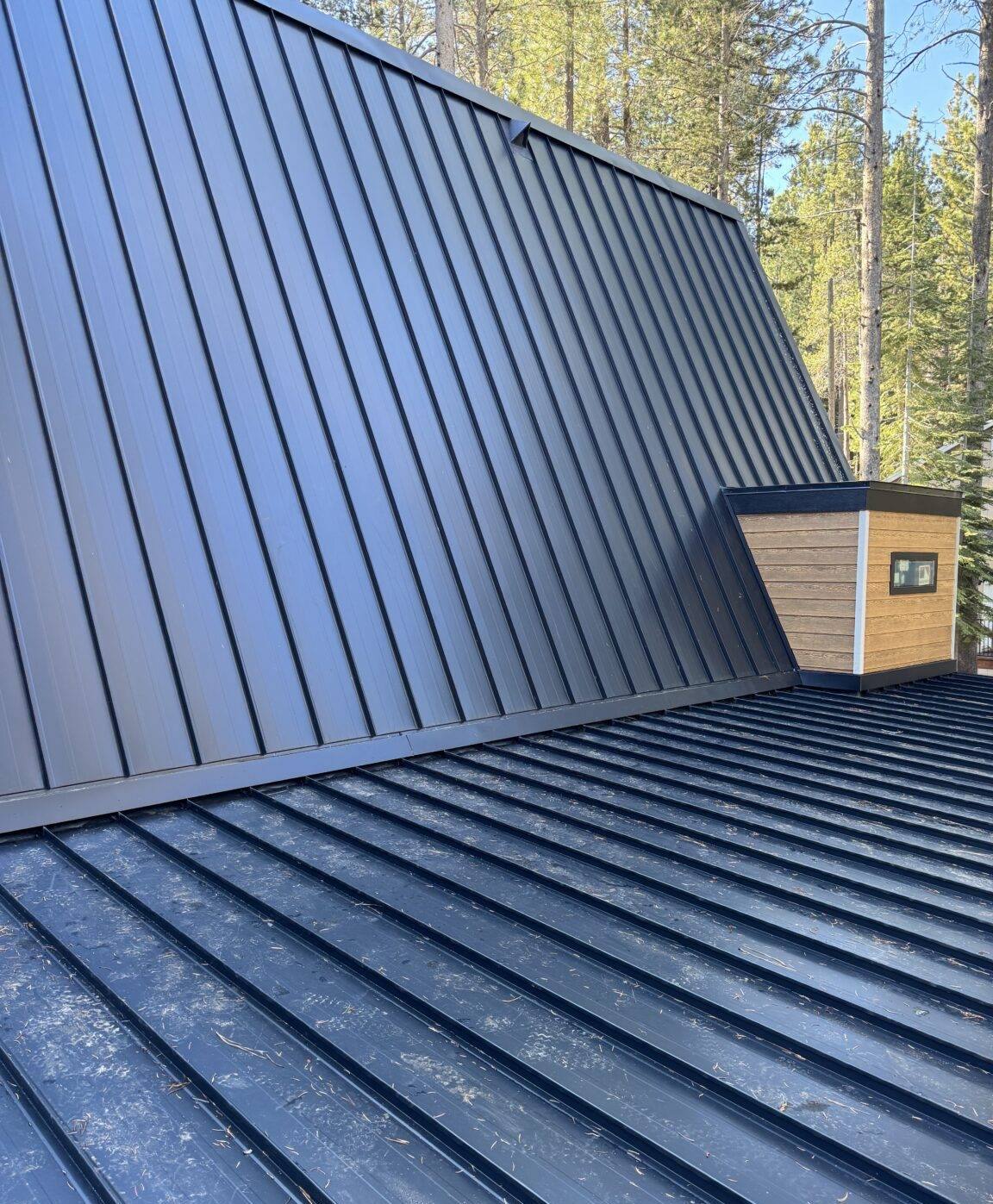
| Standing seam metal | Excellent — moss struggles to anchor on smooth panels | 40-50+ years | Low; occasional debris clearing |
| Synthetic/composite shingle | Good, resists moisture absorption well | 30-40 years | Low to moderate |
For heavily shaded lots around the lake, we generally point homeowners toward architectural shingles with algae-resistant granules as the baseline, and metal as the upgrade option for anyone tired of fighting moss year after year. We don't push a single brand — the right call depends on your roof's pitch, your budget, and how much maintenance you actually want to do.
Our Process for a Lake Whatcom Roof Replacement
- On-site inspection. We walk the roof and the attic, not just look from the ground. Ventilation, decking condition, and existing flashing all get checked before we quote anything.
- Written estimate. You get a clear breakdown — material, labor, tear-off, disposal, and any deck repair contingencies — with no vague allowances buried in the fine print.
- Material selection. We walk through the options above based on your specific roof, not a one-size-fits-all pitch.
- Scheduling around the weather. Given how much rain this area gets, we plan tear-off days around forecasts and keep the roof dried in at the end of every work day — a home is never left exposed overnight.
- Tear-off, deck repair, and install. Full removal, deck inspection and repair as needed, new underlayment, flashing, ventilation correction, and final material installation.
- Cleanup and walkthrough. Full site cleanup including magnetic sweep for nails, followed by a walkthrough so you know exactly what was done and why.
Cost Factors Worth Understanding Before You Get a Quote
Every roof is different, but the same handful of factors drive most of the price difference between homes in this area:
| Factor | Why It Matters Here |
|---|---|
| Roof pitch and access | Steeper roofs and limited driveway/staging access around Sudden Valley's terrain add labor time |
| Deck condition | Hidden rot from long-term moisture exposure isn't known until tear-off, so older roofs carry more uncertainty |
| Layers being removed | Homes with an existing layer or two of old shingles cost more to strip than a single-layer roof |
| Material choice | Asphalt, synthetic, and metal carry different material and labor costs, as shown above |
| Ventilation upgrades | Correcting intake/exhaust airflow adds modest cost but prevents much bigger problems later |
| Valley and penetration count | More chimneys, skylights, and roof planes mean more flashing work |
We'd rather walk your specific roof and give you real numbers than throw out a broad range that doesn't mean much until we've actually seen the deck and the pitch.
Moss and Tree Debris: What Ongoing Care Should Look Like
A new roof still needs some upkeep in this environment — the difference is that a correctly installed roof handles it far better than an aging one. A few habits go a long way:
- Clear needles and leaves from valleys and gutters at least twice a year, more often on heavily treed lots
- Have moss treated before it visibly spreads, not after — early treatment is cheaper and less disruptive than removal
- Keep overhanging branches trimmed back to reduce shade and debris drop directly onto the roof
- Check attic ventilation isn't blocked by insulation, which is a common issue after unrelated attic work
- Have flashing and roof penetrations visually checked after major storms, especially around chimneys
Why Hiring a Crew That Already Works This Neighborhood Matters
Roofing crews that mostly work drier, more open parts of Whatcom County can still do competent work, but they often haven't built the habits this specific environment requires — the underlayment coverage, the ventilation corrections, the flashing detail at valleys that see constant runoff and debris. A crew that regularly works Sudden Valley and the Lake Whatcom basin has already seen how these roofs fail and builds the fix into the install from day one, rather than learning it on your house. That local familiarity also means a more realistic sense of scheduling around this area's rain patterns and a better read on what a given roof's tree cover and pitch will actually cost to do right.
If you're weighing repair versus replacement, or just want an honest read on where your roof stands, we're happy to come take a look. The estimate is free, there's no pressure attached to it, and you'll get a straight answer either way — use the form below to get started.