 Sudden Valley Siding
 Building a Deck That Actually Holds Up in Sehome
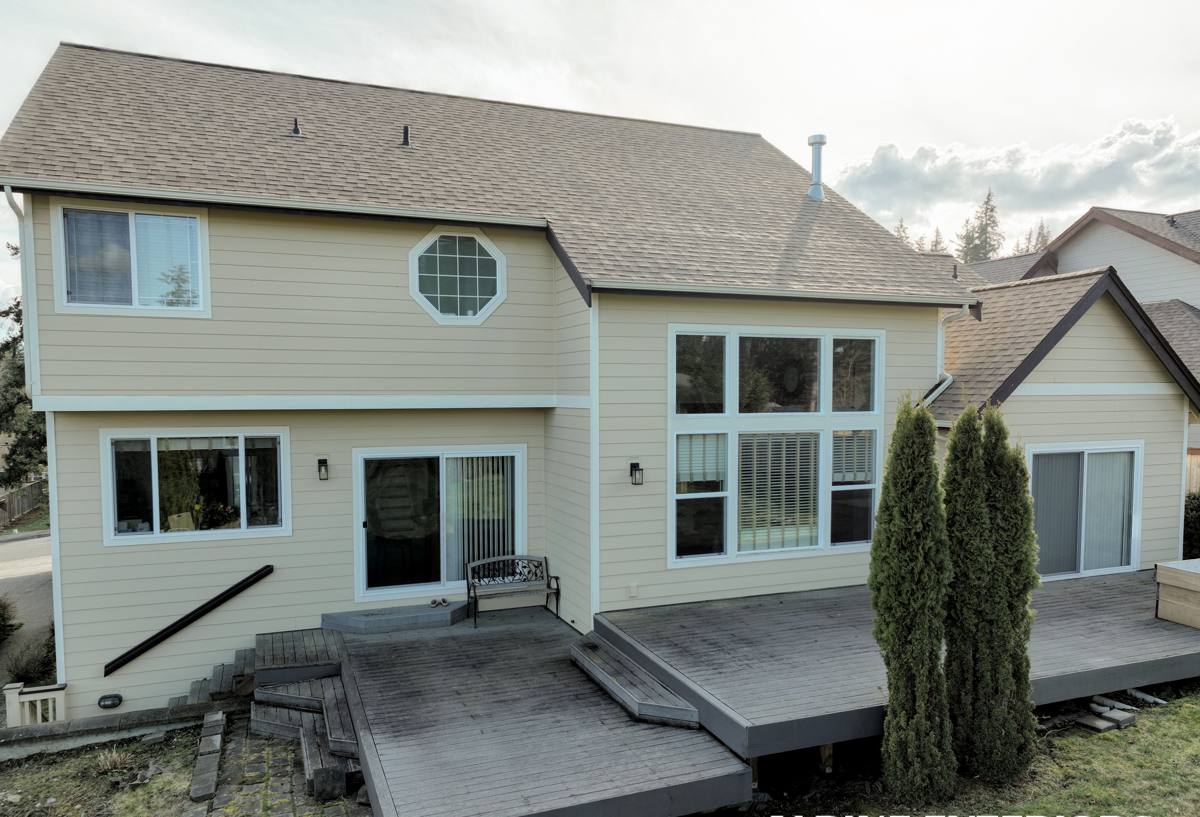
A deck in Sehome has to survive a different year than a deck in a dry inland climate. Between the salt-tinged air drifting in off the water, long stretches of driving rain, and a moss season that can run from fall through spring, the materials and details that work fine somewhere else start failing here within a few seasons if they weren't chosen and installed with this specific climate in mind. We've built and repaired enough decks around Sehome and greater Sudden Valley to know exactly where the shortcuts show up first: soft ledger boards, rusted-out fasteners, slick moss-covered boards, and railings that loosen because the posts were never properly flashed.
This page is about one thing — custom deck construction for homes in this specific part of Whatcom County — and what separates a deck that looks good for two summers from one that's still solid, safe, and low-maintenance a decade in.
What This Climate Does to an Ordinary Deck
Moisture that never fully goes away
Whatcom County doesn't get brief storms so much as long, low, steady rain that soaks into everything it touches over days at a time. Wood that isn't properly sealed and gapped for drainage stays damp far longer than it should, which is exactly the condition mold, moss, and rot need to take hold. Framing lumber tucked underneath the deck surface, where airflow is already limited, is often the first place we find problems on decks that weren't built with ventilation in mind.
Salt air and metal fatigue
Proximity to the water means a steady, low-level exposure to salt-laden air. It's not dramatic the way a coastal storm is, but it's relentless — and it goes after unprotected or low-grade metal fasteners, brackets, and hardware over time. A deck can look structurally sound while the nails or screws holding it together are quietly corroding inside the joints where you can't see them.
Moss, algae, and the slip hazard nobody plans for
Shaded decks, north-facing decks, and decks under tree cover in this area grow moss and algae almost as a matter of course. Beyond the cosmetic issue, a mossy deck surface gets genuinely slippery in wet weather, and moss holds moisture against the board surface, accelerating decay underneath the growth. Board spacing, surface texture, and drainage slope all affect how bad this gets — and all of it is decided at the design and build stage, not after the fact.
What a Correctly Built Deck Involves
A deck that's going to perform in Sehome's conditions is built differently in a handful of specific ways, not just "built well" in a general sense.
- Ledger board flashing: Where the deck attaches to the house, proper flashing — installed in the correct sequence with the house's water-resistive barrier — is what keeps water from working its way into the rim joist and wall framing. This is the single most common failure point we find on older or DIY-built decks.
- Footings below frost depth and clear of standing water: Footings need to be sized and set to local code depth, and located where they won't sit in a low spot that collects runoff during the wet months.
- Joist tape or capping on framing: A strip of self-adhering flashing tape over the top of each joist sheds water away from the fastener line and dramatically slows joist rot, especially under composite decking where moisture can get trapped.
- Corrosion-rated fasteners and hardware throughout: Structural connectors, screws, and joist hangers rated for the coastal/marine or ACQ-treated-lumber environment, not generic interior-grade hardware.
- Board spacing and airflow underneath: Correct gapping between boards and adequate under-deck ventilation so wood can actually dry out between rain events instead of staying saturated.
- A drainage plan, not just a slope guess: The deck surface and any structure underneath should shed water away from the house foundation, not toward it.
Choosing a Decking Material for This Climate
There's no single "best" decking material — there's a best fit for your budget, your maintenance appetite, and how much shade and moss exposure your specific lot gets. Here's how the common options actually compare once you factor in Whatcom County's wet season and moss pressure.
| Material | Moisture & Moss Behavior | Maintenance | Typical Lifespan Here |
|---|---|---|---|
| Pressure-treated lumber | Resists rot when sealed, but end grain and cut edges are vulnerable; moss grows readily on the textured surface | Annual cleaning and re-sealing recommended | 15–20 years with upkeep |
| Cedar | Naturally rot- and insect-resistant, ages to a silver-gray if left unfinished; still needs cleaning to keep moss off | Periodic cleaning; staining/sealing every few years if you want to keep the original tone | 20–25 years with upkeep |
| Capped composite | Doesn't absorb moisture into the core; moss and algae sit on the surface rather than growing into the board, so they rinse off more easily | Occasional washing; no sealing or staining | 25–30+ years, backed by manufacturer warranty |
| PVC decking | Fully synthetic, essentially immune to rot; still needs occasional cleaning where moss spores land | Lowest maintenance of the group | Comparable to or longer than capped composite |
Our default recommendation for most Sehome homeowners is capped composite for the deck surface, because it removes the two biggest maintenance headaches in this climate — moisture absorption into the board itself and the need for repeated sealing — while still coming in at a reasonable cost premium over quality treated lumber. That said, plenty of homeowners prefer real wood for the look and are happy to keep up with the maintenance, and we build both correctly.
Railings, Fasteners, and the Hardware Nobody Sees
Railing posts are one of the most common points of eventual failure on decks in wet coastal-influenced climates, because they combine two vulnerabilities: they're a wood-to-wood or wood-to-metal connection exposed to weather on all sides, and they carry real structural load from people leaning on them. We attach railing posts with through-bolted connections and corrosion-rated hardware rather than face-nailing or toe-screwing, and we flash the post base the same way we flash a ledger board — because that base is sitting in the wettest, least-ventilated spot on the whole structure.
The same logic applies to every visible screw and every hidden joist hanger on the project. Stainless steel or hot-dip galvanized hardware costs more up front than standard-grade fasteners, but in an environment with year-round moisture and some salt exposure, it's the difference between hardware that outlasts the decking and hardware that's rusting and staining the boards around it within a few years.
Permits and Local Code Considerations
Most decks attached to the house, and most decks built more than a couple feet above grade, require a building permit in this area — that covers footing depth, structural framing, railing height and baluster spacing, and stair geometry. Skipping this step doesn't just risk a stop-work order; it can create real problems later when you go to sell the house and an unpermitted structure shows up in an inspection. We handle the permit application and inspection scheduling as part of the build, so you're not the one navigating the county process on your own.
Beyond the permit itself, local frost depth requirements and drainage expectations factor into footing design, and any deck built close to a slope, wetland buffer, or lakeside setback around Sudden Valley may have additional site-specific requirements worth checking before design work starts.
How Our Process Works
1. On-site assessment and conversation
We look at the site — sun and shade exposure, drainage patterns, tree cover, how the deck will attach to the house — and talk through how you actually plan to use the space before any design work starts.
2. Design and material selection
We put together a plan that fits your layout, budget, and maintenance preferences, walking through the material tradeoffs above so you're choosing with full information, not guessing.
3. Permitting
We prepare and submit what's needed for permit approval and schedule the required inspections, so the deck is built to code from the footings up.
4. Construction
Footings, framing, flashing, decking, and railings — built in that order, with the moisture-management details (joist tape, proper flashing, corrosion-rated fasteners) done at each stage rather than treated as optional add-ons.
5. Final walkthrough
We walk the finished deck with you, confirm everything meets code and matches the plan, and go over basic care so you know what upkeep — if any — your chosen material actually needs.
Deck Maintenance Checklist for the Wet Season
Whatever material you choose, a little seasonal attention goes a long way in this climate. A simple maintenance routine we recommend to homeowners:
- Sweep debris and leaves off the deck surface regularly in fall — trapped organic matter is what feeds moss and mildew growth.
- Rinse or gently pressure-wash the surface at the start and end of the wet season to knock back algae and moss before it establishes.
- Check railing posts and stair stringers annually for any looseness, which can indicate a fastener or connection issue worth catching early.
- Keep gutters and downspouts near the deck clear so runoff isn't dumping extra water onto or under the structure.
- If you have wood decking, re-seal or re-stain on the schedule recommended for your specific product — skipping a cycle in this climate shows up fast.
- Trim back overhanging branches where practical to reduce shade and debris, both of which accelerate moss growth.
Why a Crew That Already Works in Sehome Matters
Deck-building fundamentals are the same everywhere, but the details that determine whether a deck lasts 10 years or 25 in this specific climate are learned by building here repeatedly — knowing which fastener grades actually hold up, which material choices homeowners end up regretting once moss season hits, and how the county's permit and inspection process actually runs in practice. A crew that splits time across drastically different climates doesn't build up that pattern recognition the same way a crew that works Sehome, Sudden Valley, and the rest of Whatcom County day in and day out does.
If you're planning a new deck or replacing one that's showing its age, we're happy to come take a look, walk the site with you, and put together a straightforward plan and estimate — no pressure, no obligation. Just fill out the form below to get started.