 Sudden Valley Siding
 Siding Repair Built for Geneva's Lake Whatcom Climate
Geneva sits along the water and up the wooded slopes near Sudden Valley, and that setting is exactly what makes siding here wear differently than siding twenty miles inland. Homes get a steady mix of damp lake air, driving rain off the water, and heavy tree cover that keeps north and shaded walls wet long after a storm has passed. Add in Whatcom County's long, gray moss season, and you have a climate that finds every weak seam, every gap in caulking, and every spot where water can get behind a panel and stay there.
Siding repair in this kind of environment isn't just about matching a color or swapping a cracked board. It's about understanding why that board failed in the first place, and making sure the fix doesn't just look right for a season before the same problem comes back. That's the standard we hold ourselves to on every Geneva repair call.
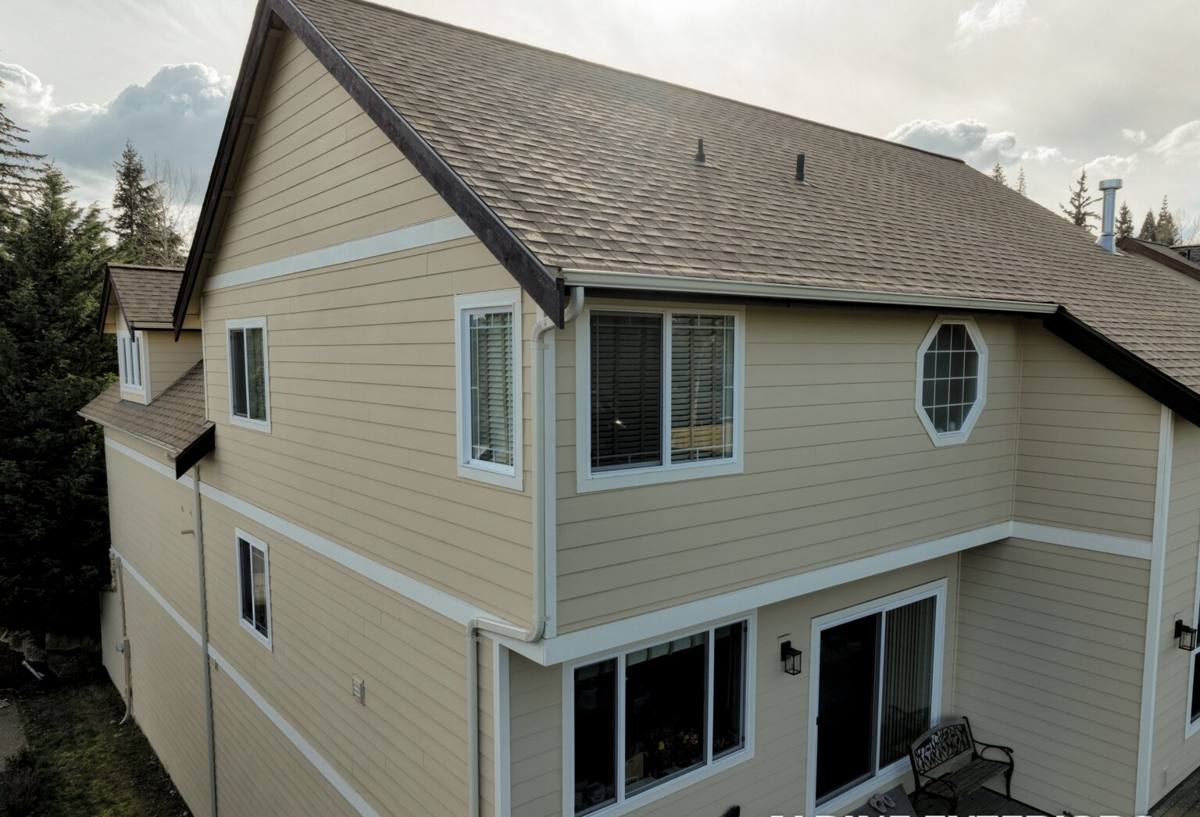
The Repair Issues We See Most in Geneva Homes
Every neighborhood has its own pattern of siding failure, driven by sun exposure, tree cover, and how close a home sits to the water. Around Geneva and Sudden Valley, a handful of issues show up again and again:
Moisture and rot at vulnerable points
Corners, butt joints, window and door trim, and anywhere siding meets a deck or roofline are the first places water finds a way in. On homes with heavy shade or lake-facing exposure, these spots can stay damp for days after a rain event, which accelerates rot in wood-based products and can lead to swelling, staining, or soft trim.
Moss, algae, and mildew staining
Whatcom County's wet, mild winters and shaded lots are ideal growing conditions for moss and algae. On siding, this shows up as green or black streaking, usually worst on north-facing walls and anywhere gutters overflow or splash back onto the wall below. It's often more of a cosmetic and maintenance issue than a structural one, but left unchecked it holds moisture against the surface longer than it should.
Cracked, split, or impact-damaged panels
Wind-driven branches, ladders, lawn equipment, and simple age-related brittleness all cause cracks and chips. On older wood or engineered wood siding, cracks are an open invitation for water. Even on fiber cement, impact damage needs to be addressed promptly so the cut edge doesn't sit exposed.
Failed caulking and trim gaps
Caulk has a service life, and in a marine-influenced, high-moisture climate it tends to fail faster than manufacturers' best-case estimates suggest. Once a bead cracks or pulls away, wind-driven rain gets pushed directly into the wall assembly during storms.
What a Correct Siding Repair Actually Involves
A lot of "siding repair" in this region is really just cosmetic patchwork — a bead of caulk over a crack, a new piece nailed over a stain, paint over moss. That kind of fix might look fine for a few months, but it doesn't address what's happening behind the siding, which is where the real damage usually starts.
A repair done right always includes:
- Inspection behind the damaged area — pulling back the affected panel to check the water-resistive barrier, flashing, and sheathing for hidden rot or staining before anything gets replaced.
- Diagnosing the cause, not just the symptom — a cracked panel might be impact damage, or it might be a sign of improper fastening or expansion clearance that will keep cracking new panels if it's not corrected.
- Matching material and profile — replacement pieces need to match the existing plank width, reveal, and texture, or the repair sticks out visually for the life of the siding.
- Correct flashing and drainage — any repair around a window, door, or penetration needs to restore the original water-shedding path, not just cover the hole.
- Proper fastening and clearances — panels need the right gap at joints and from grade, trim, and roofing to allow for seasonal movement and drainage.
- Fresh, appropriately rated sealant — used only where the manufacturer calls for it, not as a substitute for proper flashing.
Skip any one of those steps and you're likely to be back at the same spot in a year or two, except now there's fresh paint or caulk hiding the problem instead of exposing it.
Repair or Replace? How We Make That Call
Not every damaged section needs a full re-side, and we don't push replacement when a targeted repair will genuinely hold up. But there's a point where patching stops being cost-effective. Here's how we generally think through it:
| Situation | Usually a Repair | Usually Points to Replacement |
|---|---|---|
| Extent of damage | Isolated panels or a single wall section | Damage scattered across multiple elevations |
| Cause | Impact, isolated caulk failure, one bad flashing detail | Systemic moisture intrusion behind the wall assembly |
| Siding age and material | Newer fiber cement in otherwise good condition | Aging wood-based or engineered wood siding nearing end of service life |
| Sheathing condition | Dry, solid sheathing behind the damaged area | Soft or delaminated sheathing found during inspection |
| Color match feasibility | Recent ColorPlus finish with available match | Older or faded finish where new panels won't blend |
We'll always tell you honestly which category your home falls into, including when a repair is the right, less expensive answer.
Our Process for Geneva Siding Repair Calls
- On-site inspection. We look at the damaged area and the surrounding siding field, not just the spot you called about, since related issues often show up nearby.
- Moisture check. Where there's any sign of water intrusion, we open up the area enough to see the sheathing and barrier underneath before quoting a fix.
- Written scope and estimate. You get a clear explanation of what's being repaired, why, and what it will take — no vague line items.
- Repair work. Matched material, correct flashing and fastening, and a finish that blends with the surrounding siding.
- Cleanup and walkthrough. We clear debris and walk the repair with you before we consider the job done.
Why We Repair With James Hardie Fiber Cement
We install and repair exclusively with James Hardie fiber cement siding — we don't work in vinyl, LP SmartSide, primed wood, or cedar. For repair work specifically, that focus matters for a few practical reasons:
Hardie's ColorPlus factory finish is engineered for consistent color matching across production runs, which makes patch repairs on existing Hardie siding far more likely to blend seamlessly than trying to match a field-painted product. The HZ5 formulation used in this region is engineered specifically for high-moisture, freeze-thaw climates like Western Washington, so it handles the driving rain and damp shoulder seasons around Lake Whatcom without the swelling or softening that plagues wood-based siding when water gets behind it. And because it's non-combustible fiber cement, repaired sections hold up the same way the original installation does — no soft spots forming a few years down the road from moisture that wood or engineered wood products would have already absorbed.
We won't tell you a product we don't stand behind is fine for a "temporary" patch. If your existing siding is a different material, we'll be upfront that a true match may not be possible, and we'll talk through what your realistic options are.
Why a Local Sudden Valley Crew Makes a Difference
A crew that works Geneva and the greater Sudden Valley area regularly knows what to expect before we even step out of the truck. We know which sides of a house take the worst of the weather off the lake, where heavy tree cover means moss shows up first, and how the seasonal moisture cycle around Whatcom County affects timing for repair work. That local familiarity means fewer surprises, faster diagnosis, and a repair plan built around how homes here actually behave — not a generic checklist.
It also means we're not disappearing after the invoice. If a repair doesn't perform the way it should through a wet winter, we're a local call away, not a company that worked the area once and moved on.
A Homeowner's Maintenance Checklist to Cut Down on Repairs
Most of the repair calls we get could have been smaller — or avoided — with a little routine attention. A few habits go a long way in this climate:
- Walk the exterior twice a year and look closely at corners, trim joints, and anywhere siding meets the roofline or a deck.
- Keep gutters clear so overflow isn't repeatedly splashing onto the wall below.
- Trim back branches and vegetation touching the siding to reduce shade, moisture retention, and impact risk.
- Address moss and algae staining early with a gentle wash rather than letting it build up season after season.
- Re-caulk gaps at trim and penetrations as soon as you notice cracking or separation, rather than waiting for a leak.
- Note any soft spots, bubbling paint, or discoloration and have them checked before the next wet season sets in.
If you're noticing any of these signs on your Geneva home, or you've got damage from a storm or an old repair that never held up, we're happy to take a look. Estimates are free and there's no pressure to move forward — just an honest read on what your siding needs and what it will take to fix it right.