 Sudden Valley Siding
 Board & Batten Siding, Built for the Silver Beach Climate
Board and batten is one of the most requested looks on homes around Sudden Valley and the Silver Beach area — the vertical lines read as clean, modern, and a little more custom than standard lap siding, and it pairs well with the mix of cabin-style and newer builds you see through this part of Whatcom County. But the look is only half the job. Vertical siding has to manage water differently than horizontal lap siding, and out here it has to do it against a steady combination of salt air, driving rain, and a moss season that runs longer than most homeowners expect. A board and batten job that isn't detailed correctly for this climate can look fine for a year or two and then start showing streaking, soft spots, and panel separation right at the seams. This page is about what a correct board and batten installation actually requires in this specific area, not board and batten in general.
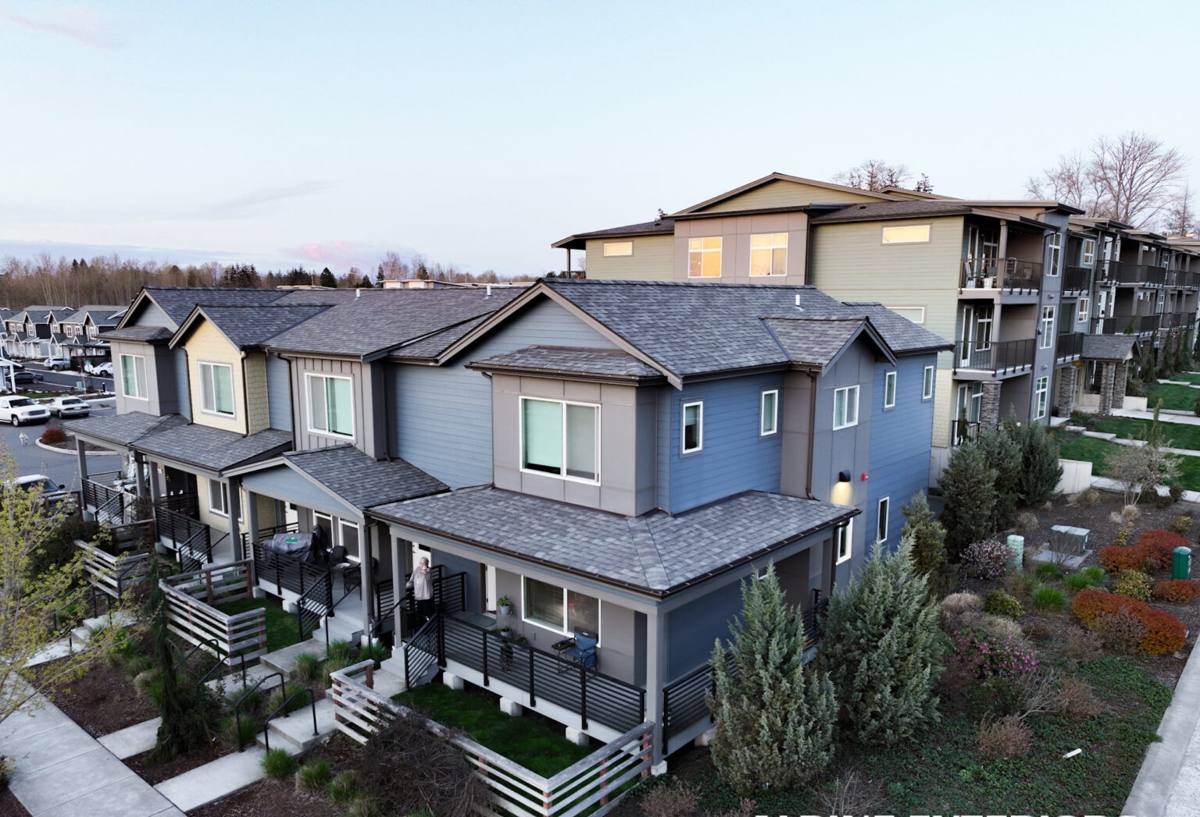
Why Vertical Siding Behaves Differently in a Wet Climate
Lap siding sheds water by gravity — each course overlaps the one below it. Board and batten relies instead on the seams between boards (or the battens covering those seams) to keep water out, which means every seam is a potential entry point if it's not detailed correctly. In a dry climate that margin for error is bigger. Around Sudden Valley, with sustained wet seasons and wind-driven rain coming off the water, it isn't.
Two things matter more here than in a typical inland install:
- Drainage behind the cladding. A functioning rainscreen gap and a properly lapped weather-resistive barrier give any water that gets past the battens somewhere to go besides into the sheathing.
- Fastener and hardware corrosion resistance. Salt-laden air accelerates corrosion on standard fasteners and trim hardware. Stainless or coated fasteners rated for coastal exposure cost more up front and are non-negotiable for a job that's supposed to last decades, not years.
What a Correct Board & Batten Installation Involves
The visual difference between a well-installed board and batten wall and a poorly installed one is small. The performance difference is not. Here's where the two paths split:
| Detail | Done Right | Common Shortcut |
|---|---|---|
| Weather-resistive barrier | Continuous, correctly lapped, integrated with window and door flashing | Patched around openings, gaps left at seams |
| Rainscreen / drainage gap | Furring strips or a purpose-built drainage mat create an air gap behind the panels | Panels fastened flush to the barrier with no drainage path |
| Fasteners | Stainless or coated, corrosion-rated, spaced and set to manufacturer specs | Standard galvanized fasteners, inconsistent spacing |
| Seam and batten treatment | Sealed per manufacturer detail, battens fastened into framing, not just sheathing | Battens face-nailed into sheathing only, gaps caulked over instead of flashed |
| Bottom edge / grade clearance | Proper clearance from grade, roof lines, and hardscape to limit splashback and standing moisture | Siding installed tight to grade or decking |
None of this shows up in a photo. It shows up five, ten, and twenty years later — which is exactly the timeframe that matters for a siding investment.
The James Hardie Board & Batten System
We install James Hardie fiber cement exclusively, and for vertical applications that means HardiePanel vertical siding paired with battens, engineered specifically for this kind of installation rather than boards trimmed down from a lap product. A few reasons this matters for a Silver Beach home specifically:
- Non-combustible material. Fiber cement doesn't feed a fire the way wood-based or engineered-wood products can, which matters anywhere with wildfire risk in the surrounding forested terrain.
- Climate-engineered product lines. Hardie's HZ5 formulation is built for the Pacific Northwest's freeze-thaw cycles and sustained moisture exposure, rather than a one-size-fits-all national spec.
- ColorPlus factory finish. A baked-on finish resists the fading and moisture intrusion that field-painted siding is prone to, and it holds up better against salt air than site-applied paint, which tends to chalk and lift faster in this kind of exposure.
- Transferable warranty. A real, honored warranty matters more on vertical siding than lap siding, precisely because the failure points (seams, battens, fastener corrosion) are the parts most likely to be argued over if something goes wrong.
We don't install LP SmartSide, vinyl, Cemplank, Allura, or bare cedar or spruce board and batten. Each has legitimate uses elsewhere, but for the moisture load and salt exposure this area sees, we've standardized on Hardie because it's the product we're comfortable putting a warranty behind on this kind of wall.
Moss, Algae, and Salt Air: What Actually Wears Siding Out Here
Two slow, unglamorous problems do more damage to Silver Beach siding than any single storm:
Moss and algae
Shaded north- and west-facing walls, tree cover, and a long wet season create ideal conditions for moss and algae growth on any siding surface. It's mostly cosmetic on a factory-finished fiber cement panel, but on lower-quality substrates it holds moisture against the surface and accelerates rot underneath. Board and batten's vertical seams give moss more edges to establish in than a flat lap wall does, which is exactly why seam detailing and drainage matter as much as they do.
Salt air
Salt-laden air corrodes exposed metal — fasteners, flashing, trim hardware — faster than it degrades the siding panel itself. A wall can look fine while the fasteners holding it on are quietly failing underneath. This is a hardware and detailing problem more than a "which siding brand" problem, and it's one reason we don't cut corners on fastener spec even though it adds cost.
Neither of these is solved by picking a fancier siding product alone. They're solved by installation details that account for them from the start.
Our Process for Silver Beach Board & Batten Projects
- On-site assessment. We look at wall orientation, shading, drainage patterns, and existing moisture damage before quoting anything.
- Tear-off and substrate check. Old siding comes off and sheathing gets inspected for rot or prior moisture intrusion before anything new goes up.
- Barrier and drainage plane. Weather-resistive barrier installed and lapped correctly, furring or drainage mat added for the rainscreen gap.
- Panel and batten installation. HardiePanel vertical siding installed to manufacturer spec, battens fastened into framing with corrosion-rated hardware.
- Trim, flashing, and seam sealing. Every penetration, corner, and seam detailed to shed water rather than rely on caulk as the only line of defense.
- Final walkthrough. We go over the finished work with the homeowner and flag anything worth watching in year one.
Cost Factors for a Board & Batten Project
| Factor | What Drives It |
|---|---|
| Home size and wall complexity | More corners, dormers, and roof intersections mean more flashing and trim labor |
| Tear-off vs. new substrate | Removing old siding and repairing damaged sheathing adds time before new siding starts |
| Batten spacing and reveal | Tighter batten spacing and wider panels change material quantities and labor |
| Color | Factory ColorPlus finishes cost more than primed panels but eliminate a future repaint |
| Site access | Steep lots, tree cover, or limited equipment access near the water add setup time |
We give a written, itemized quote for every project rather than a flat per-square-foot number, because the factors above genuinely change the price from one Silver Beach lot to the next.
Why a Crew That Already Works This Area Matters
Board and batten siding done wrong doesn't usually fail in the first year — it fails quietly, in the seams and behind the battens, in exactly the conditions Sudden Valley and Silver Beach see for most of the year. A crew that's already installed siding on homes in this area has already worked out the fastener spec, the drainage details, and the trim approach that hold up against this specific combination of rain, salt air, and shade-driven moss. That's not something a crew based somewhere dry and inland gets right by accident on their first job here.
Before you hire anyone for a board and batten project in this area, it's worth asking a few direct questions:
- Have they installed board and batten siding on homes in this specific area, not just siding in general?
- Will they specify corrosion-rated fasteners and hardware in writing?
- Do they install a rainscreen or drainage gap behind the panels, or fasten flush to the barrier?
- What manufacturer warranty applies, and is it transferable if you sell the home?
- Will they walk you through their flashing and seam details before work starts, not just after?
If you're weighing board and batten siding for a home in Silver Beach or elsewhere around Sudden Valley, we're glad to walk your property, look at your walls' exposure and drainage, and put together a straightforward, no-pressure estimate. There's no cost and no obligation to get a second opinion on what your home actually needs.