 Sudden Valley Siding
 Why South Hill Homes Need Decking Built for This Climate
A deck on the South Hill side of Sudden Valley deals with a different set of conditions than a deck built forty miles inland. Between the moisture that rolls off Lake Whatcom, the salt-laden air that reaches this part of Whatcom County, and a rainy season that can stretch for months, decking materials here are tested constantly. Wood decking can handle it for a while with diligent upkeep, but composite decking was engineered specifically for the problems this climate creates: moisture absorption, splintering, graying, and the slow rot that starts underneath boards where nobody's looking.
This page is about composite decking installed correctly for a South Hill property — not a generic overview of the product. If you already know composite is the right material and want to understand what a proper local installation actually involves, this is written for you.
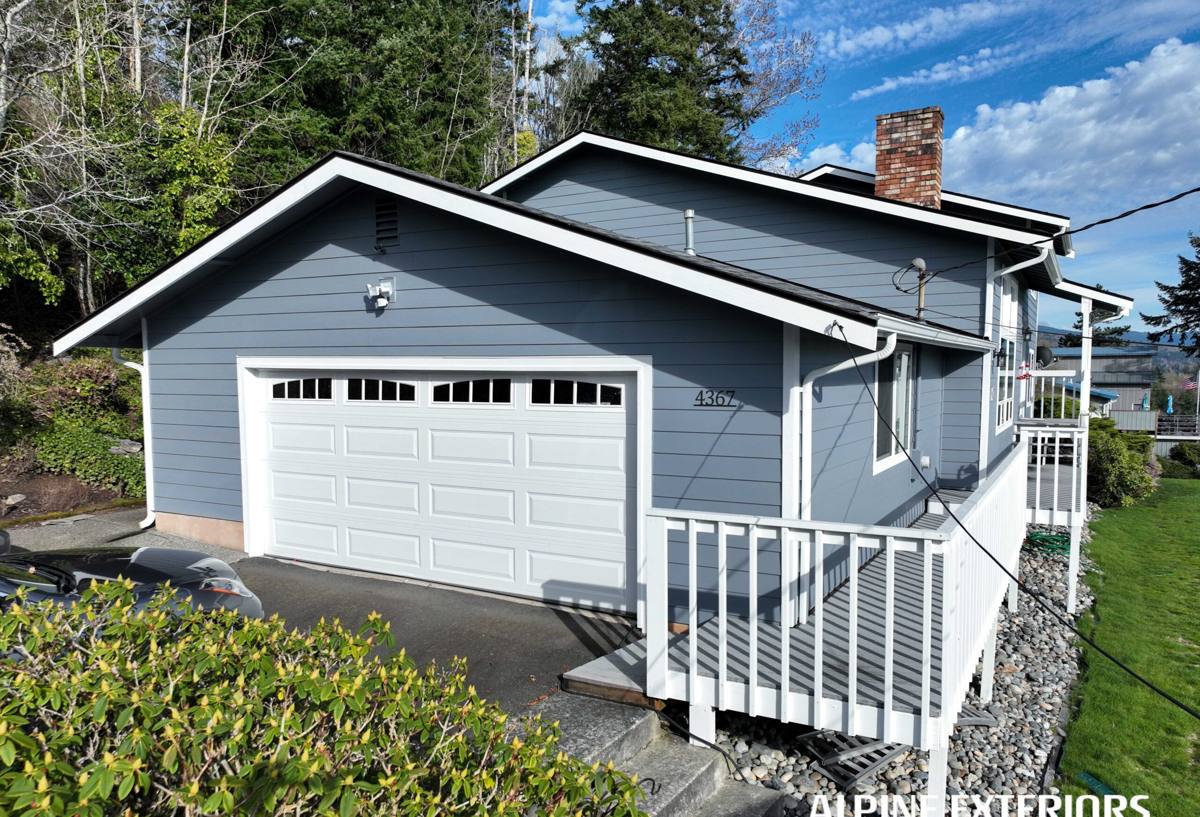
What Local Weather Does to a Deck Over the Years
Moss, Algae, and a Long Wet Season
Whatcom County's moss season isn't a short inconvenience — it's a stretch of months where shaded, north-facing, or tree-covered sections of a deck stay damp almost continuously. On wood decking, that moisture feeds mildew and moss growth in the grain itself, which means pressure washing alone never fully removes it — it just knocks back the surface growth until it returns. Composite boards, particularly capped composite, don't give moss the porous surface it needs to take hold the same way, which matters a lot on a property where deck areas sit under fir or cedar cover for part of the day.
Driving Rain and Salt Air
Driving rain off the lake and the broader marine influence in this part of the county pushes water sideways into joints, fastener holes, and end cuts — the places where wood decking fails first. Salt-bearing air accelerates corrosion in fasteners and metal hardware, which is often the real reason an older deck starts to fail even when the boards themselves still look serviceable. A correct composite installation accounts for both of these — not just with the decking material, but with the fasteners and flashing underneath it.
Composite vs. Wood vs. PVC: A Straight Comparison
Every decking material is a trade-off. Here's how the three most common options actually compare for a home in this climate, without the marketing spin.
| Material | Moisture Behavior | Maintenance | Typical Lifespan Here |
|---|---|---|---|
| Pressure-treated wood | Absorbs water, swells and shrinks seasonally | Annual staining/sealing, regular moss treatment | 10-15 years before major repair |
| Composite (capped) | Resists absorption; cap layer sheds moisture | Periodic washing, no staining or sealing | 25-30+ years, manufacturer-warrantied |
| PVC/cellular decking | Fully moisture-resistant, no wood content | Low; can show flex in temperature swings | 25-30+ years, higher upfront cost |
Composite sits in the middle on cost and at the top on practical maintenance for a climate like this one. We don't push PVC as a default here — it has its place, but it behaves differently underfoot in temperature swings, and most South Hill homeowners are better served by a well-installed capped composite system with a solid warranty.
What a Correct Composite Deck Installation Actually Involves
Substructure and Framing
Composite decking is only as good as what's underneath it. We frame with joist spacing matched to the manufacturer's specification for the board profile being used — this isn't optional; composite boards flex differently than wood and undersized framing shows up as bounce and long-term sagging. Any framing lumber gets treated for ground or moisture contact, and we don't reuse old joists just because they look sound on the surface.
Fastening and Board Layout
Hidden fastener systems are the standard for a clean composite deck — no exposed screw heads collecting grime or corroding in the salt air. Board layout accounts for expansion gaps, which composite needs more of than most homeowners expect, especially across a wide deck surface that sees direct sun part of the day and shade the rest.
Flashing and Drainage
Where the deck meets the house, ledger board flashing has to be done right or every deck failure this climate produces eventually traces back to that one detail. Water finds its way behind poorly flashed ledger boards and rots the rim joist or sheathing from behind, invisible until the damage is significant. We flash every ledger connection and make sure the deck surface itself sheds water away from the house rather than pooling against it.
Site Considerations We Plan Around on South Hill
Homes on the hillside sections of Sudden Valley often have sloped lots, which changes how a deck gets supported and how water moves underneath and around it. A few things we account for specifically:
- Footing depth and placement on sloped or uneven grade, so the substructure isn't fighting the site
- Drainage paths that carry water away from the foundation rather than letting it collect under the deck
- Sun and shade exposure, which varies significantly depending on which side of the hill a deck faces — this affects both moss risk and board expansion
- Access for equipment and material delivery on properties with steep driveways or limited staging space
None of this is exotic, but it's the kind of thing that gets missed by a crew that doesn't regularly work this terrain.
Our Process, Start to Finish
- Site visit and assessment — we look at the existing structure (if there is one), grade, sun exposure, and how the deck ties into the house before we talk numbers.
- Design and material selection — board profile, color, and railing options based on your budget and how the space will actually be used.
- Written estimate — a clear scope and price, no vague allowances buried in the fine print.
- Demo and framing — removal of the old deck if needed, then framing built to the new decking manufacturer's spec, not a generic standard.
- Installation — decking, hidden fasteners, flashing, and railing installed with attention to the expansion gaps and drainage details that matter in this climate.
- Final walkthrough — we go over care basics with you before we consider the job finished.
Cost Factors: What Actually Changes the Price
Composite decking costs more upfront than pressure-treated wood, but the honest way to think about it is total cost over the life of the deck, not just the install invoice. What moves the number most on a South Hill project:
| Factor | Why It Matters |
|---|---|
| Deck size and shape | More cuts, corners, and picture-framing add labor time |
| Substructure condition | New framing on a sloped or damaged site costs more than resurfacing sound framing |
| Board tier and brand | Entry-level capped composite vs. premium lines with longer warranties |
| Railing system | Composite/aluminum rail systems cost more than basic wood rail but match the deck's low-maintenance goal |
| Site access | Steep or tight lots can add time for material handling and equipment |
We'll walk through which of these apply to your specific property during the estimate rather than quoting a flat per-square-foot number that doesn't reflect your site.
Keeping a Composite Deck Looking Right in This Climate
Composite is low-maintenance, not no-maintenance. Skipping basic care is the most common reason a composite deck looks worse at year five than it should.
- Sweep debris and fir needles off regularly — trapped organic matter under leaves is what feeds moss and mildew, even on composite
- Rinse or wash the surface a few times a year, more often in shaded or heavily treed areas
- Keep planters and rugs from sitting in one spot too long — trapped moisture underneath can cause surface staining
- Check railing hardware and fasteners annually for corrosion, especially given the salt content in the air here
- Clear gutters and downspouts near the deck so overflow isn't dumping extra water onto the surface or framing
- Address any standing water under the deck promptly — it's a framing issue, not a decking issue, and it's worth fixing early
Why a Crew That Already Works South Hill Matters
A lot of deck problems in this area trace back to installation decisions that made sense somewhere drier — undersized expansion gaps, ledger flashing that wasn't sealed for driving rain, framing that didn't account for a sloped lot's drainage. A crew that regularly works Sudden Valley and the South Hill area has already seen how these decks perform two, five, and ten years out, and builds accordingly the first time. We're familiar with the permitting expectations in this part of Whatcom County, the site-access realities of hillside lots, and the specific ways this climate stresses a deck over its lifespan. That local track record is worth more than a lower bid from a crew that's never worked this terrain before.
If you're weighing composite decking for a South Hill property, we're glad to walk your site, answer honest questions about materials and cost, and put together a written estimate — no pressure, no obligation. The form below is the easiest way to get started.