 Sudden Valley Siding
 Deck Replacement Built for South Hill's Climate
South Hill sits up on the terraced slopes above Sudden Valley, and that elevation and tree cover come with a trade-off: beautiful views and privacy, but a deck that takes a real beating year-round. Between the driving rain that blows in off Lake Whatcom, the salt-tinged air that moves through Whatcom County from the Sound, and a moss season that can run eight months or longer, most decks up here don't fail because the homeowner neglected them. They fail because they were built — or rebuilt — for a drier, milder climate than the one they actually live in.
A deck replacement done right for South Hill isn't just swapping old boards for new ones. It's rethinking drainage, fastener choice, ledger flashing, and material selection so the next deck actually outlasts the last one. That's the job we specialize in, and it's different enough from a generic deck job that it's worth walking through in detail.
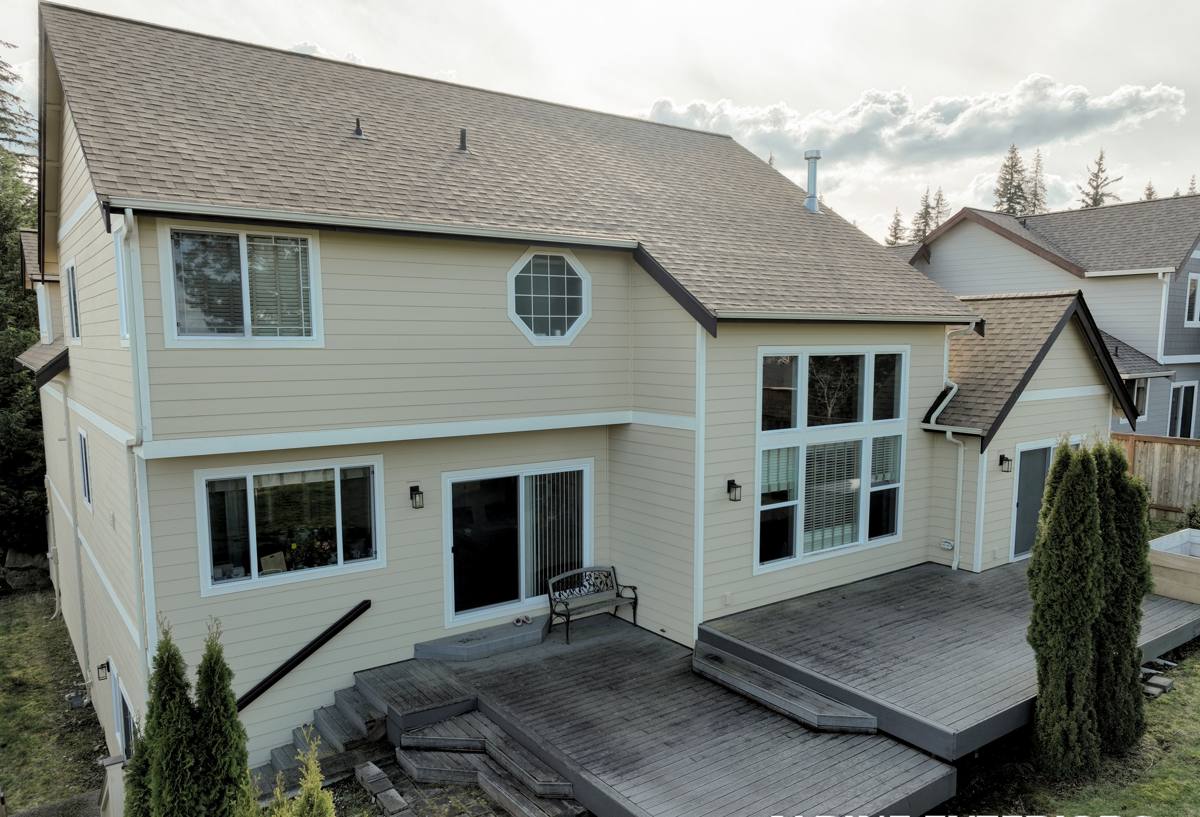
Signs Your Deck Needs Replacing, Not Just Repairing
Not every tired-looking deck needs a full teardown. But there's a point where patching boards is just delaying the inevitable and spending money that should go toward a real fix. Some signs we look for on South Hill homes:
- Soft, spongy spots in the decking or a joist that flexes underfoot — usually water has been getting into end grain or fastener holes for years
- Rust streaks or crumbling wood around the ledger board where the deck attaches to the house
- Visible gaps opening between boards, or boards cupping and splitting along their length
- Persistent moss or black-green staining that comes back within weeks of cleaning, even after a wash
- Posts or footings that have shifted, or a deck that feels slightly "bouncy" compared to when it was new
- Railings that wiggle at the post base — often a sign the post itself is compromised below the surface
If it's just a handful of boards or a railing section, repair usually makes sense. If the substructure — joists, ledger, footings — is showing wear, replacement is almost always the more honest recommendation, because you'd otherwise be putting new decking on a frame that's already on borrowed time.
What the Local Weather Actually Does to a Deck
It helps to understand the mechanism, not just the symptom. Three things work against decks in this part of Whatcom County:
Driving rain and moisture cycling
Rain here doesn't just fall straight down — hillside exposure on South Hill means wind-driven rain hits decks at an angle, working its way into seams, fastener holes, and the joint where the deck meets the house. Wood that stays damp for long stretches, then dries, then gets wet again, is under constant stress. That cycling is what causes cupping, checking, and eventually rot, far more than any single storm.
Salt-influenced air
Even away from open water, salt-tinged air moving through the region accelerates corrosion on anything metal — nails, screws, joist hangers, structural connectors. A fastener that would last decades in a dry inland climate can start failing in half that time here if it isn't rated for the exposure.
A long moss season
Shaded, north-facing, or tree-covered sections of a South Hill lot barely dry out between fall and late spring. Moss and algae don't just look bad — they hold moisture against the wood surface and make boards slick and dangerous underfoot. A deck built without airflow underneath, or with tight board spacing, will grow moss faster no matter how often it's cleaned.
Choosing the Right Decking Material for This Climate
There's no single "best" decking material — there's a best material for your budget, your maintenance appetite, and how exposed your particular deck is. Here's how the common options actually perform in a wet, moss-prone climate like this one:
| Material | Moisture behavior | Maintenance | Typical lifespan here |
|---|---|---|---|
| Pressure-treated lumber | Resists rot with proper sealing, but absorbs and releases moisture readily — prone to cupping if not maintained | Needs cleaning and re-sealing every 1-2 years | 15-20 years with upkeep |
| Cedar | Naturally rot-resistant and handles moisture well, but softer surface can hold moss in shaded areas | Periodic cleaning and staining/sealing | 15-25 years with upkeep |
| Composite decking | Doesn't absorb water the way wood does; won't cup or splinter, but surface can still grow algae/moss film | Occasional wash; no staining or sealing | 25-30+ years |
| Capped composite / PVC | Fully sealed surface sheds water and resists moss buildup best of the group | Lowest — soap and water cleaning | 25-30+ years |
For shaded South Hill lots where moss is the main complaint, we usually steer homeowners toward capped composite or well-sealed cedar. For sunnier, more open lots, quality pressure-treated lumber with proper maintenance is still a perfectly sound, budget-conscious choice. The honest trade-off with any wood product is that it needs your attention — skip a couple years of sealing and you'll pay for it in accelerated wear.
What a Correct Deck Replacement Involves
The structure you don't see
This is where most of the real durability decisions get made. A proper replacement means new footings or a footing inspection if the deck is over a certain age, correctly sized joists spaced for the decking material chosen, and — critically — proper ledger board flashing where the deck meets the house. That flashing detail is one of the most common failure points we find on older decks: water gets behind an unflashed or poorly flashed ledger and rots both the deck framing and the house's rim joist behind it. We also use corrosion-resistant, code-rated fasteners and hardware throughout, given the salt exposure in this region.
The surface and railings
Decking gets installed with attention to board spacing and airflow underneath — both of which directly affect how fast moss and algae take hold. Guardrails and stair railings are built to current code height and baluster spacing requirements, which matters both for safety and for resale, since an out-of-code railing is a common inspection flag when a home sells.
Permits and Site Considerations on the Hill
Most jurisdictions in Washington, Whatcom County included, require a permit for any deck attached to the house and for decks that sit above a modest height off grade — generally around 30 inches, though the exact threshold and process depend on your specific property and whether the existing structure is being altered. We handle that permitting conversation as part of the estimate so there are no surprises mid-project.
South Hill's terraced, sloped lots also add real site logistics that flatland decks don't have: material staging, footing access on grade changes, and sometimes limited equipment access depending on the driveway and lot layout. A crew that's worked this specific area knows to plan for that before the crew shows up, not after they've hauled lumber halfway up a slope and hit a wall.
Our Process, Start to Finish
- On-site assessment — we inspect the existing deck's framing, ledger connection, footings, and any moisture or rot damage, and take real measurements rather than guessing from a phone photo
- Material and design conversation — we walk through decking material options, railing style, and any layout changes, with honest pros and cons for your lot's sun/shade exposure
- Written estimate — a clear scope and price, including whether permitting is needed and who's pulling it
- Demolition and disposal — old decking, framing, and debris removed and hauled off
- Structural rebuild — footings, framing, ledger flashing, and hardware installed to code
- Decking and railing installation — surface material and railings installed with attention to spacing, fastening, and finish
- Final walkthrough — we go over the finished deck with you, including basic care guidance for the material you chose
Cost Factors Worth Understanding
Deck replacement costs vary a lot based on size, material, and site conditions, so we won't quote a fake number here — but these are the factors that actually move the price:
| Factor | Why it matters |
|---|---|
| Decking material | Pressure-treated lumber costs less upfront; composite and capped composite cost more but need far less long-term maintenance |
| Substructure condition | If footings and framing are sound, replacement can focus on the surface; if they're compromised, more of the budget goes below the decking |
| Deck size and height | Larger decks and multi-level decks require more material, more labor, and often more engineering for railings and stairs |
| Site access | Sloped South Hill lots with limited equipment access can add labor time compared to a flat, easy-access backyard |
| Railing and stair complexity | Custom railing styles, multiple stair runs, or code-driven changes add cost beyond a simple straight-run deck |
| Permitting | Permit fees and any required engineering for larger or taller decks are a real, if usually modest, line item |
Keeping Your New Deck Ahead of the Moss
Whatever material you choose, a little seasonal attention goes a long way toward getting the full lifespan out of your new deck in this climate:
- Sweep debris and fallen leaves off the deck regularly, especially in fall — trapped organic matter holds moisture and feeds moss growth
- Rinse or lightly wash the surface a couple of times a year, more often in shaded areas that stay damp longer
- Check the gap where the deck meets the house siding periodically to make sure it hasn't closed up or trapped debris
- For wood decking, plan on re-sealing on the schedule recommended for that product — skipping it is the single biggest cause of early wood deck failure here
- Keep gutters and downspouts near the deck clear so runoff isn't dumping extra water directly onto or under the structure
- Have railings and stair connections checked periodically, since loose hardware is often the first sign of a fastener issue
Why Local Experience on South Hill Matters
A deck built for a dry, low-elevation neighborhood somewhere else doesn't automatically work on a shaded, sloped South Hill lot in Sudden Valley. The right footing depth, the right fastener spec for salt-influenced air, the right decking gap for a moss-prone yard — those are decisions shaped by actually having worked on decks in this specific stretch of Whatcom County, not by a generic install checklist. We've built and replaced decks on these hillside lots enough to know where water tends to collect, which sides of a house stay shaded longest, and how to plan access on a sloped driveway before the job starts, not after.
If your deck is showing its age, or you're just not sure whether it needs a repair or a full replacement, we're happy to take a look and give you an honest answer either way. Reach out for a free, no-pressure estimate using the form below.