 Sudden Valley Siding
 Why Decks in Sunnyland Take a Beating
A deck in Sunnyland doesn't fail the same way a deck does in a dry climate. Out here, the damage is slower and sneakier — it's not one big storm that wrecks a deck, it's years of driving rain getting under flashing that was never quite right, salt-laden air off the water working into fasteners and hardware, and a moss season that runs long enough to keep wood surfaces damp for weeks at a stretch. By the time a homeowner notices a problem, it's usually been building for a while underneath the boards.
Whatcom County's climate is genuinely hard on outdoor structures. The combination of moisture that doesn't fully dry out between rain events, salt air accelerating corrosion on nails, screws, and joist hangers, and moss that holds water against wood and finishes is a specific set of conditions that a generic deck repair approach doesn't always account for. A repair that would hold up fine in a drier region can fail here in a fraction of the time if it isn't built with this climate in mind.
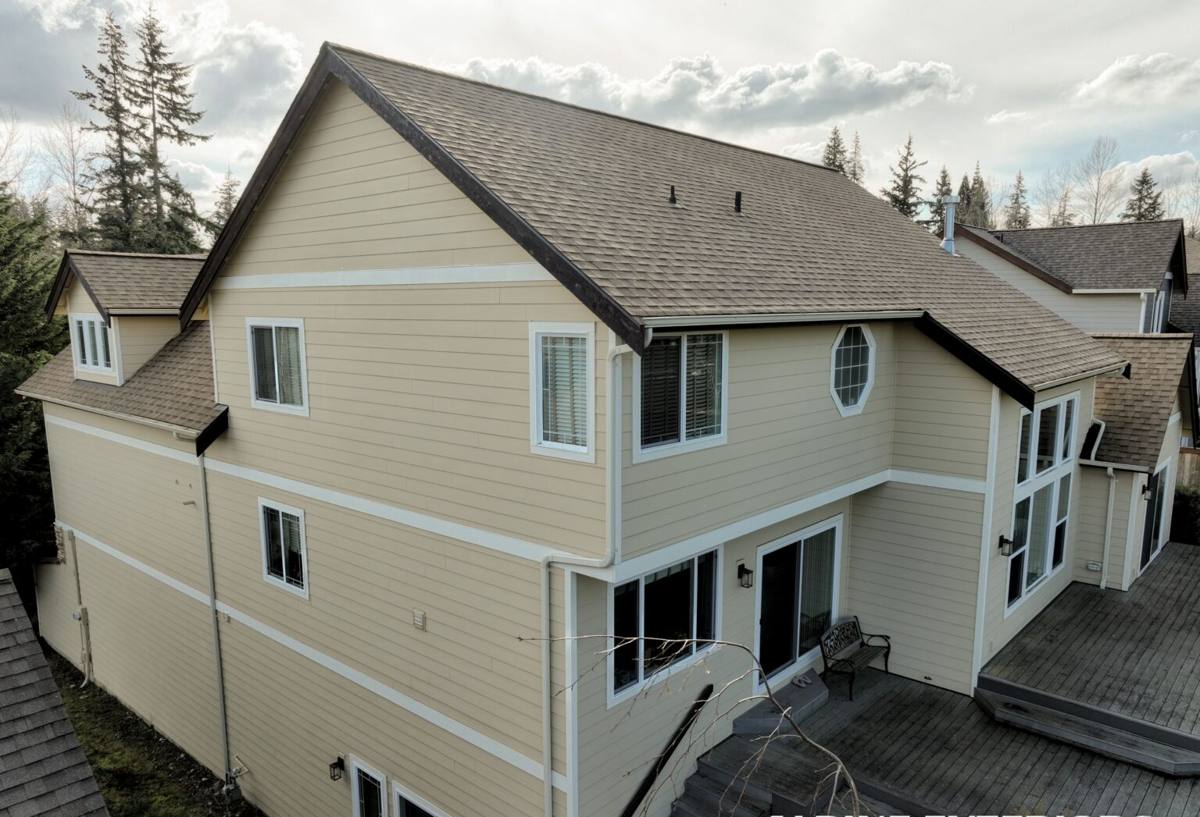
Warning Signs It's Time for Repair
Most deck problems in this area start small and stay hidden until they're not. Here's what we tell Sunnyland homeowners to actually check for, not just glance at:
- Boards that feel soft, spongy, or slightly springy when you walk on them, especially near the house or along the edges
- Dark staining or streaking running down from fasteners — usually a sign of rust or corrosion starting inside the wood
- Any gap, even a small one, where the deck's ledger board meets the house siding or foundation
- Green or black film on the surface that stays damp longer than the rest of the deck, or that comes back quickly after cleaning
- Railings or guard posts that wiggle more than they did a year or two ago
- Visible splitting or checking in structural framing members underneath the deck, not just the surface boards
- A musty or earthy smell coming from underneath the deck structure
None of these by themselves mean the whole deck is done. But ignoring them is how a $600 repair turns into a $6,000 rebuild two years later.
What a Proper Deck Repair Actually Involves
Structural Framing and the Ledger Board
The ledger board — where the deck attaches to the house — is the single most common failure point we find on decks in this area, and it's also the one most homeowners can't see without getting underneath. If flashing behind the ledger was installed poorly or has degraded, water tracks straight into the rim joist and wall framing behind it. A correct repair means pulling back enough to actually inspect that connection, not just patching what's visible from outside. If the flashing is compromised, it gets replaced as part of the repair — patching boards while leaving bad flashing in place just buys a year or two before the same problem comes back.
Decking Surface Repair or Replacement
Individual boards that are soft, cracked, or heavily weathered get replaced rather than resurfaced. Sanding or refinishing a board that's already absorbing water doesn't solve the underlying moisture problem — it just delays the visible symptoms. We match fastening patterns and spacing to the existing deck so a partial board replacement doesn't stand out or create new water traps at mismatched seams.
Railings, Guard Posts, and Stairs
Loose railings are usually a sign that the post attachment has been working loose from moisture cycling — wood swelling and shrinking repeatedly around the fasteners. This is a safety issue, not just a cosmetic one, and it's one of the more common repair calls we get. Stair stringers get the same scrutiny, since they take direct rain exposure and ground-level moisture that upper deck surfaces don't.
Fasteners and Hardware
In a salt-air environment, hardware matters more than most homeowners realize. Standard fasteners can corrode from the inside out, staining the wood around them long before the fastener itself visibly fails. Any repair we do uses hardware rated for coastal or high-moisture exposure — it costs a little more up front and it's the difference between a repair that lasts and one that needs redoing.
Repair or Replace? How We Make That Call
Not every deck problem means starting over, but not every deck is worth patching either. Here's the honest breakdown of what pushes a job one way or the other:
| Factor | Leans Toward Repair | Leans Toward Replacement |
|---|---|---|
| Framing condition | Joists and beams are sound, damage is localized | Widespread rot or soft spots across multiple structural members |
| Ledger board | Flashing issue caught early, wall framing behind it is dry | Water has been tracking into the wall for an extended period |
| Age of the deck | Under 12-15 years, built to a reasonable original standard | Original construction is dated, undersized, or non-compliant |
| Surface boards | Isolated boards affected, rest of the deck is solid | Most boards show cupping, splitting, or soft spots |
| Footings | Footings are intact and adequately sized | Footings are undersized, shifting, or frost-heaved |
We'll always tell you straight which side of that line your deck falls on. A lot of decks in Sunnyland are structurally sound underneath but have surface and connection problems from years of moisture exposure — those are good repair candidates. A deck with compromised framing or a ledger connection that's been leaking for years is usually money better spent on a rebuild.
Choosing Materials for a Wet, Salt-Air Climate
When we're replacing boards, framing members, or hardware as part of a repair, the material choice matters more here than it would in a drier climate. There's no single "best" answer — every option is a trade-off between upfront cost, maintenance, and how it behaves with sustained moisture.
| Material | Maintenance Burden | Moisture Behavior | Honest Trade-Off |
|---|---|---|---|
| Pressure-treated lumber | Moderate — needs periodic sealing | Resists rot when properly sealed and maintained | Lowest upfront cost, but requires ongoing upkeep to keep performing |
| Cedar | Higher — needs regular finish maintenance | Naturally moisture-resistant but still needs a protective finish here | Looks great, but the long moss season means finishes need more frequent attention |
| Composite decking | Low — no sealing or staining | Doesn't rot, but surface can stay damp longer, encouraging moss growth | Higher material cost, less upkeep, but needs regular cleaning to stay slip-safe |
Our standard for structural framing members stays consistent regardless of what surface material a homeowner picks — the framing needs to handle sustained moisture exposure without depending on a homeowner remembering to reseal it every year. What we recommend for visible decking surface depends more on how much upkeep a homeowner actually wants to commit to.
Our Deck Repair Process
- On-site inspection. We get underneath the deck, not just walk the surface. This is where most of the real problems — ledger flashing, joist condition, footing issues — actually show up.
- Straight assessment. We explain what we found, what's driving the damage, and whether repair or replacement makes sense, in plain terms with photos of anything hidden.
- Written scope and pricing. You know exactly what's being repaired, what materials and hardware are going in, and what it costs before any work starts.
- Repair work. Framing and flashing corrections first, then decking, railings, and stairs. We don't cover up a moisture problem with new boards.
- Final walkthrough. We show you what was done and what to watch for going forward, including any maintenance that falls on you.
Moss, Drainage, and the Maintenance Homeowners Skip
A lot of repeat deck problems in this area come down to drainage and moss more than anything else. If water pools on the deck surface or in the ground beneath it instead of shedding away, that moisture sits against wood and hardware far longer than it should. Moss makes it worse — it holds water directly against the surface and can make boards genuinely slippery, which is a fall hazard as much as a durability one.
Part of any repair we do includes looking at how water actually moves across and away from the deck — board spacing, any slope in the surface, and whether ground-level drainage near the footings is doing its job. A repair that fixes the visible damage but ignores why the damage happened in the first place is a repair that comes back.
Why Hire a Crew That Already Works Sunnyland
Deck problems here follow patterns — ledger flashing failures, corroded fasteners, moss-driven surface wear — that show up repeatedly on homes dealing with the same Whatcom County weather. A crew that already repairs decks in this area knows what to check first, what corners tend to get cut on original builds, and what actually holds up against another wet season rather than what looks fine on install day. We're based out of Sudden Valley and work this region regularly, which means we're not guessing at how your deck will hold up against a Northwest winter — we've already seen how the last one treated decks just like it.
If your deck is showing any of the signs above, or you just want an honest read on where it stands, we're happy to take a look. Estimates are free, there's no pressure, and you'll get a straight answer about whether you're looking at a repair or something bigger.