 Sudden Valley Siding
 Why Windows Wear Out Faster on Yew Street
Homes on Yew Street sit inside Sudden Valley's mix of tree cover, lake-influenced air, and the general dampness that defines Whatcom County for most of the year. That combination is harder on windows than most homeowners realize. It's not one dramatic event that fails a window — it's years of small, repeated exposure that eventually breaks down seals, frames, and glazing.
Marine-Influenced Air and Salt
Whatcom County's climate carries a fair amount of salt-tinged marine air inland, and over time that air is corrosive to metal window hardware — hinges, cranks, locking mechanisms, and screen frames. On older aluminum-frame windows especially, you'll see pitting, stiff or seized hardware, and a chalky white residue on the metal long before the glass itself fails.
Driving Rain and Wind-Driven Moisture
Storms in this part of Washington don't just fall straight down — wind pushes rain sideways into wall assemblies, and window openings are one of the most common places for that water to find a way in. A window that was installed without proper flashing, or one whose sealant has cracked with age, becomes a slow, hidden entry point for moisture behind the siding and trim.
A Long Moss Season
Shaded lots and persistent humidity mean moss and algae get a long growing season here, and they don't stay confined to the roof. Wood trim and sills around older windows collect organic growth, which holds moisture against the wood and accelerates rot — especially on north-facing walls or windows tucked under eaves that never fully dry out.
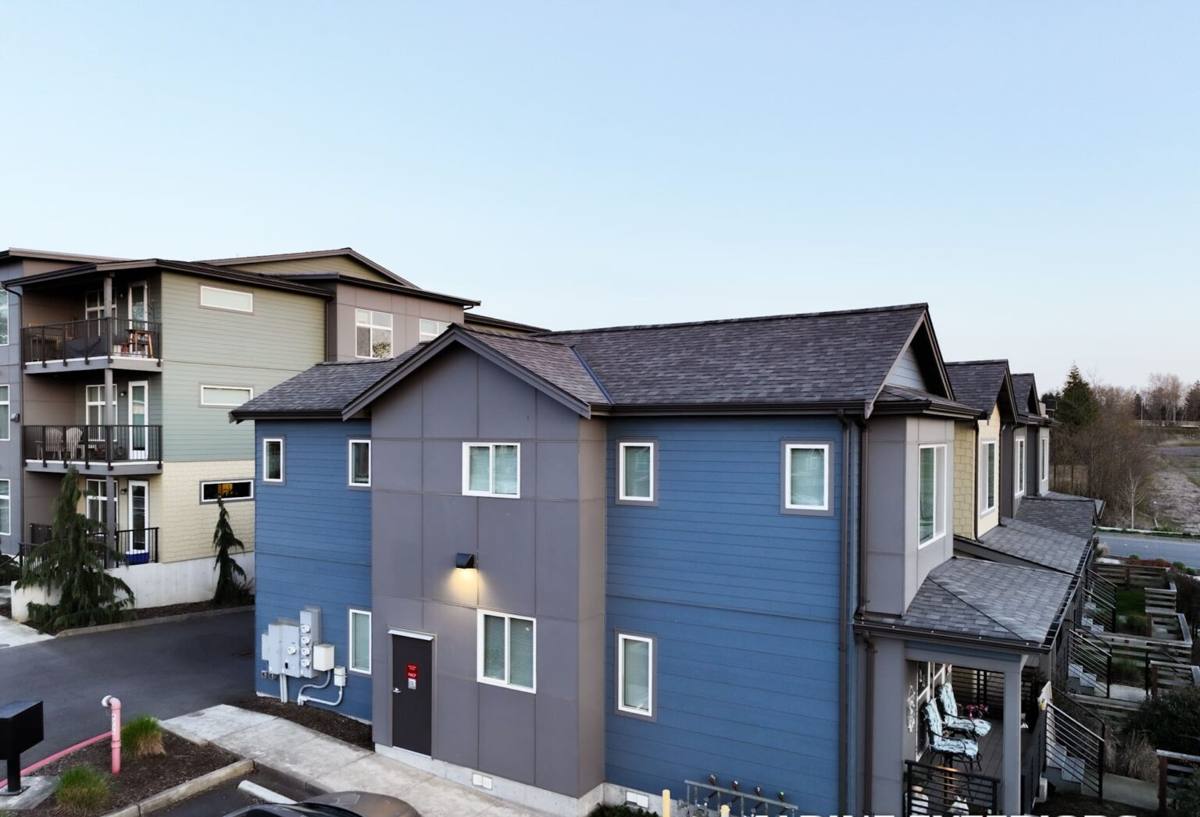
Signs a Yew Street Home Needs Replacement, Not Repair
Not every window problem calls for full replacement. But there's a point where re-caulking and hardware repair stop being cost-effective and start being a band-aid on a failing unit. Look for these signs before deciding which path makes sense:
- Fogging or a permanent haze between panes of double-pane glass — the seal has failed and can't be repaired
- Soft, spongy, or visibly rotted wood at the sill, jamb, or corners
- Windows that are difficult to open, close, or lock, even after cleaning and lubricating hardware
- Noticeable drafts or cold spots near the frame in winter
- Condensation forming on the inside of the glass regularly, not just on cold mornings
- Visible mold or persistent green staining on interior sills or exterior trim
- Single-pane glass still in place, especially on original construction from decades past
- A jump in heating costs that isn't explained by anything else in the home
If you're only seeing one or two of these, repair may still make sense. If several show up at once, it usually means the window's materials and seals have reached the end of their useful life together.
What a Correct Window Replacement Job Involves
Window replacement is one of those jobs that looks simple from the outside and isn't. A window that's installed quickly, without attention to what's happening behind the trim, will often leak within a few years — even if it looks fine from the street.
Removing the Old Window and Inspecting the Opening
Once the old unit comes out, the rough opening needs a real inspection — not a glance. This is where hidden rot from years of driving rain or moss-related moisture usually shows up. Any soft framing, damaged sheathing, or compromised weather barrier needs to be repaired before a new window goes in, not covered up.
Flashing and Weather Barrier Integration
This is the step that determines whether a window will actually keep water out over the next 20 years. Proper flashing tape and correct shingle-lap sequencing — so water sheds down and over each layer, never behind it — matter more to long-term performance than almost anything else in the job.
Insulation and Air Sealing
The gap between the new window frame and the rough opening needs to be sealed with the right low-expansion foam or backer rod and sealant — not stuffed with excess material that can bow the frame, and not left with gaps that let air and moisture through.
Trim, Caulking, and Exterior Finish
The final exterior detailing — trim, caulk joints, and paint or finish work — is what protects the seams long-term and what makes the finished job look like it belongs on the house, not like an add-on.
Choosing the Right Window Material for This Climate
There's no single "best" window material for every home — the right choice depends on your home's exposure, your budget, and how much upkeep you want to take on. Here's an honest comparison for a climate like Sudden Valley's:
| Frame Material | Moisture Resistance | Maintenance | Typical Cost |
|---|---|---|---|
| Vinyl | Very good — won't rot or corrode | Low; occasional cleaning | Lower |
| Fiberglass | Excellent; very stable in wet, variable climates | Low | Mid to higher |
| Wood-clad | Good on the exterior clad side; interior wood needs protection | Higher; periodic finishing | Higher |
| Aluminum | Prone to corrosion from salt-tinged air over time | Moderate to high | Varies |
We don't push wood-frame windows with an exposed exterior on homes here as a default recommendation — not because the material is bad, but because unprotected wood exposed to this much rain and shade needs more diligent upkeep than most homeowners want to commit to. Clad wood, vinyl, and fiberglass all shift more of that moisture-management burden onto the material itself rather than onto a repainting schedule.
Glass Packages Worth Considering
Beyond the frame, ask about double- versus triple-pane glass, low-E coatings, and gas fill (argon is standard on most quality double-pane units). For a home that gets driving rain and long gray stretches, a good low-E coating helps with both heat retention in winter and glare control, and it's a reasonable upgrade on most budgets.
Our Process for Yew Street Projects
Assessment and Measurement
We start with an on-site look at every window being considered — not just measurements, but a check of the surrounding trim, sill condition, and any signs of past water intrusion. This tells us whether we're looking at a straightforward insert replacement or a full-frame job that needs to address damaged framing underneath.
Product Selection
We walk through material and glass options based on the specific exposure of each window — a window on a shaded, rain-facing wall gets a different conversation than one on a sheltered, south-facing side of the house.
Installation Day
Old windows come out, openings get inspected and repaired as needed, new units go in plumb, level, and square, and flashing is integrated correctly with the existing weather barrier before any trim goes back on.
Cleanup and Final Walkthrough
We clean up debris and old materials, then walk the finished windows with you — checking operation, locks, and seals before we consider the job done.
What Affects the Cost of Window Replacement Here
Every home is different, but the same handful of factors drive most of the cost variation we see on jobs in and around Sudden Valley:
- Number and size of windows — larger openings and specialty shapes cost more than standard sizes
- Insert vs. full-frame replacement — full-frame costs more but is necessary when framing damage is found
- Frame material — vinyl is typically the most budget-friendly, fiberglass and clad wood run higher
- Glass package — triple-pane and upgraded low-E coatings add cost but improve comfort and efficiency
- Access and site conditions — second-story windows, tight lot access, or extensive landscaping to protect can add labor time
- Trim and siding repair — any rot found around the opening needs to be repaired as part of the job, not skipped
We give straightforward, itemized estimates so you can see what's driving the price on your specific home rather than a flat per-window number that hides what you're actually paying for.
Why Local Experience on Yew Street Matters
A crew that regularly works in Sudden Valley already understands the patterns particular to this area — which sides of a home in this kind of tree cover take the worst of the moss and moisture, how driving rain typically finds its way into older window openings, and what to expect once trim comes off a house of a certain age. That's not something you get from a crew that mostly works in drier or more exposed parts of Whatcom County.
Many homes in Sudden Valley are also part of a community association with its own guidelines on exterior changes. We're used to working within those kinds of requirements and can help you understand what, if anything, applies to your project before work starts — it's far easier to check up front than to deal with it after installation.
Maintenance Tips to Extend the Life of New Windows
A correctly installed window in a climate like this can last decades, but a little seasonal attention goes a long way:
- Rinse pollen, moss spores, and grime off frames and glass a couple of times a year, especially on shaded sides of the house
- Check exterior caulk lines annually for cracking or separation and have gaps resealed before winter rains set in
- Keep gutters and downspouts clear so water isn't sheeting down over window heads during heavy storms
- Trim back vegetation that keeps trim and sills shaded and damp for long stretches
- Lubricate hardware — locks, cranks, hinges — once a year to keep corrosion from setting in early
If your windows on Yew Street are showing their age, or you just want an honest opinion on whether repair or replacement makes more sense for your home, we're happy to take a look. Fill out the form below for a free, no-pressure estimate — we'll tell you what we actually see, not just what's easiest to sell.