 Sudden Valley Siding
 Why Yew Street Roofs Take a Beating Every Storm Season
Homes along Yew Street sit inside one of the wetter, wind-exposed pockets of Sudden Valley, and the roof is the first thing that pays for it. Whatcom County storms don't usually announce themselves with a single dramatic event — it's the steady accumulation of driving rain, gusting wind off the surrounding hills and lake basin, and long stretches of damp, low-sun weather that slowly work roofing materials loose. A shingle that lifts an eighth of an inch in October can be leaking by February.
Add in the salt-laden marine air that moves through this part of Washington and you get a slow corrosive effect on exposed metal flashing, nails, and fasteners that homeowners rarely think about until a leak shows up on a ceiling. None of this means Yew Street roofs are poorly built — it means they're doing hard, constant work against a climate that doesn't let up for long.
What Makes This Stretch Different From a Generic Storm Repair Job
A storm-damage repair on a Yew Street home isn't the same job as one three towns over on a drier, more sheltered lot. We're accounting for wind direction off the water, tree canopy that drops debris and holds moisture against the roof deck, and a moss season that can run eight or nine months out of the year. Repairs that don't account for those specifics tend to fail again within a year or two.
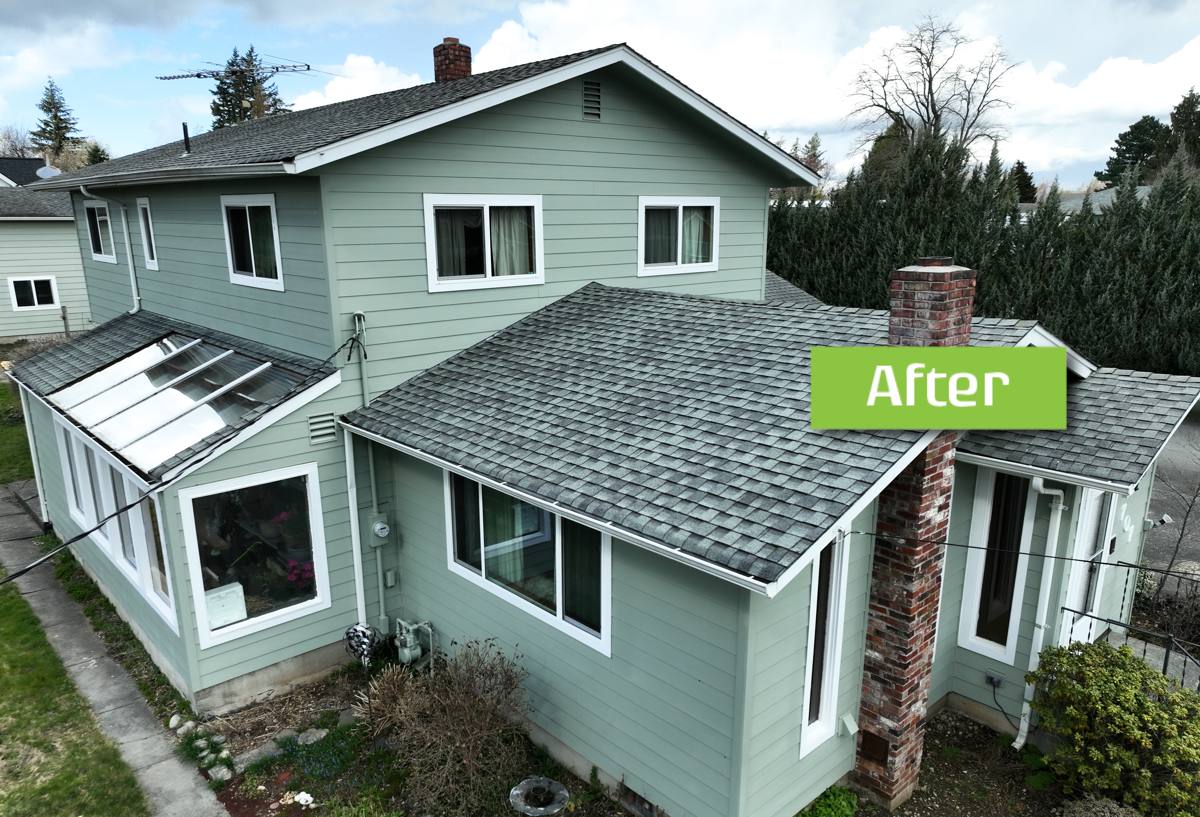
What Actually Counts as Storm Damage (and What Doesn't)
Not every roof problem after a storm is storm damage in the way insurance or a contractor would define it, and it's worth understanding the difference before you spend money.
- Wind damage: lifted, creased, or missing shingles, usually starting at ridges, edges, and corners where uplift is strongest.
- Impact damage: bruising or punctures from falling branches or wind-driven debris, common under mature tree cover.
- Water intrusion: staining, sagging decking, or active drips that show up during or right after heavy rain.
- Flashing failure: separated or corroded flashing around chimneys, vents, and valleys — often the real source of a "mystery leak."
- Pre-existing wear mistaken for storm damage: granule loss, brittle shingles, or moss undermining the surface — real problems, but not something a storm caused, and not always something insurance will cover.
We're upfront when we see the second kind. A roof that was already near the end of its service life didn't fail because of one storm; the storm just exposed what was already coming. Telling you that honestly up front saves you from a claim denial or a repair that doesn't hold.
Our Storm Damage Repair Process, Step by Step
1. Ground-Level and Roof-Surface Inspection
We start by walking the property and then the roof itself, documenting every area of concern — not just the spot you called about. Storm damage rarely stays in one place; wind uplift on one slope often means stress on the opposite slope too.
2. Photo Documentation
Every damaged area gets photographed before any repair begins. This protects you if you end up filing an insurance claim, and it gives us a clear record to reference if a related issue shows up later.
3. Written Scope and Honest Repair-vs-Replace Recommendation
You get a plain-English explanation of what's damaged, what's original wear, and what your realistic options are — patch repair, section replacement, or full re-roof — with the reasoning behind the recommendation, not just a number.
4. Repair Work
Shingles, flashing, underlayment, and decking are addressed in that order when needed — decking first if there's rot or soft spots, since anything installed over compromised decking will fail again regardless of the shingle quality on top.
5. Final Walkthrough and Weatherproofing Check
Before we call a job finished, we check that flashing laps correctly, fasteners are seated properly for wind resistance, and nothing was left exposed to the next round of rain.
Repair vs. Replace: How We Make the Call
This is the question every homeowner actually wants answered, and it depends on more than just the size of the damaged area.
| Factor | Points Toward Repair | Points Toward Replacement |
|---|---|---|
| Age of roof | Under 10-12 years | Approaching or past manufacturer's service life |
| Extent of damage | Isolated to one section or slope | Spread across multiple slopes or the whole roof |
| Decking condition | Solid, dry decking underneath | Soft spots, rot, or repeated past leaks |
| Shingle condition elsewhere | Rest of roof still flexible and granule-intact | Widespread granule loss or brittleness |
| Insurance scope | Claim covers a defined section | Adjuster approves full slope or full roof |
We'll tell you honestly which column your roof falls into. A repair that's cheaper today but ignores brittle shingles a few feet away just means another service call next storm season.
Materials We Use and Why
For storm repairs, matching materials matters as much as the workmanship. Mismatched shingle profiles or incompatible flashing metal are two of the most common reasons a "repaired" roof leaks again within a year.
Shingles
Where possible, we match existing shingle type, weight, and color family so the repair blends and performs consistently with the rest of the roof. When an exact match isn't available — common on older roofs — we'll explain your options rather than installing something visibly mismatched and calling it done.
Flashing
Given the marine-influenced air here, we favor corrosion-resistant flashing materials over lighter-gauge options that look fine going in but degrade faster in this climate. It costs a bit more upfront and holds up considerably longer around chimneys, valleys, and vent penetrations.
Underlayment
Synthetic underlayment is our standard for storm repairs in this area because of how much moisture it has to shed over a Whatcom County winter. It's a small line item in the overall repair cost, but it's the layer doing the real work if a shingle ever lifts again.
Insurance Claims: What Yew Street Homeowners Should Know
Many storm repairs on Yew Street homes go through homeowner's insurance, and a few things make that process smoother:
- Document damage as soon as it's safe to do so — photos from the ground are fine if the roof isn't safely accessible.
- Get an independent contractor assessment before or alongside the adjuster's visit; it gives you a second, unbiased set of eyes on the scope.
- Ask for a written, itemized estimate — adjusters and insurers respond better to specifics than a lump-sum number.
- Understand that cosmetic wear (moss staining, faded color) typically isn't covered even when it's on the same roof as storm damage.
We're not a public adjuster and we won't promise a claim outcome, but we'll give you a straightforward, well-documented scope of work that reflects what we actually find on your roof.
Moss, Algae, and Long-Term Roof Health in This Climate
A long moss season is one of the quieter threats to roofs in this part of Whatcom County. Moss holds moisture against the shingle surface far longer than open air would, and over time that moisture works its way under shingle edges — which is exactly where wind damage also likes to start. A roof with active moss growth is more vulnerable in the next storm, not just less attractive.
What We Recommend Between Storm Repairs
- Keep gutters and valleys clear of needles and debris, especially under tree cover — clogged channels back water up under shingles.
- Have moss treated (not pressure-washed, which can strip granules) rather than left to spread.
- Trim back branches that keep a roof section shaded and damp longer than the rest of the roof.
- Schedule a light inspection once a year, ideally after the wettest stretch of winter, so small issues get caught before a storm turns them into a leak.
Signs You Need a Roof Inspection After a Storm
You don't need to climb a ladder to check most of these. If any of the following are true after a windstorm or heavy rain event, it's worth a call:
- Granules collecting in gutters or at the base of downspouts
- Visible shingles in the yard or on the ground near the house
- New or worsening stains on interior ceilings, especially near chimneys or skylights
- Daylight visible through the attic roof deck
- Flashing that looks bent, lifted, or separated from the roofline
- A musty smell in the attic that wasn't there before
- Sagging in any section of the roofline
None of these guarantee major damage, but each one is worth a real inspection rather than a guess.
Why Hiring a Crew That Already Works Yew Street Matters
A contractor who already works this specific stretch of Sudden Valley knows the local wind patterns, which slopes tend to take the worst of a storm, and how the tree cover and lake-basin weather here differ from a roof twenty minutes away in flatter, drier terrain. That familiarity shows up in faster, more accurate inspections and repairs that are built for the conditions your roof actually faces — not a generic checklist. It also means we're not guessing at permitting or access when we show up; we've been in this neighborhood before and we'll be here again.
If a storm has left you with a leak, missing shingles, or just a nagging feeling something's not right up there, we're happy to take a look and give you a straight answer — repair, replace, or leave it alone for now. Reach out for a free, no-pressure estimate using the form below.