 Sudden Valley Siding
 Yew Street Roofs Deal With a Different Climate Than Most Shingle Warranties Assume
Asphalt shingle manufacturers write their installation specs and warranty terms for a national average climate. Yew Street, tucked into Sudden Valley along Lake Whatcom in Whatcom County, doesn't get a national average climate. It gets salt-tinged marine air drifting up from the Strait, long stretches of driving rain off the water, and a moss season that can run from fall through spring in shaded, tree-covered lots. A shingle roof installed to the letter of the manufacturer's minimum spec will survive here. A shingle roof installed with this specific street's exposure, tree cover, and rainfall pattern in mind will survive here and look better doing it for another ten to fifteen years.
This page is about that second kind of job — what it takes to install and maintain asphalt shingle roofing on Yew Street specifically, not asphalt shingles in general.
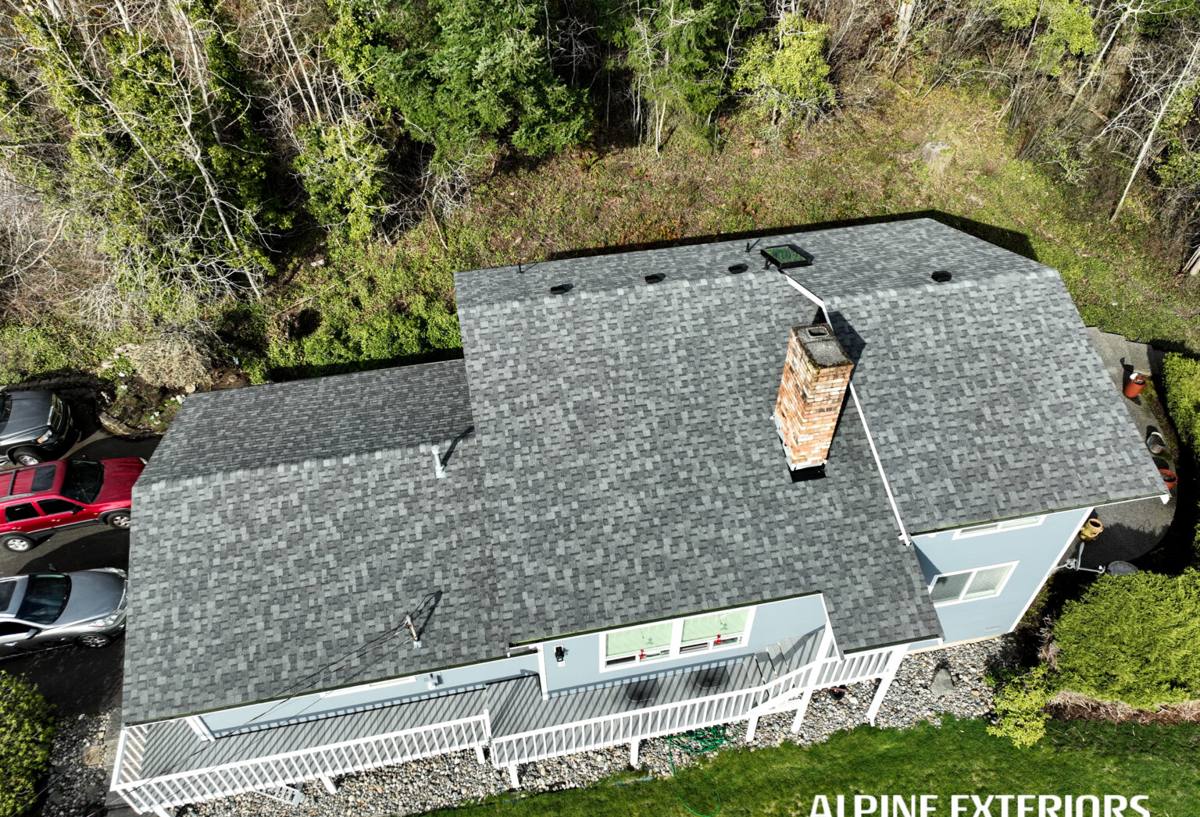
What Sudden Valley's Climate Actually Does to a Shingle Roof
Salt Air
Homes closer to Lake Whatcom and the broader marine airflow through Whatcom County see faster corrosion on exposed metal than homes further inland. On a shingle roof, that means the fasteners, flashing, and any exposed metal drip edge take the brunt of it. Cheap galvanized fasteners and thin flashing corrode faster in this air than they would in a dry inland county, and once a fastener starts to rust, the seal around it goes with it. This is a materials-selection problem more than an installation problem — it's solved by specifying corrosion-resistant fasteners and flashing up front, not by hoping the finish coat holds.
Driving Rain
Rain that comes in sideways off the water tests every lap, seam, and flashing detail on a roof in a way that straight-down rain doesn't. Valleys, roof-to-wall transitions, and anywhere a vent or chimney penetrates the shingle field are the points that fail first under wind-driven rain — not because the shingles themselves leak, but because water gets pushed sideways and up under a lap that would hold fine in calm weather. Underlayment choice and flashing detail matter more here than shingle brand.
The Long Moss Season
Shaded lots with mature tree cover — common through Sudden Valley — hold moisture on the roof surface longer after every rain. Moss and algae take root in that moisture, and once established, moss growth works shingle tabs up at the edges and holds water against the surface even during dry stretches. It's a slow process, which is exactly why it gets ignored until a homeowner notices a soft, spongy patch or a leak that traces back to a spot that's been damp under a moss mat for two or three years.
What a Correct Asphalt Shingle Installation Actually Involves
"New roof" covers a wide range of workmanship. A correct installation for this street includes all of the following — skipping any one of them is where roofs on marine, rain-heavy sites start failing early:
- Full tear-off to the decking, not a layover, so the deck can actually be inspected and any soft or delaminated plywood replaced before it's covered up
- Synthetic underlayment rather than felt, since synthetic holds up better through the wet install windows this climate forces on a crew
- Ice-and-water shield membrane at eaves, valleys, and around every penetration — the spots where wind-driven rain and moss-trapped moisture do the most damage
- Corrosion-resistant drip edge and flashing, given the salt content in the air here
- Proper nailing pattern and nail placement per manufacturer spec — this is what the warranty actually depends on, more than shingle brand
- Balanced attic ventilation (intake at the eaves, exhaust at the ridge) so moisture from inside the house isn't adding to what the roof is already fighting from outside
- Flashing details at chimneys, plumbing vents, and roof-to-wall transitions built up in layers, not caulked over as an afterthought
None of this is exotic. It's the difference between a roof installed to pass and a roof installed to last through everything Whatcom County weather does to it over fifteen or twenty years.
Choosing a Shingle for a Yew Street Home
Shingle lines are generally sold in three tiers. The right choice depends on how much tree cover and shade the specific lot has, since that drives moss and algae exposure more than anything else.
| Shingle Tier | Algae/Moss Resistance | Typical Lifespan | Best Fit |
|---|---|---|---|
| Standard 3-tab | Basic — no built-in algae resistance unless specified | 15–20 years | Open, sunnier lots with less tree shading |
| Architectural / laminate | Often available with algae-resistant granules | 25–30 years | Most Yew Street homes; better wind rating in driving rain |
| Premium designer laminate | Algae-resistant granules standard on most lines | 30+ years | Heavily shaded, moss-prone lots or homes prioritizing longevity |
Algae-resistant (often labeled "AR") granules contain copper or zinc compounds that slow algae and moss growth on the shingle surface. On a shaded, damp lot they're worth the modest upcharge; on an open, sun-exposed roof the difference matters less. We'll walk the specific lot with you and make a real recommendation rather than defaulting to whatever's easiest to sell.
Our Process for a Yew Street Roofing Project
- On-site inspection. We walk the roof, check the attic for ventilation and moisture signs, and look at how the specific tree cover and drainage on the lot has treated the current roof.
- Written estimate. A clear scope — tear-off, decking allowance, underlayment, flashing, shingle tier, ventilation work — with an honest range, not a lowball number that grows once the tear-off starts.
- Material selection. We go over shingle tier and color together, weighing this lot's actual shade and moisture exposure against cost.
- Scheduling around the weather. Roofing needs a dry window to go in correctly. We plan around Whatcom County's rain patterns rather than rushing a job into a wet forecast.
- Install day. Tear-off, decking inspection and repair, underlayment, flashing, shingles, ridge venting — done in the sequence and to the nailing spec that keeps the manufacturer warranty intact.
- Cleanup and magnetic nail sweep. Every job site gets swept for stray fasteners before we call it done.
- Final walkthrough and paperwork. We go over the finished roof with you and hand over warranty documentation in writing.
Signs a Yew Street Roof Needs Attention Now
- Moss visibly growing on the shingle surface, especially on north-facing or shaded slopes
- Granules collecting in gutters or at downspout outlets
- Shingle tabs curling, cupping, or lifting at the edges
- Cracked or missing shingles after a windstorm
- Daylight visible through the roof deck from inside the attic
- Soft or spongy spots underfoot when walking the roofline (viewed from a ladder, not walked on directly)
- Staining on interior ceilings or walls, especially near chimneys or plumbing vents
- Flashing that looks rusted, lifted, or separated from the roof-to-wall line
Any one of these on its own might not mean an emergency. Several together, especially combined with visible moss, usually means the roof is past the point where a patch is the honest answer.
Keeping Moss Off a Shingle Roof Between Installs
Moss prevention on an existing roof is mostly about limiting how long the surface stays wet. Trimming back overhanging branches to let more light and airflow reach the roof helps more than any product applied after the fact. Keeping gutters clear so water isn't backing up under the shingle edge matters just as much. Zinc or copper strips installed near the ridge can help suppress new moss growth over time as rainwater carries trace metal down the roof slope. What we don't recommend is pressure-washing moss off an aging shingle roof — it strips granules along with the moss and shortens the shingles' remaining life rather than extending it. A soft-wash approach or careful hand removal is the safer route on an older roof.
Why It Matters That We Already Work This Street
A roof installed by a crew that's worked other homes on Yew Street already knows the tree cover, the typical roof pitches, and how the weather off Lake Whatcom actually behaves on this specific stretch — not just what a regional average would suggest. That's not a marketing point, it's a practical one: it means fewer surprises during tear-off, a materials list built around what actually holds up here, and a crew that's already accountable to neighbors who can tell you how the last job went. We stand behind our workmanship with a clear written warranty, and we're not going anywhere after the last shingle goes down.
What Affects the Cost of an Asphalt Shingle Roof Here
| Cost Factor | Why It Matters |
|---|---|
| Roof pitch and access | Steeper roofs and difficult access take more labor time and safety setup |
| Number of existing layers | Tear-off of multiple old layers costs more than a single-layer tear-off |
| Decking condition | Rot or delamination found under old shingles adds material and labor to replace it |
| Shingle tier chosen | Standard, architectural, and premium lines carry different material costs |
| Ventilation upgrades | Adding proper ridge and intake venting where none existed adds scope but pays off in shingle lifespan |
| Flashing and detail work | Chimneys, multiple vents, and valleys add labor time regardless of shingle choice |
We won't quote a number without seeing the roof, but we'll break down exactly what's driving the price on your specific estimate — no vague lump sum with no explanation behind it.
If your Yew Street roof is showing moss, missing granules, or you're just due for a straight answer on its condition, we'll come take a look and put together a free, no-pressure estimate — use the form below to get started.