 Sudden Valley Siding
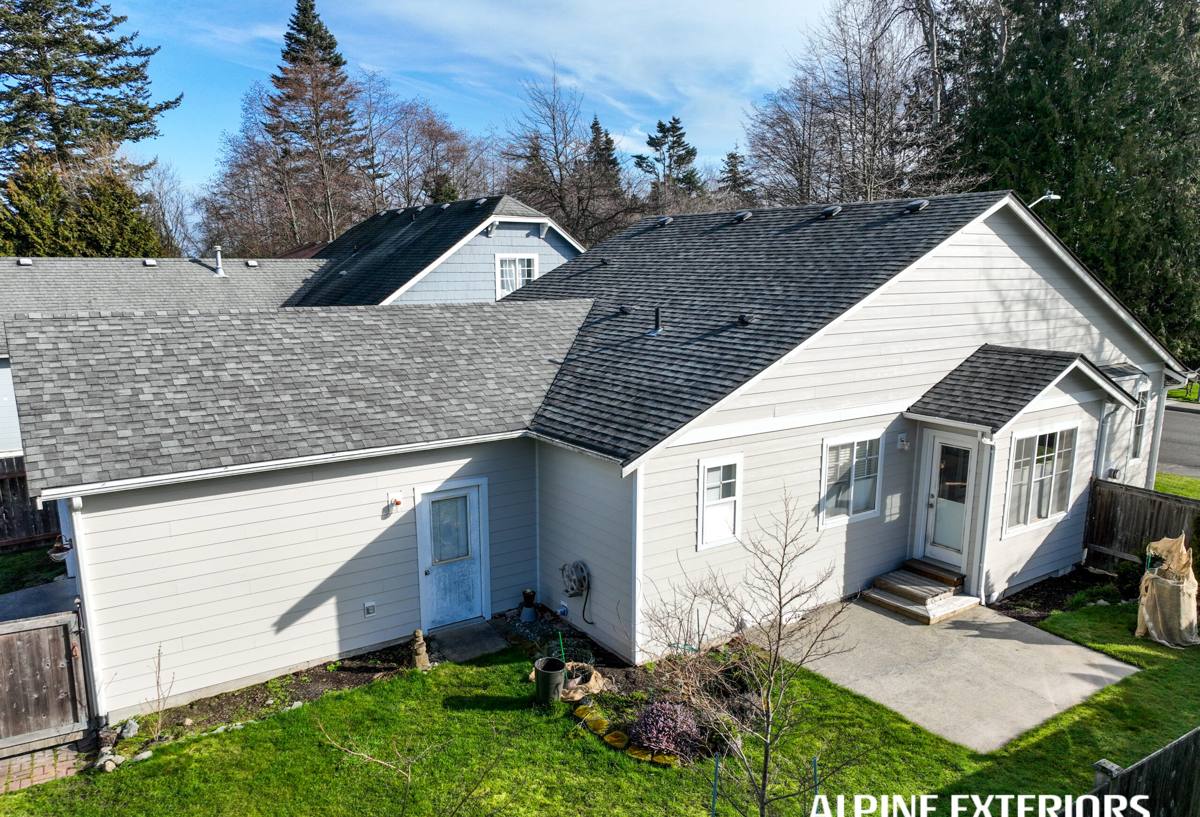
 Asphalt Shingle Roofing Built for Deming's Weather
Deming sits in a part of Whatcom County that gets hit from two directions: wet, wind-driven storms rolling off the Pacific and Puget Sound, and the deep, wooded shade that comes with living along the Nooksack valley. That combination is hard on a roof. Homes here don't just deal with rain — they deal with rain that gets pushed sideways under shingle tabs, and they deal with moss and moisture that never fully dry out because the tree cover blocks the sun for a big part of the day. An asphalt shingle roof that's installed correctly for this specific environment will outlast one that was installed the same way you'd install it in a drier, more open part of the state.
We work on homes throughout the Sudden Valley and greater Whatcom County area, and Deming's roofs get a specific kind of attention from us because of that tree cover and moisture load. This page covers what that actually means in practice — not generic shingle talk, but what we look at, what we install, and why, for houses in this area.
What Deming's Climate Actually Does to a Shingle Roof
Moss and Organic Growth
Whatcom County's moss season isn't a two-month event — on shaded, north-facing roof slopes it can be close to year-round. Moss holds moisture against the shingle surface, works its way under tab edges, and lifts granules as it grows. Once granules are gone, the asphalt mat underneath is exposed to UV and water directly, and that's when a roof starts failing from the inside of the shingle rather than the outside.
Driving Rain and Wind-Driven Water
Storms coming through this area frequently carry enough wind to push rain sideways and up under shingle tabs and flashing edges, rather than just letting it run straight down and off. A roof that relies only on the shingle's face to keep water out — without solid underlayment and properly lapped flashing — will eventually leak at those pressure points, usually around valleys, chimneys, and roof-to-wall transitions.
Salt Air and Metal Component Wear
Deming is inland compared to the coast, but Whatcom County as a whole still sees salt-laden air move through, and it accelerates corrosion on exposed metal — nail heads, flashing, vent stacks, and gutter hardware. Under-spec or poorly coated fasteners and flashing show rust and failure well before the shingles themselves are due for replacement.
Temperature Swings and Freeze-Thaw
Whatcom County winters bring enough freeze-thaw cycling that trapped moisture becomes a real problem. Water that gets under a shingle or into a deck seam and then freezes expands, and that's a common way small leaks turn into structural rot over a single winter.
What a Correctly Installed Shingle Roof Needs Here
A shingle roof is a system, not just a layer of shingles. In an area like Deming, every layer of that system earns its keep. Here's what we consider non-negotiable for local homes:
| Component | Why It Matters in Deming |
|---|---|
| Ice-and-water shield at eaves, valleys, and penetrations | Stops wind-driven and backed-up water from reaching the deck at the roof's most vulnerable points |
| Synthetic underlayment (full roof) | Sheds moisture that gets past the shingle layer during long wet stretches and holds up better than felt under repeated damp cycles |
| Corrosion-resistant flashing and fasteners | Resists the accelerated rust that salt-influenced air causes on exposed metal |
| Proper ridge and soffit ventilation | Keeps the attic dry and temperature-balanced, which slows moss regrowth and prevents ice damming |
| Algae-resistant (AR) shingles | Copper- or zinc-infused granules that actively slow moss and algae growth on shaded slopes |
| Correct nailing pattern and placement | Under-driven or misplaced nails are one of the most common causes of early wind and leak failure |
Skipping any one of these doesn't usually show up as a problem in year one. It shows up in year five or six, as a leak that seems to come from nowhere or a shingle field that's lifting at the tabs. Most of the roofs we get called out to repair in wooded, moss-heavy areas trace back to one of these shortcuts.
Choosing the Right Shingle Product for a Shaded, Wet Lot
Not every asphalt shingle is built the same, and for a property with heavy tree cover, that difference matters more than it does on an open, sunny lot.
Algae-Resistant (AR) Shingles
These use copper or zinc granules blended into the shingle surface. As rain runs across them, trace amounts of that metal discourage algae and moss growth. On a shaded Deming roof, this is the single highest-value upgrade available at the shingle level — it doesn't stop moss forever, but it meaningfully slows it down compared to a standard shingle.
Architectural (Laminate) vs. 3-Tab
Architectural shingles are thicker, heavier, and have a stronger wind rating than 3-tab shingles. In a wind-and-rain-driven climate, that extra mass and the layered design help the shingle stay sealed at the tab and resist the lifting that lets water underneath in the first place. We steer most Deming homeowners toward architectural product for that reason — it's a straightforward cost-to-durability trade-off, not a cosmetic upgrade.
Impact and Wind Ratings
Look for a Class 3 or 4 impact rating and a wind rating that matches or exceeds what's typical for this part of Whatcom County. Manufacturers publish these ratings, and they're a fair, apples-to-apples way to compare products beyond just price and color.
Our Process for a Deming Shingle Roof
- On-site inspection: We walk the roof (weather permitting) and check the attic from inside, looking at deck condition, existing ventilation, moss patterns, and flashing points.
- Written scope and estimate: You get a clear breakdown of tear-off, deck repair (if needed), underlayment, flashing, shingle product, and ventilation work — no vague line items.
- Tear-off and deck check: Old roofing comes off down to the deck so we can actually see the wood, not guess at its condition from above.
- Deck repair as needed: Any soft, rotted, or delaminated sheathing gets replaced before anything new goes down — installing over a bad deck just hides the problem.
- Underlayment and flashing installation: Ice-and-water membrane at vulnerable points, synthetic underlayment across the field, and new flashing at all transitions.
- Shingle installation: Installed to manufacturer spec for nail placement, exposure, and pattern — this is where most warranty claims get denied when it's skipped.
- Ventilation check and adjustment: We confirm intake and exhaust venting are balanced so the attic isn't trapping moisture.
- Final walkthrough and cleanup: Site cleared of debris, magnet-swept for stray nails, and we walk the finished roof with you.
Maintenance That Actually Extends a Deming Roof's Life
Even a well-installed roof benefits from basic upkeep in this climate. Homeowners who stay on top of these items tend to get noticeably more years out of the same roof:
- Have gutters cleared at least twice a year — clogged gutters back water up under the eave line
- Get moss physically removed (not just chemically treated) from shaded slopes every year or two
- Trim back overhanging branches to reduce shade, debris buildup, and physical abrasion on the shingle surface
- Check attic ventilation isn't blocked by insulation or storage that's crept over soffit vents
- Have a professional look at flashing around chimneys, skylights, and vent stacks every few years
- Address small leaks immediately — a stain on the ceiling means water has already been getting in for a while
Cost Factors for a Deming Shingle Roof
Every roof is different, but the same handful of variables drive most of the cost difference between jobs in this area:
| Factor | How It Affects Cost |
|---|---|
| Roof size and number of planes | More square footage and more valleys/hips mean more material and labor |
| Deck condition | Rotted or soft sheathing found during tear-off adds repair cost not visible from the ground |
| Pitch and access | Steeper roofs and difficult access (tree cover, tight lot) slow the work and add safety requirements |
| Shingle tier chosen | Standard 3-tab, standard architectural, and AR/impact-rated architectural shingles each carry different material costs |
| Ventilation and flashing scope | Adding or upgrading ridge vents, soffit vents, or full flashing replacement adds labor and material |
| Layers of existing roofing | Multiple old layers mean more tear-off labor and disposal |
We won't quote a roof over the phone without seeing it — too many of these factors only show up on-site or once tear-off starts. What we will do is give you an honest, itemized estimate before any work begins, so you know exactly what you're paying for and why.
Why a Crew That Already Works Deming Matters
A roofing crew that's worked other jobs in this same stretch of Whatcom County already knows which slopes on a typical Deming lot hold shade and moisture longest, what ventilation setups tend to be underbuilt in older homes here, and how wind and rain actually move across a roof in this specific terrain — not just in the Pacific Northwest broadly. That local pattern recognition shows up in small decisions: where we add extra ice-and-water coverage, which shingle line we recommend for a heavily shaded lot versus an open one, and how we sequence work around this area's wetter stretches of the year. It's the difference between a roof that's technically up to code and one that's actually built for where it sits.
Get a Free, No-Pressure Estimate
If your Deming home needs a new shingle roof, a repair, or you just want an honest opinion on what's left in the one you've got, we're happy to take a look. Fill out the form below and we'll set up a time to come out, inspect the roof, and give you a straightforward, written estimate — no pressure, no games.