 Sudden Valley Siding
 Barkley Decks Face a Different Kind of Wear
A deck in Barkley doesn't fail the way a deck fails in a dry climate. Out here, the problem almost never shows up as one dramatic event — it shows up slowly, as a soft spot near a ledger board, a green film on the north-facing stair treads, or fasteners that have started to weep rust down the face boards. Between the salt-tinged air drifting in off the water, the long stretches of driving rain that come sideways under eaves and railings, and a moss season that can run from October well into April, a deck here is under load almost every day of the year, not just during a storm.
That's the lens we build through. A deck that would hold up fine in a drier part of the state can start showing problems in Barkley within a couple of seasons if it wasn't detailed for this climate specifically. The framing, the flashing, the fastener choice, and even the gap spacing between boards all need to account for near-constant moisture cycling — wet, then damp, then wet again — rather than the occasional soaking.
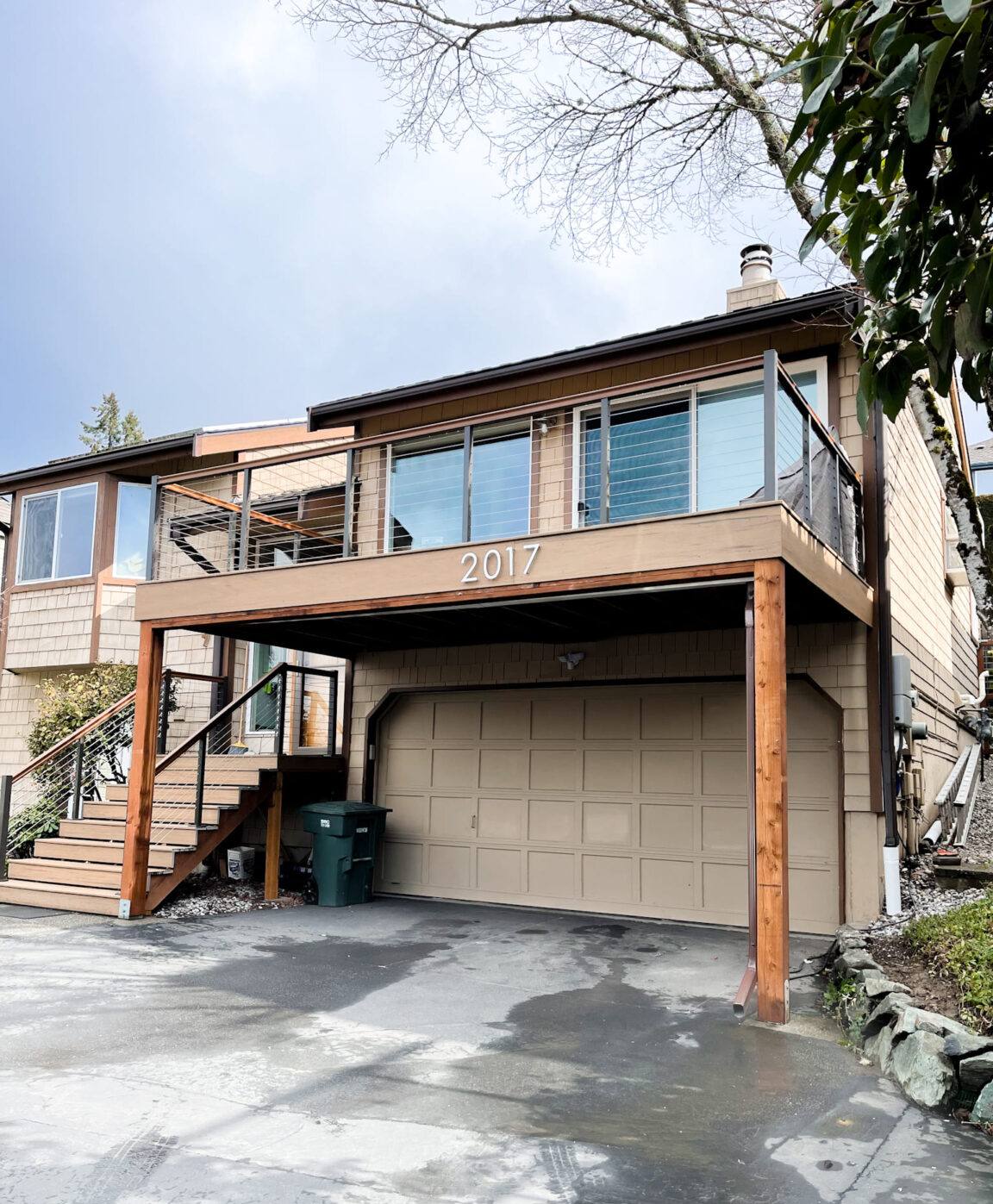
What "Built Correctly" Means Here
Moisture Management Comes First
Every deck we build starts with the assumption that water will reach the structure — through rain driven at an angle, through condensation under the decking, through splashback off the ground. The job isn't to pretend that won't happen; it's to give that water a clear path away from wood and fasteners. That means proper ledger board flashing where the deck ties into the house, self-adhering joist tape on the tops of framing members, and enough slope and gap in the decking itself to let water shed rather than pool.
Salt-Air-Appropriate Hardware
Standard hardware corrodes faster this close to the water. We use hot-dip galvanized or stainless fasteners and structural connectors rated for coastal exposure, not the cheapest code-minimum hardware a big-box store stocks. It costs a little more up front. It's a lot cheaper than reframing a deck in eight years because the joist hangers rusted through.
Ventilation Under the Deck
Low decks and decks built close to grade are the ones we see moss and rot problems on first, because airflow underneath is choked off. Where we can, we build in enough clearance and skirting ventilation to let the underside of the deck actually dry out between rain events instead of staying damp for weeks at a stretch.
Choosing the Right Decking Material for This Climate
There's no single "best" decking material — there's a best material for how a specific homeowner wants to use and maintain the deck. Here's how the common options actually perform in Whatcom County's wet, mossy conditions, honestly, including the trade-offs.
| Material | How it handles moisture & moss | Maintenance reality | Rough lifespan here |
|---|---|---|---|
| Pressure-treated wood | Sheds water fine if sealed and gapped correctly; grain can trap moss in shaded areas | Needs re-staining/sealing every 2-3 years to keep performing | 15-20 years with upkeep |
| Cedar | Naturally rot-resistant but still needs airflow and drainage; can gray and hold moss if neglected | Oiling or staining recommended; more forgiving than PT if left bare | 15-25 years with care |
| Composite decking | Doesn't rot, but capped composites can still grow surface moss/algae in constant shade and damp | Periodic cleaning with the right products; no staining or sealing | 25-30 years |
| PVC decking | Fully synthetic, sheds water well, resists moss better than most composites | Lowest maintenance of the group; occasional wash-down | 25-30+ years |
We install all of these. Which one makes sense depends on budget, how much shade the deck sits in, and how much upkeep a homeowner actually wants to do. A deck tucked under trees on a north-facing lot is a different conversation than one that gets sun most of the day — moss pressure alone can swing that decision.
The Details Most Deck Jobs Skip
Framing and decking are the visible part of the job. The parts that actually determine whether a deck is still solid in fifteen years are mostly hidden once the project is done:
- Ledger board flashing that actually sheds water away from the house rim joist, not just a bead of caulk
- Joist tape or membrane on top of every framing member the decking sits on
- Post bases set above grade and away from standing water, not buried in soil or mulch
- Stainless or hot-dip galvanized fasteners throughout, including hidden fastener systems where used
- Proper board gapping for drainage and seasonal wood movement
- Stair stringers and ledger connections sized to current code, not just "what was there before"
- Skirting with enough ventilation gaps to let the underside breathe
Skip any one of these and the deck can still look fine for a few years. It's the combination that determines whether it's still sound — not soft, not rusting, not growing moss through the boards — a decade out.
Our Process, Start to Finish
1. On-Site Walkthrough and Honest Assessment
We look at sun exposure, drainage on the lot, how the deck ties into the house, and what's actually feasible for the site — not just what looks good in a brochure. If a homeowner asks for a low-to-grade deck in a shaded, poorly-drained spot, we'll say so plainly and talk through what that means for moss and maintenance down the road.
2. Design and Material Selection
We go through decking material, railing style, and framing layout together, with real trade-offs on cost, maintenance, and lifespan — not a sales pitch toward the highest-margin product.
3. Permitting
Most deck construction in this area requires a building permit, and elevated decks almost always require guardrails and stair specifications to meet current code. We handle the permit process and build to the approved plan, not around it.
4. Construction
Footings, framing, flashing, and decking, in that order, with inspections at the points the jurisdiction requires. We don't cover up ledger or framing work before it's been checked.
5. Final Walkthrough
We walk the finished deck with the homeowner, point out what maintenance (if any) the chosen material needs, and make sure drainage and railings are exactly as expected before we call it done.
Permits, Guardrails, and Local Requirements
Deck projects in Whatcom County generally require a building permit once the structure exceeds a certain height or size, and any deck more than a modest distance above grade needs code-compliant guardrails and stair geometry. Requirements can vary by exact jurisdiction and lot, so we confirm specifics for each address rather than assuming last year's rules still apply. What doesn't change is the baseline: a deck attached to a house needs a properly engineered ledger connection, and any elevated structure needs guardrails sized and spaced to current code — not "close enough."
Living With a Deck in a Long Moss Season
Moss doesn't mean a deck was built badly — it means the deck is doing what decks do in this climate, and it needs occasional attention to stay ahead of it. A little seasonal upkeep goes a long way toward protecting the investment:
- Sweep debris off the deck surface before fall rains set in, especially leaves and needles that trap moisture
- Rinse or lightly scrub moss and algae off the surface at the start of spring, before it gets a foothold
- Check that gaps between boards haven't filled with debris that blocks drainage
- Re-oil or re-stain wood decking on the schedule the product calls for, not just when it looks faded
- Keep gutters and downspouts near the deck clear so runoff isn't dumping extra water onto or under it
- Look under the deck once a year for any signs of standing water, soft framing, or rust streaking at fasteners
None of this is complicated, but skipping it for a few years in a row is how a fifteen-year deck turns into an eight-year deck.
Why a Crew That Already Works Barkley Matters
Building a deck that holds up here isn't about a different set of tools — it's about knowing which details actually matter in this specific climate and not treating this build like it's happening somewhere dry. A crew that works Barkley regularly already knows which lots drain poorly, which exposures collect moss fastest, and which fastener and flashing choices are worth the extra cost versus which upgrades are just upsells. That local pattern recognition is the difference between a deck that's still tight and solid in year twelve and one that needs early repairs because it was built to a generic spec sheet instead of to the conditions actually on the ground here.
If you're planning a new deck or replacing one that's past its prime, we're happy to take a look and give you a straight answer on what it needs. There's no cost and no pressure for an estimate — just a clear picture of what the job actually involves and what it'll take to build it right for this climate.