 Sudden Valley Siding
 Bellingham's Climate Puts Real Demands on Exterior Siding
Bellingham sits right where Puget Sound moisture, marine salt air, and long stretches of overcast, wet weather all meet. That combination is tough on building exteriors in ways that homeowners in drier parts of the country never have to think about. Wood-based siding products absorb moisture and swell, paint fails early, and anything with exposed metal fasteners is at risk of corrosion from the salt-laden air rolling off the water. On top of that, Whatcom County's long, mild, wet winters create ideal conditions for moss and algae to take hold on north-facing walls and anywhere sunlight doesn't reach for months at a time.
None of this means siding is doomed to fail here — it means the material and the installation both have to be matched to the environment. That's the whole reason we standardized on James Hardie fiber cement rather than offering a menu of siding options. This page walks through what Bellingham homes specifically need from their siding, what a correct James Hardie installation looks like in this climate, and how our process is built around it.
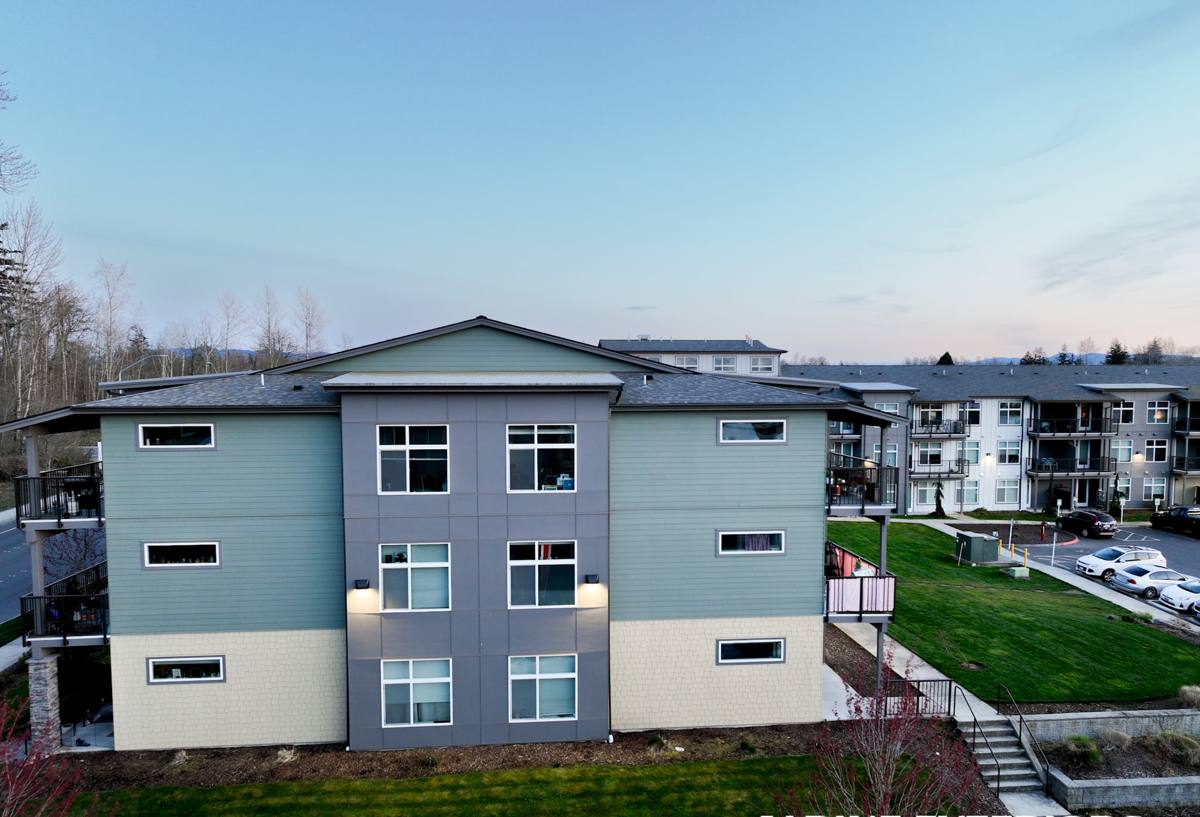
Why Fiber Cement Handles This Environment Better
James Hardie siding is made from cement, sand, and cellulose fiber — an inorganic material that doesn't absorb and release moisture the way wood or wood-composite products do. That matters a great deal in a climate where the siding might be damp for weeks at a stretch during the fall and winter rains. Fiber cement doesn't swell, warp, or rot from that exposure, and it's non-combustible, which is a genuine advantage regardless of climate.
James Hardie also engineers specific product formulations for different climate zones through what it calls its HZ5 and HZ10 systems. Homes in the Pacific Northwest fall into the wetter, more humid HZ5/HZ10 category, and the panels made for this zone are formulated to resist moisture-related damage better than the standard formulation sold in drier regions. Specifying the correct zone product is a basic, non-negotiable part of doing this job right in Bellingham — it's not an upgrade, it's the baseline.
ColorPlus Finish and Salt Air
Standard field-painted siding is only as good as the paint job on top of it, and paint applied outdoors, on site, in variable weather rarely performs as well as a factory-cured finish. James Hardie's ColorPlus technology bakes a color coat onto the board under controlled conditions before it ever reaches the site, which gives it better adhesion and more consistent UV and moisture resistance than field painting. In a coastal-influenced climate where salt air and driving rain accelerate finish breakdown, that head start matters — homeowners see less fading and less touch-up work over the life of the siding.
What a Correct Installation Actually Involves
The product itself is only half the equation. James Hardie siding that's installed incorrectly can still trap moisture, fail at the seams, or void the manufacturer's warranty — and installation mistakes are far more common than most homeowners realize, because siding can look fine from the ground for a year or two before problems surface. In a climate that gives siding as much sustained moisture exposure as Bellingham does, the details below aren't optional extras; they're what determines whether the wall assembly behind the siding stays dry.
- Correct clearance between the siding's bottom edge and roofing, decks, and grade, so water isn't wicking up into the panel
- Weather-resistant barrier and flashing installed and lapped correctly at every window, door, and penetration before the first board goes up
- Proper fastener type, spacing, and depth — over-driven or corrosion-prone fasteners are one of the most common causes of early failure
- Correctly sized gaps and sealant at butt joints and trim, following James Hardie's published installation instructions rather than generic siding practice
- Rainscreen or drainage plane detailing where the wall assembly calls for it, so incidental moisture behind the siding has somewhere to go
- Field-cut edges properly sealed, since an unsealed cut edge is a direct path for moisture into the board
James Hardie's transferable warranty is conditioned on installation following the manufacturer's guidelines. A crew that treats those guidelines as the floor, not a suggestion, is protecting both the performance of the siding and the homeowner's ability to rely on that warranty later.
Where We See Problems on Existing Bellingham Homes
Working in this area consistently, a few patterns show up more often than others:
- Moss and algae staining on shaded, north- and east-facing walls that hold moisture longer through the wet season
- Corroded or rust-streaking fasteners on older siding installations, especially closer to the water, where salt-laden air accelerates metal corrosion
- Caulk failure and gapping at trim and butt joints from years of wet-dry cycling, letting water behind the siding
- Paint failure on wood and older composite siding well before the manufacturer's expected lifespan, driven by sustained damp exposure
- Hidden moisture damage discovered only when siding is removed, where flashing was missing or misdirected water into the wall years earlier
Most of these issues trace back to either the wrong material for the climate or installation shortcuts that don't show themselves until years later. Both are avoidable with the right product and the right process from the start.
James Hardie Product Lines: Matching the Style to the Home
James Hardie makes several siding profiles, and the right one depends on the home's architecture as much as the climate. All of them share the same fiber cement core and ColorPlus finish options.
| Product | Look | Best suited for |
|---|---|---|
| HardiePlank lap siding | Traditional horizontal lap, smooth or woodgrain texture | The large majority of Bellingham homes — Craftsman, farmhouse, and traditional Pacific Northwest styles |
| HardieShingle siding | Staggered or straight-edge shingle profile | Homes wanting a cedar-shingle look without the moisture and maintenance concerns of real cedar |
| HardiePanel vertical siding | Smooth or textured vertical panels | Modern builds, gable accents, and mixed-material facades |
| HardieTrim boards | Smooth or woodgrain trim stock | Corners, window and door surrounds, fascia — paired with any of the above |
For most Bellingham projects, we recommend HardiePlank in the HZ5 formulation as the primary field siding, with HardieTrim for corners and openings so the whole exterior is fiber cement rather than mixing in a different trim material that will age and weather differently.
Our Process for a Bellingham James Hardie Project
The process is the same discipline every time, adjusted for the specific house:
- On-site assessment — checking the existing siding, sheathing, and any signs of moisture intrusion before quoting the job, not after tearing into the wall
- Tear-off and inspection — removing old siding down to the sheathing and addressing any rot, damaged flashing, or trapped moisture found underneath
- Weather barrier and flashing — installing or repairing the water-resistive barrier and flashing at every penetration before any new siding is hung
- Installation to manufacturer spec — correct clearances, fastening, and joint treatment using James Hardie's published guidelines for the HZ5 zone
- Trim, caulking, and finish detailing — the visible finish work that determines both appearance and long-term water management
- Final walkthrough and warranty registration — documenting the installation so the manufacturer's transferable warranty is properly in place
We schedule around the wetter months where we can, since siding installed and sealed during a dry window has a better shot at performing well from day one — though Bellingham's weather rarely offers a fully dry season, so managing moisture during the install itself is part of the job, not an excuse to cut corners.
What Affects Cost
Every home is different, but the same factors drive most of the variation in a James Hardie project's cost:
| Factor | Why it matters |
|---|---|
| Home size and wall complexity | More square footage and more corners, gables, and cutouts increase material and labor time |
| Tear-off and substrate repair | Rotted sheathing or damaged framing found during tear-off adds cost but shouldn't be skipped |
| Siding profile chosen | Plank, shingle, and panel styles differ in material and labor requirements |
| Trim and accessory scope | Full HardieTrim corners and surrounds cost more up front than mixing in other trim materials, but age consistently with the field siding |
| Access and site conditions | Steep lots, limited access, or multiple stories affect labor time and equipment needs |
As a broad range, full siding replacement with James Hardie typically runs from the low teens to the low twenties per square foot installed, though every home needs its own on-site quote — this is not a number you should rely on for budgeting without a walkthrough.
Why a Crew That Already Works This Area Matters
Installation quality is the biggest variable in how well any siding performs, and that's especially true in a climate that punishes shortcuts. A crew that regularly works Bellingham and the surrounding Whatcom County area already knows which walls take the worst weather exposure, how much clearance local drainage and grading conditions actually require, and how to sequence a job around the region's wet stretches instead of fighting them. That local pattern-recognition doesn't replace following the manufacturer's installation guidelines — it's what makes following them well, on this specific house, second nature rather than a checklist read for the first time on site.
It also means a shorter learning curve on local permitting and inspection expectations, and a crew that isn't guessing at how a given detail will hold up through a Bellingham winter because they've already seen how similar details performed on homes down the street.
Living With James Hardie Siding in a Wet, Mossy Climate
Correctly installed James Hardie siding is low-maintenance, not no-maintenance. A few habits go a long way here:
- Rinse siding periodically, especially on shaded north- and east-facing walls where moss and algae take hold fastest
- Keep gutters clear so overflow isn't running down the siding face during heavy rain events
- Trim back vegetation and tree cover that keeps a wall damp and shaded longer than the rest of the house
- Inspect caulking at trim and joints every couple of years and have gaps resealed before they let water behind the siding
- Avoid pressure washing directly into joints and edges — a garden hose and soft brush are enough for routine cleaning
None of this is burdensome, but skipping it in a climate this wet lets small issues turn into bigger ones faster than they would somewhere drier.
If you're weighing a siding project on a Bellingham home, we're happy to take a look and talk through what your house actually needs — no pressure, no obligation. Use the form below to request a free estimate.