 Sudden Valley Siding
 Decks Built for the Silver Beach Setting
Silver Beach sits close enough to Lake Whatcom and the surrounding tree cover that a deck here lives a different life than a deck in a dry, open subdivision. Homes back up to slopes, tree canopy, and moisture-holding ground that keeps structures damp longer after a storm than homes just a few miles inland. A deck built without that in mind will look fine for a year or two and then start showing problems — soft spots, black streaking, loose railings — well before it should. We build decks in Sudden Valley and the Silver Beach area specifically for that environment, not for a generic Pacific Northwest spec sheet.
This page covers what a custom deck actually needs to hold up here: the material choices that make sense, the structural details that matter more in this microclimate than elsewhere, and how our process is set up around building correctly the first time instead of coming back to fix it.
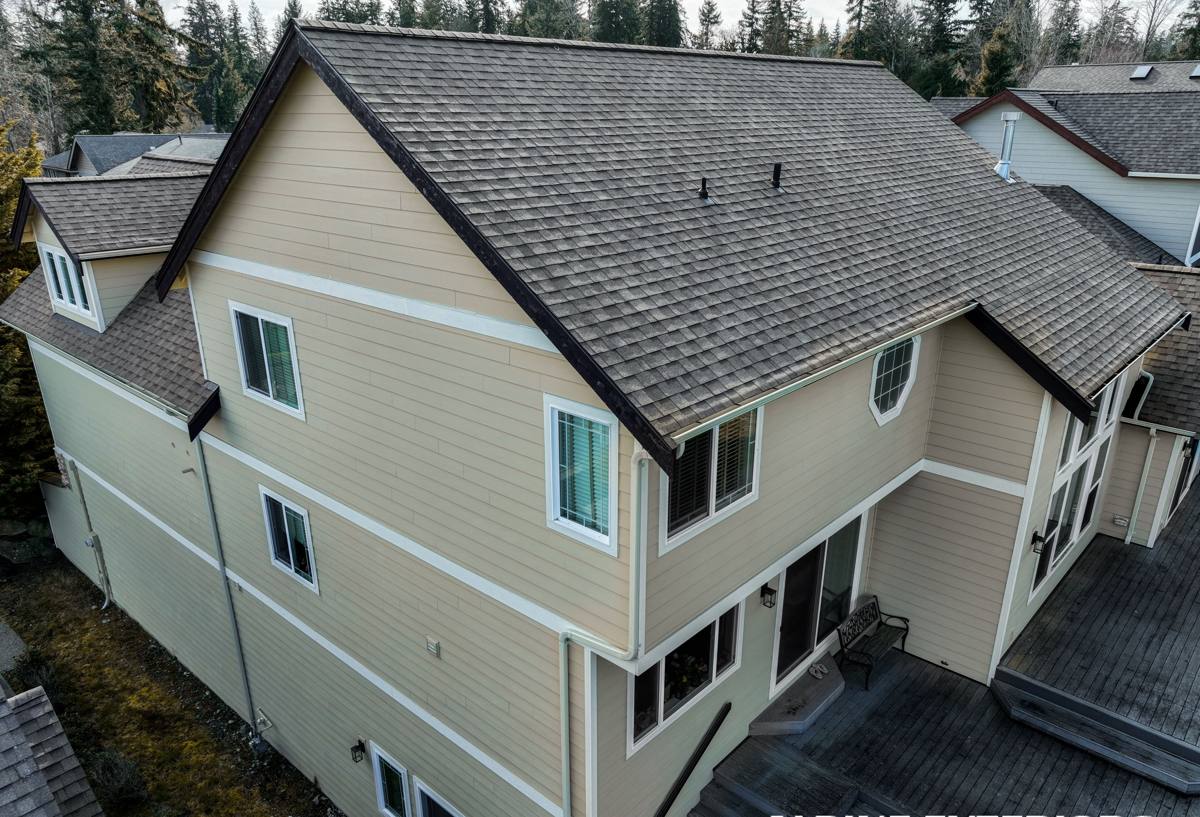
What Whatcom County Weather Does to a Deck
Whatcom County's marine-influenced climate means long stretches of driving rain, heavy dew, and short daylight windows for wood to actually dry out between wet spells. Add in the moss and algae growth that thrives on shaded, tree-covered lots near the lake, and a deck surface can stay damp for days at a time even when it's not actively raining. Salt-laden air moving in off the water compounds the problem for any exposed metal fastener or bracket that isn't rated for it — corrosion shows up as rust streaks on the decking and, eventually, as weakened connections you can't see from the top.
The Three Things That Cause Most Deck Failures Here
- Trapped moisture — water that gets under boards, into end grain, or behind ledger boards and has nowhere to go
- Moss and algae — organic growth that holds water against the surface and makes boards slick and, over time, breaks down wood fiber
- Fastener corrosion — screws, joist hangers, and bolts that weren't spec'd for a wet, salt-tinged environment failing quietly under the surface
None of these are exotic problems. They're the predictable result of building a deck the same way you'd build one in a dry climate and hoping the finish coat does all the work. It doesn't.
Choosing Decking Material for a Silver Beach Lot
There's no single "best" decking material — there's a best material for your site, your budget, and how much upkeep you're willing to do. For a Silver Beach property with shade, moisture, and moss pressure, here's how the common choices actually compare.
| Material | Moss/Moisture Behavior | Maintenance | Typical Lifespan Here |
|---|---|---|---|
| Cedar | Naturally rot-resistant but still needs airflow and periodic cleaning to shed moss | Annual cleaning, refinish every 2-3 years | 15-20 years with upkeep |
| Pressure-treated fir/hem-fir | Treated for rot but end cuts and fasteners are the weak points | Annual wash, stain/seal every 1-2 years | 10-15 years |
| Composite (capped) | Sheds water well but can still grow surface moss in deep shade if never cleaned | Occasional wash, no staining or sealing | 20-25+ years |
| Composite (uncapped) | More prone to moisture absorption at cut edges | More frequent cleaning than capped | 15-20 years |
On heavily shaded Silver Beach lots, we lean homeowners toward capped composite or well-detailed cedar over uncapped composite or bare pressure-treated lumber — the difference in long-term moss resistance is real, and it shows up in how the deck looks five years in, not just how it looks the day it's finished. That said, budget matters, and a correctly built pressure-treated deck with good drainage and a maintenance routine will still serve a family well. We'll walk through the honest trade-offs for your specific lot rather than push one product line.
Why We Don't Push the Cheapest Composite Option
Not all composite decking is built the same. Lower-grade, uncapped boards absorb moisture at the cut ends and in fastener holes, and in a climate that stays damp as long as Whatcom County's does, that moisture absorption eventually shows up as swelling, discoloration, or mold at the joints — even though the face of the board looks fine. Our standard is to use capped composite or a well-sealed natural wood system on shaded, damp lots, because the maintenance burden and moisture behavior of uncapped product isn't worth the upfront savings on a lot like this. It's a standard we hold ourselves to, not a claim about any one manufacturer.
Structural Details That Matter More Here
The visible decking is maybe a third of what makes a deck last. The framing, flashing, and drainage underneath do the rest of the work, and they're the part most likely to get shortcut on a budget build.
Ledger Board Flashing
Where the deck attaches to the house is the single most common source of hidden rot on any deck in a wet climate. We flash the ledger board properly — metal flashing that directs water away from the house band board, not just a bead of caulk — because a failure here rots the house structure, not just the deck.
Joist Spacing and Airflow
Tighter joist spacing than code minimum gives a stiffer deck, but it also reduces airflow underneath. On shaded, damp lots we balance structural spacing with enough clearance for air to move and moisture to evaporate rather than sit.
Ground Clearance and Drainage
Low decks built close to sloped, moisture-holding ground trap humid air against the framing. Where the lot allows it, we build in enough clearance — and grade or gravel the ground below — so water moves away from the structure instead of pooling under it.
Fasteners and Hardware
We use stainless or heavy hot-dip galvanized fasteners and connectors rated for treated lumber and coastal-influenced air, not the cheapest deck screws off the shelf. A joist hanger that rusts through from the inside out is invisible until it fails.
How We Build a Custom Deck in Silver Beach
- Site walk and design — we look at sun exposure, tree cover, existing drainage, and how the deck ties into the house before we talk materials
- Material selection — matched to your budget and how much maintenance you actually want to do, not a one-size default
- Permitting — Whatcom County and applicable local requirements handled before framing starts, not after
- Ledger flashing and footings — the parts nobody sees but that determine whether the deck lasts 10 years or 25
- Framing and decking installation — built to the spacing and airflow standards above, not code minimum by default
- Railings and finish details — code-compliant railing height and baluster spacing, corrosion-rated hardware throughout
- Final walkthrough — we go over cleaning and maintenance expectations specific to your material and site before we call it done
Railings, Stairs, and Code Requirements
Any deck more than a modest height off the ground needs a compliant guardrail, and stairs need proper rise-and-run and handrail detailing. These aren't optional upgrades — they're safety requirements, and they're also where inspectors look first. We build railings and stairs to current code as a baseline, then talk through material and style options — wood, metal, cable, or composite railing systems — based on the look you want and how much upkeep you're willing to take on for the railing separately from the decking itself.
Keeping a Silver Beach Deck in Good Shape
Even a well-built deck needs some seasonal attention in this climate. Here's the realistic maintenance routine we recommend for decks in the Sudden Valley and Silver Beach area:
- Sweep and clear leaves and debris regularly in fall — trapped leaf litter holds moisture against the boards
- Wash the deck surface at least once a year with a deck-safe cleaner to knock back moss and algae before it takes hold
- Check railings and stair connections annually for looseness — a sign fasteners may be corroding
- Reseal or restain wood decking on the schedule appropriate to the product (typically every 1-3 years)
- Keep gutters and downspouts near the deck clear so roof runoff isn't dumping extra water onto or under the structure
- Trim back overhanging branches where practical to improve sun exposure and airflow
Why Hire a Crew That Already Works Silver Beach
A deck built by a crew that hasn't worked this specific area tends to get the framing and the decking right and miss the details that matter for the local conditions — the flashing detail that keeps water out of a shaded ledger board, the fastener grade that won't rust out in a few seasons, the ground clearance that accounts for a sloped, tree-covered lot instead of a flat, sunny one. We work siding and decking projects throughout Sudden Valley, so we've seen how homes here age and where the shortcuts show up first. That's the standard we build to, not the code minimum.
If you're planning a new deck or replacing one that's showing its age, we're happy to walk the site with you, talk through material options honestly, and put together a straightforward estimate — no pressure, no upsell. Use the form below to get started.