 Sudden Valley Siding
 Why Silver Beach Homes Take a Beating
Silver Beach sits close to the water, and that proximity is exactly what makes siding here a harder problem than it is a few miles inland. Homes in this pocket of Sudden Valley deal with a longer wet season, moisture-laden air rolling off the water, driving rain that hits walls at an angle instead of straight down, and a moss and algae season that can run most of the year in shaded, north-facing spots. Add in Whatcom County's mild but persistently damp winters, and you have a climate that is hard on siding not because of any single extreme event, but because of relentless, low-grade exposure that never really lets up.
That kind of exposure punishes weak points. Caulk joints dry out and crack. Butt seams that weren't flashed correctly wick water behind the cladding. Wood-based products swell, split, or start feeding mold in places that never fully dry between rain events. None of this shows up in year one. It shows up in year six or seven, after the siding has been through enough freeze-thaw cycles and wet-dry cycles to expose every shortcut taken during installation.
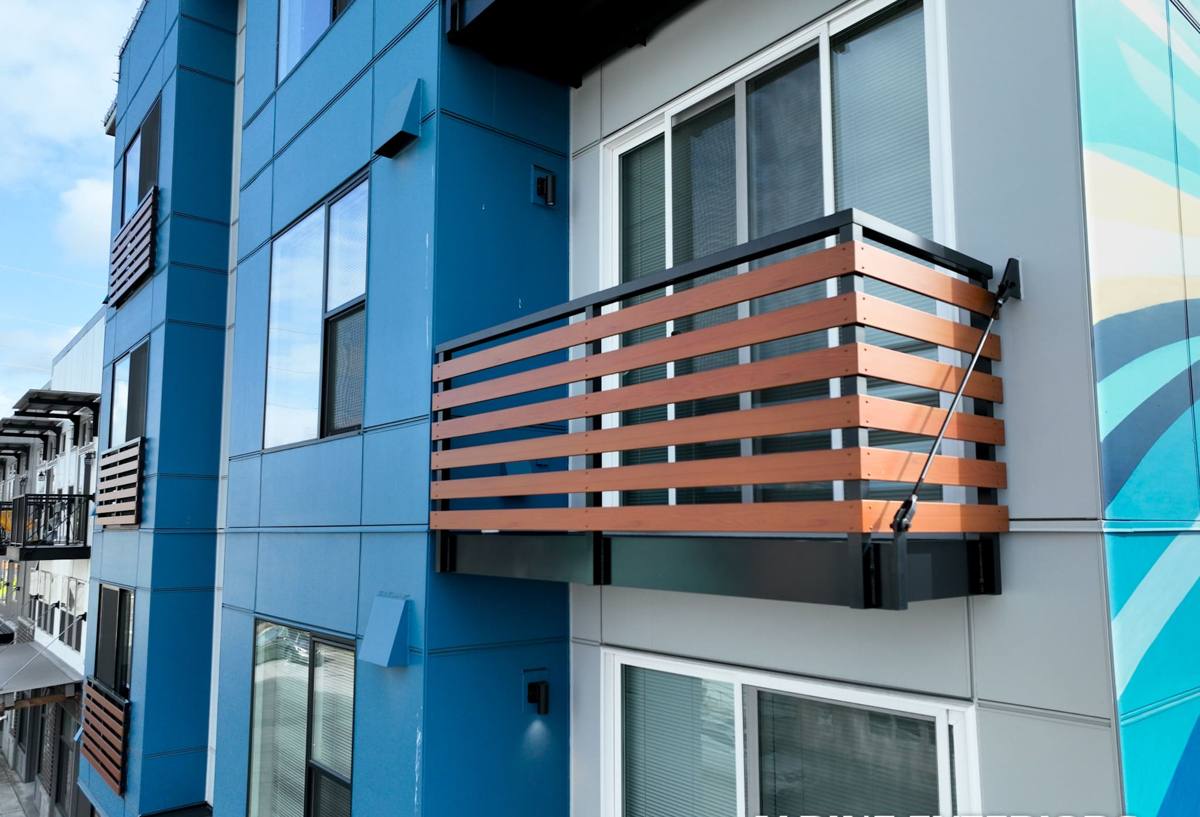
What a Correct Siding Installation Actually Involves
Siding installation is often sold as a cosmetic upgrade, but the product you see on the wall is only doing part of the job. The other part — the part that determines whether the house stays dry for the next 30-plus years — happens underneath it, in layers most homeowners never look at closely.
Water Management Comes First
Before a single piece of siding goes up, the wall needs a water-resistive barrier installed correctly, with proper overlaps, and flashing at every window, door, and penetration that directs water down and out rather than letting it pool or migrate behind the wall assembly. In a climate like Silver Beach's, this step is not optional detail work — it's the difference between siding that lasts and sheathing that rots quietly behind it.
Fastening and Clearances
Fiber cement siding has specific fastening patterns, nail penetration depths, and minimum clearances from grade, roof lines, and decks. Skipping these — nailing too high, too tight, or too close to the edge of a board — is one of the most common causes of premature cracking and moisture intrusion we see when we're called in to fix another contractor's work.
Ventilation Behind the Cladding
A rainscreen gap or properly furred-out installation lets any moisture that does get past the outer layer dry out instead of sitting against the sheathing. In a location with this much ambient moisture and this long a moss season, that airspace matters more than it would in a dry climate.
Why We Install Only James Hardie Fiber Cement
We made a decision as a company to install one product system — James Hardie fiber cement — and nothing else. We don't install vinyl, LP SmartSide, Cemplank, Allura, or primed wood siding, and we're upfront about why: in a marine-influenced climate with this much sustained moisture, fiber cement holds up in ways that wood-based and polymer products don't.
Vinyl expands and contracts with temperature swings, can crack in cold snaps, and never fully solves the moisture-behind-the-wall problem because it isn't rigid enough to seal tightly at seams. Wood-based composite siding depends on its factory coating staying intact; once moisture finds a cut edge or a fastener hole, the substrate can swell and delaminate, and that damage is often hidden until it's advanced. James Hardie's fiber cement is a different material category — it's cement, sand, and cellulose fiber, which means it doesn't feed mold or rot, doesn't expand and contract the way vinyl does, and stands up to the kind of driving rain and prolonged dampness that defines this area's weather. It's also non-combustible, which matters given how many properties around Sudden Valley back up to trees and brush.
Comparing Siding Options for a Silver Beach Home
| Factor | James Hardie Fiber Cement | Vinyl | Wood-Based Composite (e.g. LP SmartSide) |
|---|---|---|---|
| Moisture resistance | Does not rot, swell, or feed mold | Won't rot, but seams and moisture behind panels remain a risk | Vulnerable at cut edges and fastener penetrations |
| Performance in driving rain | Rigid, tight seams when installed to spec | Can flex and gap over time | Depends heavily on coating integrity |
| Combustibility | Non-combustible | Melts/deforms under heat | Combustible wood substrate |
| Finish longevity | Factory ColorPlus finish, fade-resistant | Color baked into vinyl, can chalk over time | Requires field caulking/painting maintenance |
| Typical lifespan when installed correctly | 30+ years | 20-30 years | 15-25 years, condition-dependent |
Our Installation Process
- On-site assessment — we look at your current siding, sheathing condition, and any moisture damage before quoting anything.
- Removal and inspection — old siding comes off and we check the sheathing underneath for rot, soft spots, or existing water damage that needs to be addressed before new siding goes on.
- Water-resistive barrier and flashing — installed and lapped correctly at every window, door, and penetration.
- Rainscreen/furring where called for — to give the wall assembly a way to dry out.
- James Hardie installation to manufacturer spec — correct fastener type, spacing, and clearances from grade, roofline, and decks.
- Trim, caulking, and finish detailing — the visible work that also happens to be where most water problems start if it's rushed.
- Final walkthrough — we go over the finished work with you before we consider the job done.
Cost Factors for Silver Beach Siding Projects
Every home is different, but the price of a siding installation is driven by a consistent set of factors. We'll always give you a firm number after we've seen the house, but here's what moves the estimate up or down:
| Factor | How It Affects Cost |
|---|---|
| Home size and wall complexity | More corners, gables, and dormers mean more cutting and trim work |
| Condition of existing sheathing | Rot or moisture damage found during tear-off adds repair scope |
| Siding profile chosen | Lap width, shingle-style panels, and board-and-batten price differently |
| Trim and accent work | Window trim, corner boards, and fascia detailing add labor |
| Access and site conditions | Steep lots, limited driveway access, or dense landscaping slow work |
Signs Your Silver Beach Home Needs New Siding
- Persistent moss, algae, or dark streaking that comes back within weeks of cleaning
- Soft or spongy spots when you press on the siding, especially near the bottom courses
- Visible cracking, warping, or bubbling in the current siding material
- Paint that won't hold — repeated peeling or blistering in the same spots
- Rising energy bills that suggest the wall assembly is no longer doing its job
- Visible gaps or separation at seams, corners, or trim joints
Any one of these on its own might be minor. Several together, especially on a wall that faces prevailing wind and rain, usually means the siding is past the point where patching makes sense.
Why Local Experience in This Neighborhood Matters
Siding installation isn't one-size-fits-all across Whatcom County. A crew that mainly works dry, inland neighborhoods will detail a wall differently than a crew that's spent years dealing with Silver Beach's wetter, moss-prone conditions. Knowing which walls in this area take the worst weathering, how much ventilation a given wall assembly needs, and where moss and mildew tend to establish first are things you learn from doing the work here repeatedly — not from a spec sheet. That local pattern recognition is part of what keeps a job from becoming a callback.
It also matters for scheduling and site logistics. Homes around Sudden Valley often have tighter lots, mature landscaping, or lake-adjacent access considerations that a crew unfamiliar with the area hasn't planned around before showing up with equipment and material.
Caring for Your New Siding
James Hardie siding is low-maintenance, not no-maintenance. A little attention keeps it performing the way it's designed to in this climate:
- Rinse the siding periodically to keep moss and algae from establishing, especially on shaded, north-facing walls
- Keep gutters clear so water isn't overflowing directly onto siding below
- Trim back vegetation that keeps a wall section shaded and damp longer than the rest of the house
- Re-caulk trim joints if you notice gaps opening up over the years
- Have any impact damage or cracking looked at promptly rather than waiting
If you're weighing siding options for a home in Silver Beach or elsewhere in Sudden Valley, we're glad to take a look and walk you through what your house actually needs. Reach out for a free, no-pressure estimate using the form below.