 Sudden Valley Siding
 Windows Built for Columbia's Climate, Not Just Any Climate
Columbia homes sit in one of the wetter, greener corners of Whatcom County, and that has real consequences for windows. The marine air that moves in off the Salish Sea carries fine salt and moisture even well inland, driving rain hits west- and south-facing glass hard for months at a stretch, and the long shoulder seasons here mean moss and algae get a real foothold on anything that stays damp. A window that was installed correctly for a drier climate can still fail here — not because the window itself is bad, but because the flashing, sealant, or trim detail wasn't built for constant wet-dry cycling. Custom windows for a Columbia home need to be sized, flashed, and sealed for this specific climate, not treated as an off-the-shelf swap.
"Custom" doesn't just mean a non-standard size, either. It means matching the window to the wall assembly it's going into, the exposure it faces, and the way water actually moves across a Whatcom County roofline and siding field. Get that wrong and you're not looking at a cosmetic problem — you're looking at rot behind the trim in a few years.
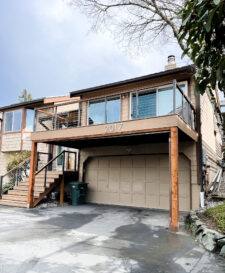
What a Correct Window Installation Actually Involves
Most window problems we get called out to fix in this area aren't the window's fault — they're installation shortcuts that don't show up until the first hard winter of driving rain. A correct install has a few non-negotiable steps.
Flashing and the Weather Barrier
Every opening needs to be flashed so water sheds down and out, never into the wall cavity. That means sill pan flashing at the bottom of the opening, properly lapped side and head flashing, and integration with the existing weather-resistant barrier so water is directed onto the barrier, not behind it. This is the single most common corner cut in budget window jobs, and it's the one that costs the most to fix later because the damage is hidden until you open the wall up.
Sealing, Shimming, and Insulation
A window that's shimmed out of square will bind, leak air, and stress the seals over time. Gaps around the frame need to be insulated — not just caulked shut — so you're not trading an air leak for a moisture trap. Exterior sealant has to be compatible with both the window frame material and the siding it meets, and it has to be applied in the right sequence relative to the flashing, not as an afterthought once the trim is on.
Trim and Drainage Detail
Sills need a slight outward slope so water doesn't pool against the glass or frame. Exterior trim should be back-primed and gapped slightly off the sill to let it dry, not sealed flush all the way around, which traps moisture against the wood or composite and is exactly what feeds moss and mildew growth in a climate like this one.
Choosing the Right Window for a Sudden Valley Home
Frame material matters more here than in a lot of climates because it determines how the window handles constant humidity, wet-dry cycling, and the freeze-thaw swings a Whatcom County winter can throw at it. There's no single "best" material for every home — it depends on your exposure, your siding, and your budget.
| Frame Material | How It Handles This Climate | Maintenance | Typical Fit |
|---|---|---|---|
| Vinyl | Good moisture resistance, won't rot, low cost | Low — occasional cleaning | Value-focused replacements, rentals, secondary homes |
| Fiberglass | Excellent — very stable through wet-dry and temperature swings, holds paint well | Low to moderate | Homes wanting durability without wood upkeep |
| Wood-clad (wood interior, clad exterior) | Good if the cladding and flashing details are done right; exposed end grain is the weak point | Moderate — watch cladding seams and sill joints | Homes prioritizing interior wood aesthetics |
| Aluminum | Conducts cold and can condense in our damp winters unless thermally broken | Low | Modern/commercial-style openings with thermal break |
We'll walk through this table with you against your actual home — the right answer for a wall that gets hammered by wind-driven rain off the lake or valley approach is often different than for a sheltered, tree-covered elevation on the same house.
Signs Your Columbia Home Is Overdue for New Windows
Windows fail slowly, so a lot of homeowners live with the early warning signs for years before calling anyone. Worth checking for:
- Fogging or a permanent haze between the panes — the seal has failed and the gas fill is gone
- Soft, spongy, or discolored wood trim around the frame, especially at the bottom corners
- Visible moss, algae, or black staining building up on the sill or exterior trim
- Windows that are hard to open, don't latch tight, or let in a draft you can feel by hand
- Noticeably colder rooms near certain windows, or higher heating bills without another explanation
- Condensation forming on the inside of the glass regularly, even in normal indoor humidity
- Visible daylight or gaps around the frame from outside
Any one of these on its own might just mean a repair. Several at once, especially on the same wall, usually means the whole assembly — window, flashing, and trim — needs to come out and be redone properly.
Our Process, Start to Finish
- On-site assessment. We look at each opening individually — exposure, existing flashing condition, trim and siding interface — not just the window itself. Two windows on the same house can need different solutions.
- Product selection. We go over frame material, glass package, and sizing options based on what that specific wall needs and what you want to spend, with no pressure toward a particular brand.
- Written scope and pricing. You get a clear, itemized quote before any work starts — what's included, what the timeline looks like, and what happens if we find hidden damage once the old window is out.
- Removal and inspection. Old windows come out carefully so we can actually see the condition of the framing and sheathing underneath before anything new goes in.
- Flashing and installation. New sill pan and flashing, correct shimming, insulation, and sealing, done in the sequence that actually sheds water instead of trapping it.
- Trim and finish work. Exterior trim is fitted, back-primed where needed, and finished to match the rest of the home.
- Final walkthrough. We check operation, seals, and cleanup with you before calling the job done.
What Affects the Cost of Custom Windows
There's a real range in window pricing, and most of it comes down to a handful of factors rather than the sticker price of the glass itself.
| Factor | Why It Moves the Price |
|---|---|
| Opening size and shape | Custom or non-standard openings cost more to source and fit than stock sizes |
| Frame material | Vinyl is typically the most affordable; fiberglass and wood-clad cost more upfront but differ in long-term upkeep |
| Glass package | Double vs. triple pane, low-E coatings, and gas fills all affect both price and performance |
| Condition behind the old window | Rot or water damage found during removal adds repair work before the new window can go in |
| Number of openings | Doing several windows in one project usually lowers the per-window labor cost |
| Trim and exterior finish work | Matching existing trim profiles or siding takes more time than a plain reinstall |
We'd rather walk your home and give you real numbers than quote a range that doesn't mean anything for your specific situation.
Why a Crew That Already Works Columbia and Sudden Valley Matters
A contractor who works this part of Whatcom County regularly already knows how driving rain hits these homes, which elevations take the worst of it, and where moss and moisture problems tend to start first. That's not something you can fully substitute with a general contractor passing through from somewhere drier. Local experience means fewer surprises once the old window is off the wall, and a crew that stands behind its work because they're still going to be around the neighborhood next year and the year after.
Before hiring anyone for a window project in this area, it's worth asking:
- Are you licensed and insured to do exterior work in Washington State?
- Will you show me the flashing and sealing plan before you start, not just the window brand?
- What happens if you find rot or damage once the old window comes out?
- Do you have a written warranty on both the product and your labor?
- Can you walk me through why you'd recommend one frame material over another for this specific wall?
A contractor who answers those clearly, without dodging into a sales pitch, is usually one worth hiring.
Living With New Windows in a Moss-Prone Climate
Even a correctly installed window benefits from a little seasonal attention here. Rinse pollen, moss spores, and grime off the glass and sills a couple of times a year so organic buildup doesn't get a foothold. Check that weep holes on vinyl and aluminum frames stay clear so water can drain out instead of pooling. Keep an eye on exterior caulk lines — in a climate this wet, sealant does eventually need refreshing, and catching it early is a five-minute job instead of a trim replacement. None of this is heavy maintenance, but skipping it is exactly how a good installation turns into a problem a decade sooner than it should.
If your windows in Columbia are fogging, drafty, showing moss on the sills, or you're just planning ahead for a home in this climate, we're happy to take a look and talk through honest options — no pressure, no obligation. Fill out the form below and we'll set up a free estimate.