 Sudden Valley Siding
 Why Fairhaven's Climate Is Tougher on Siding Than Most Homeowners Realize
Fairhaven sits close enough to the water that salt-laden air is a daily fact of life for the homes here, not an occasional nuisance. Combine that with the wind-driven rain that rolls in off the water for months at a stretch, and you have a climate that attacks siding from two directions at once: salt accelerates corrosion of fasteners and metal trim, while driving rain finds every gap, seam, and hairline crack a lesser installation leaves behind.
Then there's moss. Whatcom County's shaded, damp winters give algae and moss a long runway to establish themselves on north-facing walls, under eaves, and anywhere siding stays wet longer than it should. On some products that's a cosmetic problem you can pressure-wash away. On others, sustained moisture behind a stained or discolored surface is a warning sign of moisture getting where it shouldn't. Siding replacement in Fairhaven has to account for all three of these stressors — salt, rain, and moss — not just the fact that the old siding looks tired.
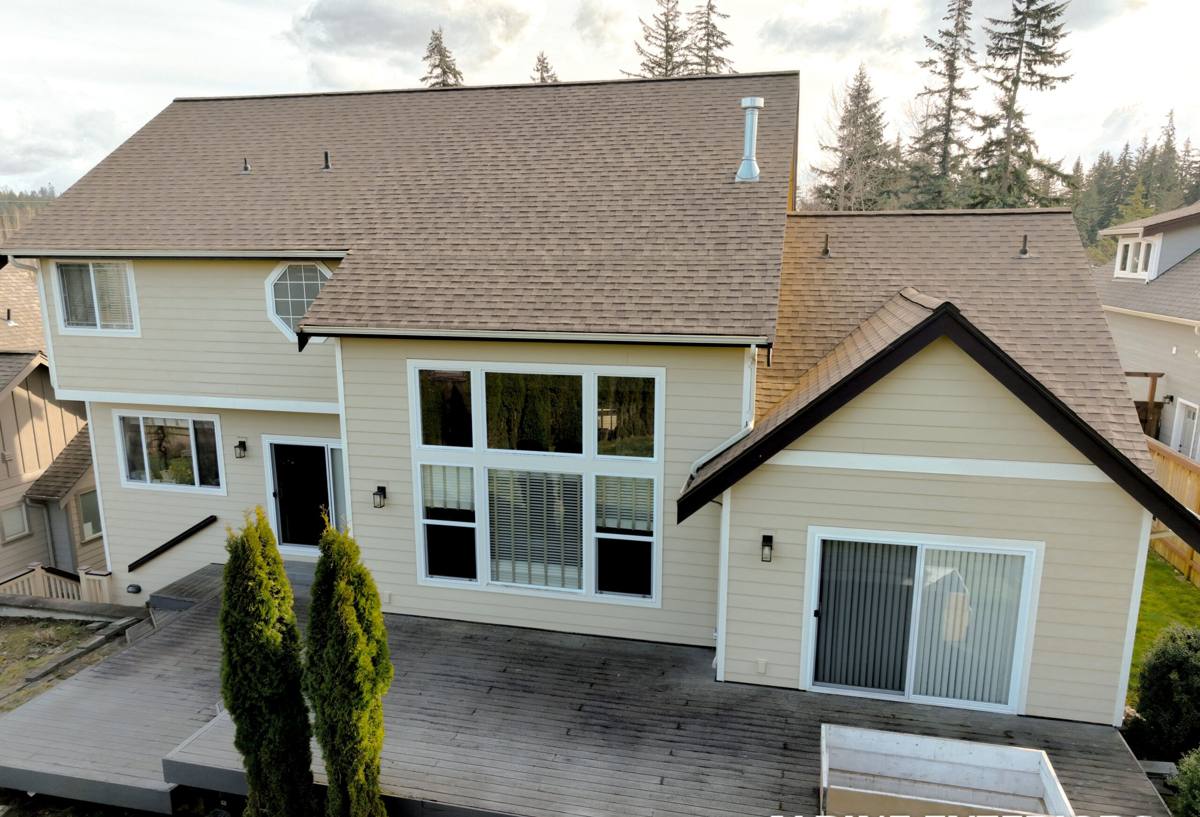
What Correct Siding Replacement Actually Involves
"Replacing siding" sounds simple: take the old material off, put new material on. In a marine climate, the work that happens between those two steps is what determines whether the new siding lasts fifteen years or fifty.
Full Removal and Sheathing Inspection
Old siding has to come off entirely — not be covered over — so the sheathing underneath can be inspected. This is often the first time in decades anyone has actually looked at the wall assembly on a Fairhaven home. Soft spots, rot around window and door openings, and rusted fasteners all show up here, and any of it needs to be addressed before new siding goes on. Covering damaged sheathing with new siding just hides a problem that will keep getting worse.
Weather-Resistive Barrier and Flashing
A correctly installed weather-resistive barrier (house wrap) manages the water that inevitably gets past the siding itself — and in a climate with as much driving rain as this one, some water always gets past the siding. Flashing at windows, doors, deck ledgers, and roof-to-wall intersections has to be layered correctly, shingle-style, so water sheds outward and down rather than getting trapped. This detail work is invisible once the job is done, which is exactly why it's the part that gets rushed on lower-bid jobs.
Fastening and Clearances
Fastener spacing, type, and depth all affect how well siding resists wind-driven rain and how long it holds up against salt air corrosion. Proper clearance between the bottom of the siding and grade, decks, and roof lines keeps splash-back and standing moisture away from the material's most vulnerable edges — a detail that matters more here than in a dry climate, and one that's easy to shortcut if a crew isn't paying attention.
Why We Only Install James Hardie Fiber Cement
We install one siding product: James Hardie fiber cement. Not because it's the only product on the market, but because it's the one that holds up to what this climate does to a house, and because it comes with an installation and warranty system we can stand behind. Fiber cement doesn't rot, doesn't feed mold or moss the way some organic and composite materials can, and it's non-combustible. Hardie's HZ5 product line is engineered specifically for climates like ours — wet, marine, freeze-thaw — with a moisture and mold resistance formulation that matters more in Fairhaven than it would in a dry inland climate.
The factory-applied ColorPlus finish also matters here specifically: it's baked on under controlled conditions and warranted against fading and flaking, which holds up better against salt air and UV than field-applied paint that has to be touched up and eventually repainted. That's fewer repaint cycles over the life of the siding, which counts for something on a home that already takes weather from every direction.
| Factor | James Hardie Fiber Cement | Vinyl | Wood / Cedar |
|---|---|---|---|
| Salt air / corrosion resistance | Not affected — fiber cement doesn't corrode | Doesn't corrode but can become brittle over time | Fasteners and trim can corrode; wood itself doesn't |
| Moss / algae resistance | Doesn't feed organic growth; surface can be cleaned | Growth sits on the surface, cleans off easily | Organic material; can trap moisture and feed growth |
| Moisture behavior | Engineered for wet climates (HZ5); doesn't rot | Doesn't absorb water but traps moisture behind it | Absorbs moisture; requires diligent maintenance |
| Finish durability | Factory ColorPlus finish, warranted | Color molded in; can fade and chalk | Field-applied paint or stain; regular upkeep needed |
| Fire resistance | Non-combustible | Combustible | Combustible |
We're not saying vinyl or cedar are bad products in every application — vinyl is inexpensive and cedar has real aesthetic appeal that some homeowners want. But given what this climate does to a house over twenty or thirty years, we've made a business decision to install only the product we believe holds up best here, and stand fully behind that one product rather than offering several we have less confidence in.
Our Process for a Fairhaven Siding Replacement
1. On-Site Assessment
We start by walking the exterior with you, looking at the current siding's condition, checking for soft spots, moisture staining, and problem areas — particularly on north- and west-facing walls that take the brunt of wind-driven rain and stay shaded long enough to grow moss. We'll talk through what we find in plain terms before any work is scoped.
2. Removal and Repair
Old siding comes off, sheathing gets inspected, and any rot or damage gets repaired before anything new goes on. This is also when we install or verify the weather-resistive barrier and flashing details described above.
3. Installation to Spec
Hardie panels, planks, or shingles go on following manufacturer fastening and clearance specifications — not shortcuts. Trim, corners, and joints are detailed to shed water rather than collect it.
4. Final Walkthrough
We walk the finished job with you, point out what was done and why, and make sure you know the basic maintenance a Hardie exterior needs going forward — which, done right, is minimal.
What Siding Replacement Costs Depend On
There's no honest flat number for siding replacement — cost depends on the specifics of the house. The factors below are the ones that actually move the price, in roughly the order they tend to matter.
| Cost Factor | Why It Matters |
|---|---|
| Home size and wall area | More square footage means more material and labor, the largest single driver of cost |
| Sheathing condition | Rot or moisture damage found during removal adds repair work before new siding can go on |
| Siding profile and accessories | Lap siding, shingle panels, and trim/batten details vary in material and labor cost |
| Number of stories and accessibility | Multi-story walls, steep grades, and limited access increase labor time and equipment needs |
| Window, door, and trim count | More openings mean more flashing and trim detail work per square foot of wall |
Because of this, an honest estimate can only come from an actual look at your home — anyone quoting a firm number over the phone without seeing the house is guessing.
Signs Your Fairhaven Home May Need Siding Replacement Soon
- Persistent moss or dark staining that returns quickly after cleaning
- Soft, spongy, or bubbling siding, especially near the bottom courses or around windows
- Visible cracking, warping, or separation at seams and corners
- Paint that's peeling or blistering repeatedly in the same spots
- Rising energy bills that suggest air and moisture are getting through the wall assembly
- Rust streaks around fasteners or trim, a sign metal components are breaking down
- Siding that's original to a home more than twenty-five to thirty years old
Any one of these on its own might just need a repair. Several together, especially on a home that's due for an update anyway, usually means replacement is the more cost-effective long-term call.
Living with Moss Season After Replacement
New siding doesn't make moss season disappear — it changes how you deal with it. Fiber cement's factory finish and non-organic composition mean moss and algae sit on the surface rather than feeding into the material, so an occasional soft wash (not high-pressure blasting, which can damage the finish) keeps things looking clean. Trimming back vegetation that shades walls and keeping gutters clear so water doesn't run down the siding face both go a long way toward keeping moss from getting a foothold in the first place.
Why Hire a Crew That Already Works in Fairhaven
Siding installation isn't identical everywhere. A crew that's used to a drier inland climate may not think twice about details that matter enormously here — flashing overlap, fastener corrosion resistance, clearance from grade — because they've never had to. A crew that works Fairhaven and the surrounding Whatcom County area regularly has already seen what this specific combination of salt air, rain, and moss does to houses over time, and builds accordingly rather than learning it the hard way on your house.
Local experience also means fewer surprises during the permitting and scheduling process, and a crew that's easy to reach if a question comes up five years down the road — not a company that did one job in the area and moved on.
If your Fairhaven home's siding is showing its age, we're happy to take a look and give you a straightforward, no-pressure estimate — no obligation, just an honest read on what your home actually needs. Use the form below to get started.