 Sudden Valley Siding
 Building a Deck That Actually Holds Up in Geneva
Geneva sits in one of the wetter, shadier pockets of Whatcom County, tucked in near Lake Whatcom and the tree cover that surrounds it. That combination — driving rain off the water, marine-influenced salt air moving in from the Puget Sound region, and a moss season that can stretch from early fall well into spring — is hard on any exterior structure, and a deck takes more of that punishment than almost anything else on the property. It sits low, it's horizontal, and it collects water, needles, and shade all at once.
A deck built to a generic spec sheet, without accounting for any of that, will often look fine for the first year or two and then start showing problems: soft spots, black streaking, slick moss buildup on the walking surface, and rot at the spots where the deck meets the house. A deck built correctly for this specific climate is a different project from the start — different material choices, different framing details, and different maintenance expectations. This page is about what that actually looks like for a Geneva property.
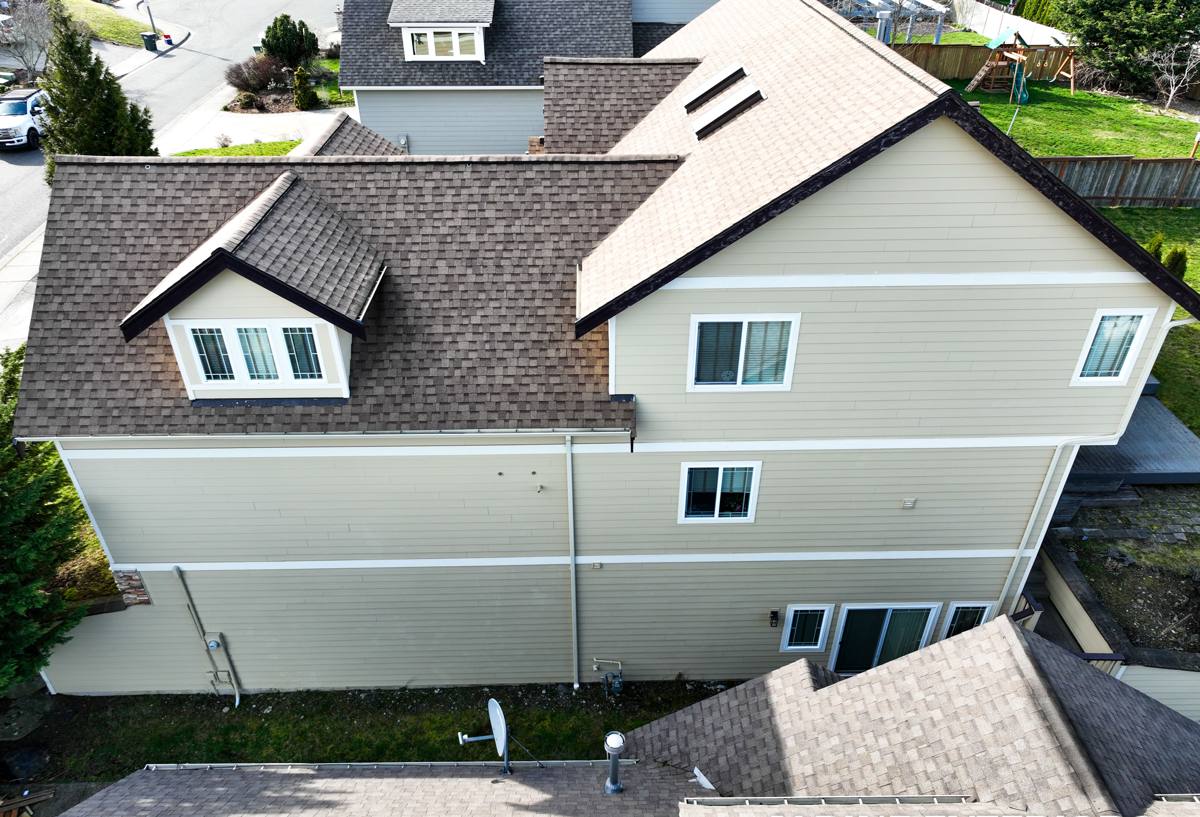
What Local Homes Need From a Custom Deck
Site and Sun Exposure
Many lots in and around Geneva have significant tree cover and slope toward the lake, which means a lot of decks end up partially or fully shaded for much of the day. Shade keeps a deck cooler in summer, but it also means the walking surface and framing underneath stay damp far longer after rain. That extra drying time is exactly what moss, algae, and mildew need to take hold.
Foundation and Soil Conditions
Ground conditions on wooded, sloped lots vary a lot from one yard to the next — some spots have solid, well-drained soil, others hold water longer or shift more with seasonal saturation. Footings need to be sized and set for the actual soil they're going into, not a one-size-fits-all number, and that's something a site visit settles far better than a phone estimate.
Choosing a Decking Material for Wet, Shaded Conditions
There's no single "best" decking material — there's a best material for your budget, your sun exposure, and how much upkeep you actually want to do. Here's how the common options stack up in a climate like Geneva's:
| Material | Moisture & Moss Resistance | Maintenance | Typical Lifespan |
|---|---|---|---|
| Pressure-treated wood | Good if sealed regularly; bare wood stays damp and grows moss fast in shade | Annual cleaning and re-sealing recommended | 15–20 years with upkeep |
| Cedar | Naturally rot-resistant but still needs sealing in high-shade areas | Periodic cleaning and sealing | 15–20 years with upkeep |
| Capped composite (e.g., Trex- or TimberTech-style boards) | Strong resistance to rot and moisture absorption; surface algae/moss can still form in deep shade but rinses off easily | Occasional wash-down, no sealing or staining | 25–30 years, often warrantied |
| PVC decking | Fully synthetic, essentially immune to rot; can still get slick with algae film in shade | Occasional wash-down | 25+ years, often warrantied |
For heavily shaded, moss-prone lots, we lean toward capped composite or PVC for the decking surface itself, because the ongoing maintenance burden of bare or lightly sealed wood in that kind of exposure is real — it's not that wood "fails," it's that keeping it looking good takes more consistent attention than most homeowners want to give it. Framing underneath is almost always pressure-treated lumber regardless of what decking goes on top, since it's not exposed to foot traffic or UV.
Framing and Structure: What a Correct Build Involves
Footings and Framing
Footings need to be sized for the load and set below frost depth, and joist spacing has to match the decking material's span rating — composite and PVC boards often call for tighter joist spacing than solid wood, and skipping that is one of the more common corner-cutting mistakes we see on decks that were built cheap. Framing lumber should be rated for ground contact where it's close to grade, and every structural connection matters more here than it would in a drier climate, because any gap in the framing is a place for water to sit.
The Ledger Connection
The single most common point of failure on a deck attached to a house isn't the decking — it's the ledger board, the piece that bolts the deck to the house framing. If that connection isn't flashed correctly, water gets behind it and works into the house's structure, sometimes for years before anyone notices. In a climate with as much driving rain as Geneva gets, proper ledger flashing, along with flashing tape over every fastener penetration, isn't optional detail work — it's the difference between a deck that lasts and one that causes hidden damage to the house itself.
Fasteners and Hardware
Marine air and constant moisture accelerate corrosion on cheap fasteners. We use hot-dip galvanized or stainless-steel structural hardware and coated deck screws rated for the decking material in use, rather than whatever's cheapest at the box store. Rust streaks bleeding down a deck face a couple years in are almost always a hardware problem, not a wood problem.
Railings, Stairs & Code Requirements
Guardrails, baluster spacing, and stair geometry are governed by Washington building code, and Whatcom County requires a permit for most new decks, especially anything attached to the house or elevated more than a modest height above grade. Elevated decks on sloped, lake-adjacent lots — common around Geneva — often also need engineering sign-off on the footing and post design. We handle the permit paperwork and, when engineering is required, coordinate that as part of the project rather than leaving it as a surprise homeowners have to sort out themselves.
If your property falls under a homeowners' association or architectural control committee, as many do in and around Sudden Valley, we're used to working within those design review processes and can help put together what's needed for submittal.
Our Process, From Estimate to Finished Deck
- Site visit and assessment: We walk the site, check sun exposure, slope, soil, and how the deck will attach to the house.
- Design and material selection: We go over decking, railing, and structural options against your budget and how much upkeep you want long-term.
- Permitting and, if needed, engineering: We prepare and submit what Whatcom County requires before any framing starts.
- Framing: Footings, posts, beams, and joists go in to code, with the ledger flashing detail done right the first time.
- Decking, railing, and stairs: Final surface, railings, and stairs are installed and fastened with corrosion-resistant hardware.
- Final walkthrough: We go over the finished deck together and cover basic maintenance for your specific material.
Living With Moss, Algae, and Driving Rain: A Maintenance Checklist
No deck in this climate is completely maintenance-free, even the low-upkeep composite and PVC options. The difference is how much and how often. A basic seasonal routine keeps most problems from ever starting:
- Sweep leaves, needles, and debris off the deck regularly — trapped organic matter holds moisture and feeds moss growth
- Keep gutters and any drainage near the deck clear so water isn't dumping directly onto the structure
- Wash the deck surface at least once a year with a deck-safe cleaner to remove algae film before it gets slick
- Check that gaps between boards stay clear so water can drain through instead of pooling
- Inspect the ledger flashing and any visible fasteners once a year for rust streaking or gaps
- Reseal or restain bare wood decking on a regular schedule — don't wait until it's visibly gray and dry
- Trim back overhanging branches where practical to get more sun and airflow onto shaded sections
What Affects the Cost of a Custom Deck in Geneva
Every deck is priced around the specifics of the site and the design, but the same handful of factors drive most of the variation we see:
- Size and footprint — larger decks mean more material, framing, and labor
- Height above grade — elevated decks on sloped lots need taller posts, more bracing, and sometimes engineering
- Decking material — wood costs less upfront; composite and PVC cost more initially but less in upkeep over time
- Railing style — basic wood or metal balusters versus cable or glass rail systems
- Stairs and landings — more runs and landings add both material and labor
- Site access — wooded, sloped lots common around Geneva can require more hand-carrying of material and staging time
- Permit and engineering requirements — anything requiring engineered footings or posts adds design and review time
We give real numbers based on your actual site and design, not a rough per-square-foot guess that doesn't hold up once we see the lot.
Why Hiring a Crew That Already Works Geneva Matters
Geneva and the surrounding Sudden Valley area have their own combination of terrain, tree cover, and permitting process that doesn't show up the same way in a drier or more open part of Whatcom County. A crew that's already worked this area knows what the soil tends to do on sloped, wooded lots, understands how much shade actually affects material choice on a given exposure, and has been through the county permit process here before, which keeps that part of the project from turning into a delay. That local familiarity shows up in fewer surprises during the build and a deck that's specified correctly for the site from the start, rather than adjusted after something goes wrong.
If you're planning a new deck or replacing one that's showing its age, we're happy to walk the site with you and put together a clear, no-pressure estimate — just fill out the form below to get started.