 Sudden Valley Siding
 Siding Built for Life on Lake Whatcom
Homes around Lake Whatcom and Sudden Valley sit in one of the more demanding microclimates in Whatcom County. The lake itself keeps the air heavier and more humid than you'll find a few miles inland, the surrounding hillsides funnel driving rain sideways into west- and south-facing walls, and the tree cover that makes this area beautiful also means a lot of shade — which means a long moss and algae season on anything that stays damp. Add the marine-influenced air moving in off the Salish Sea and Bellingham Bay, and you've got a combination of moisture and organic growth that wears out the wrong siding material faster than most homeowners expect.
This page is about one thing specifically: replacing siding on a Lake Whatcom or Sudden Valley home the right way, with a material actually engineered for this climate, installed by a crew that already knows what these lots and these exposures do to a wall system.
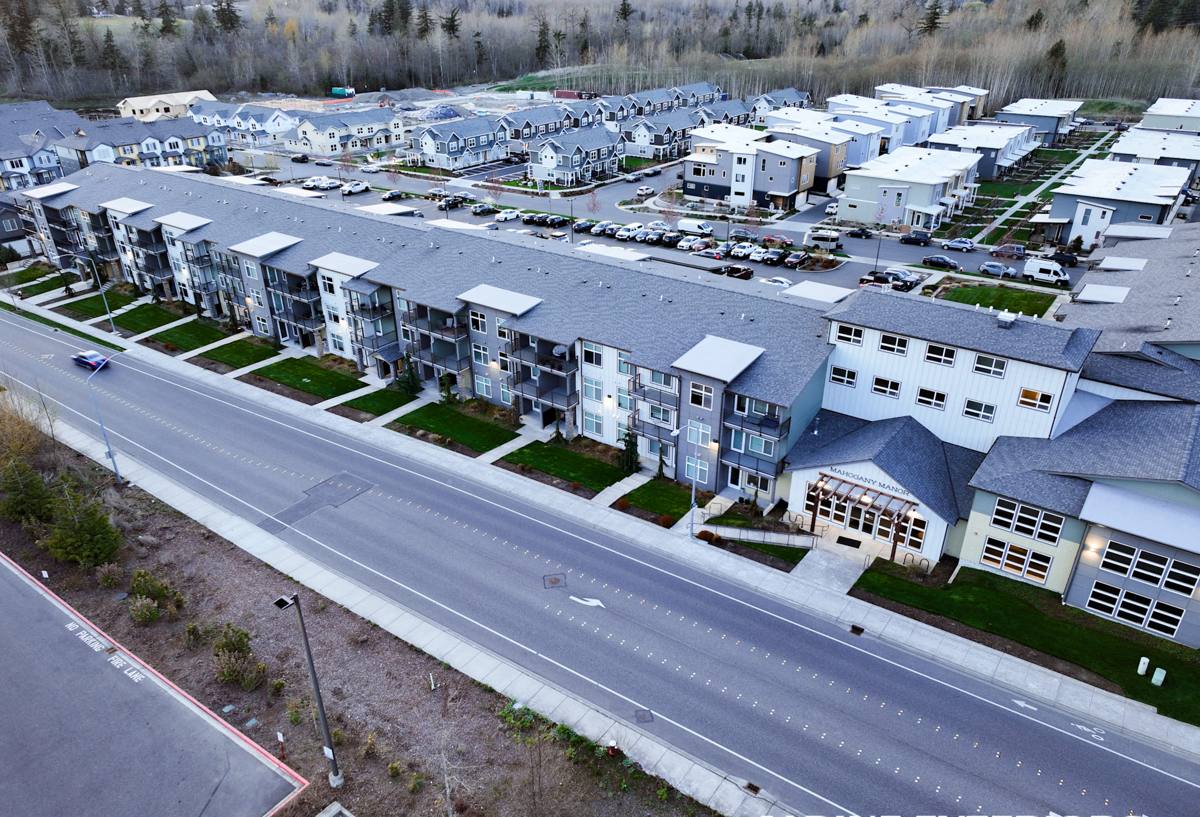
What This Climate Actually Does to Siding
Constant moisture load
Lake-effect humidity doesn't just make things feel damp — it keeps siding surfaces wet longer after every rain event, which is exactly the condition that lets moss, mildew, and algae take hold. Wood-based sidings (cedar, primed spruce, LP SmartSide) absorb that moisture at cut edges, fastener holes, and seams. Once moisture gets into the substrate of an engineered wood product, swelling and softening follow, and it's not something you can paint your way out of.
Driving rain and wind-driven exposure
Homes on sloped Sudden Valley lots, especially those with a clear run toward the lake or open exposure on upper stories, take rain at an angle, not just straight down. That pushes water into laps, seams, and trim joints that a south-facing suburban wall might never see. Flashing detail and lap coverage matter more here than on a sheltered in-town lot.
Shade and moss season
Mature tree cover around the lake keeps large sections of many homes in shade most of the day. Shaded siding dries slower, and slower drying means moss and algae get a longer runway every year. Over a decade-plus, that constant biological growth is one of the most common reasons we get called out to a Sudden Valley home for a replacement estimate rather than a repaint.
Signs a Lake Whatcom Home Needs Siding Replaced, Not Patched
- Soft or spongy spots when you press on the siding, especially near the bottom courses and around window trim
- Moss or dark algae staining that comes back within a season or two of cleaning
- Visible swelling, delamination, or bubbling on wood-based or engineered wood panels
- Paint that's failing (peeling, alligatoring) across large sections rather than one weathered spot
- Warping or bowing boards, particularly on shaded or lake-facing elevations
- Gaps opening at seams, corners, or trim joints that let water track behind the siding
- Interior signs — musty smell, staining, or soft drywall on an exterior wall — that point to moisture getting past the siding entirely
A few of these on an isolated section can sometimes be repaired. Widespread moisture damage, especially on wood-based products, usually means the material has reached the end of what it can handle in this environment, and patch repairs just delay a full replacement while the underlying sheathing keeps absorbing water.
What a Correct Siding Replacement Involves
Replacing siding well is not a cosmetic swap. On a Lake Whatcom or Sudden Valley home, the work that happens underneath the new siding matters as much as the siding itself.
Full tear-off and inspection
We remove the old siding down to the sheathing so we can actually see what's there — rot, soft sheathing, compromised framing, or house wrap that's failed. Covering over hidden moisture damage with new siding just hides the problem for a few more years.
Water-resistive barrier and flashing
Given how much this area relies on driving rain rather than straight-down rain, correct window, door, and penetration flashing is non-negotiable. We install or repair the weather-resistive barrier and detail flashing so water is directed out and down, not behind the cladding.
Sheathing and framing repair
Any soft or rotted sheathing gets cut out and replaced before new siding goes up. This is the step that gets skipped on cut-rate jobs, and it's the reason a "new" siding job can still fail from the inside out within a few years.
Manufacturer-spec installation
Fastener pattern, clearance from grade and rooflines, lap coverage, and caulking at penetrations all have to follow the manufacturer's published specs — not just "how it's always been done." This is also what keeps the product warranty valid if something ever does go wrong.
Finish and detail work
Trim, corners, and caulking get finished to shed water the same way the field siding does. A siding job is only as good as its weakest transition point.
Why We Only Install James Hardie
We install James Hardie fiber cement siding exclusively. We don't install vinyl, LP SmartSide, Cemplank, Allura, primed spruce, or cedar — not because those products have no place in the market, but because after years of working on homes in exactly this kind of moisture-heavy, moss-prone environment, we standardized on the one material that consistently holds up without the maintenance battle.
| Material | How it handles this climate |
|---|---|
| Cedar / primed spruce | Natural wood movement, absorbs moisture at cuts and joints, needs regular refinishing to keep water out — high maintenance in a shaded, humid lot |
| LP SmartSide (engineered wood) | More stable than raw wood but still wood-based; edges and cut ends are moisture-sensitive if not sealed and maintained exactly to spec |
| Vinyl | Doesn't rot, but can warp or fade in temperature swings and doesn't offer the fire resistance or paintable, factory-finished look homeowners here often want |
| James Hardie fiber cement | Non-combustible, dimensionally stable in wet-dry cycles, ColorPlus factory finish resists the fading and peeling that shows up fastest in shaded, damp conditions |
James Hardie's HZ product lines are engineered specifically for climate zones like ours, the ColorPlus factory finish holds color and resists moisture-related failure far better than field-applied paint on wood, and the product carries a strong transferable warranty. For a lake-adjacent, tree-shaded property, that combination is what actually holds up — not just on day one, but ten and twenty years in.
Our Process for Lake Whatcom & Sudden Valley Projects
- On-site assessment — we look at sun exposure, tree cover, wall orientation relative to prevailing rain, and existing moisture damage before we recommend anything
- Written estimate — clear scope, product line and color, and what's included in tear-off, repair, and installation
- Sheathing and moisture check during tear-off — any surprises get flagged and priced before we cover them up, not after
- Installation to Hardie's published specs — fastening, clearances, and flashing done to keep the warranty intact
- Final walkthrough — we go over the finished work with you before we consider the job done
Working this area regularly means we already understand which elevations on a typical Sudden Valley lot take the worst of the weather, where moss tends to establish first, and how much clearance a home needs from grade, decks, and mature landscaping. That familiarity shortens the assessment and avoids surprises mid-project.
Cost Factors for a Lake Whatcom Siding Replacement
| Factor | Why it matters here |
|---|---|
| Extent of hidden moisture damage | Shaded, lake-adjacent walls often have more sheathing repair than they appear to from the outside |
| Home size and number of stories | More surface area and higher elevations mean more material, staging, and labor |
| Trim and detail complexity | Dormers, multiple rooflines, and window trim all add cut work and flashing detail |
| Access on sloped Sudden Valley lots | Steep driveways and limited staging area can affect setup time and equipment needs |
| James Hardie product line and color | Plank profile, texture, and ColorPlus color selection affect material cost |
We don't quote in vague generalities — every estimate is based on an actual look at your home, not a square-footage guess.
Keeping Moss and Growth From Coming Back
New siding doesn't stop moss from landing on a shaded roofline or wall, but it changes how much damage that growth can actually do. James Hardie's factory finish doesn't feed organic growth or absorb moisture the way bare or painted wood does, which means routine washing keeps it looking clean instead of masking ongoing material breakdown underneath. A yearly rinse-down, especially on north- and shade-facing walls, and keeping nearby branches trimmed back for airflow, go a long way toward keeping moss from re-establishing.
What to Check Before You Hire a Contractor
- Do they tear off and inspect sheathing, or just install over existing siding?
- Are they installing to the manufacturer's written specifications, and can they explain what that means?
- Do they have current licensing and insurance, and will they show it without being asked twice?
- Do they have experience specifically with lake-adjacent or heavily shaded properties in this area?
- Is the estimate detailed — product line, color, scope — or a single vague number?
- Do they stand behind the installation separately from the manufacturer's product warranty?
If a project this size is being underway on your home, it's worth having someone walk the exterior with you and point out exactly what's driving the recommendation, rather than a quick estimate based on square footage alone. We're happy to do that walk-through, explain what we see, and put together a straightforward, no-pressure estimate for your Lake Whatcom or Sudden Valley home using the form below.