 Sudden Valley Siding
 Why Deming Roofs Wear Out Faster Than People Expect
Deming sits in the Whatcom County foothills, and the roofs out here do more work than roofs in drier parts of the country. The region gets a long, wet fall-through-spring stretch, moisture-heavy air that pushes in from the Sound, and enough tree cover on most lots that moss and algae get a real foothold on anything north-facing or shaded. None of that is dramatic on its own, but stacked together year after year, it shortens the life of a roof that was installed carelessly, or installed correctly for a drier climate but not for this one.
A roof here needs to shed driving rain without backing water up under the shingles, resist moss colonization long enough that you're not re-treating it every season, and hold up to fasteners and flashing that see salt-tinged, humid air even well inland. That's not a cosmetic checklist — it's the difference between a roof that makes it 25-30 years and one that starts failing at year 12 because a detail was skipped.
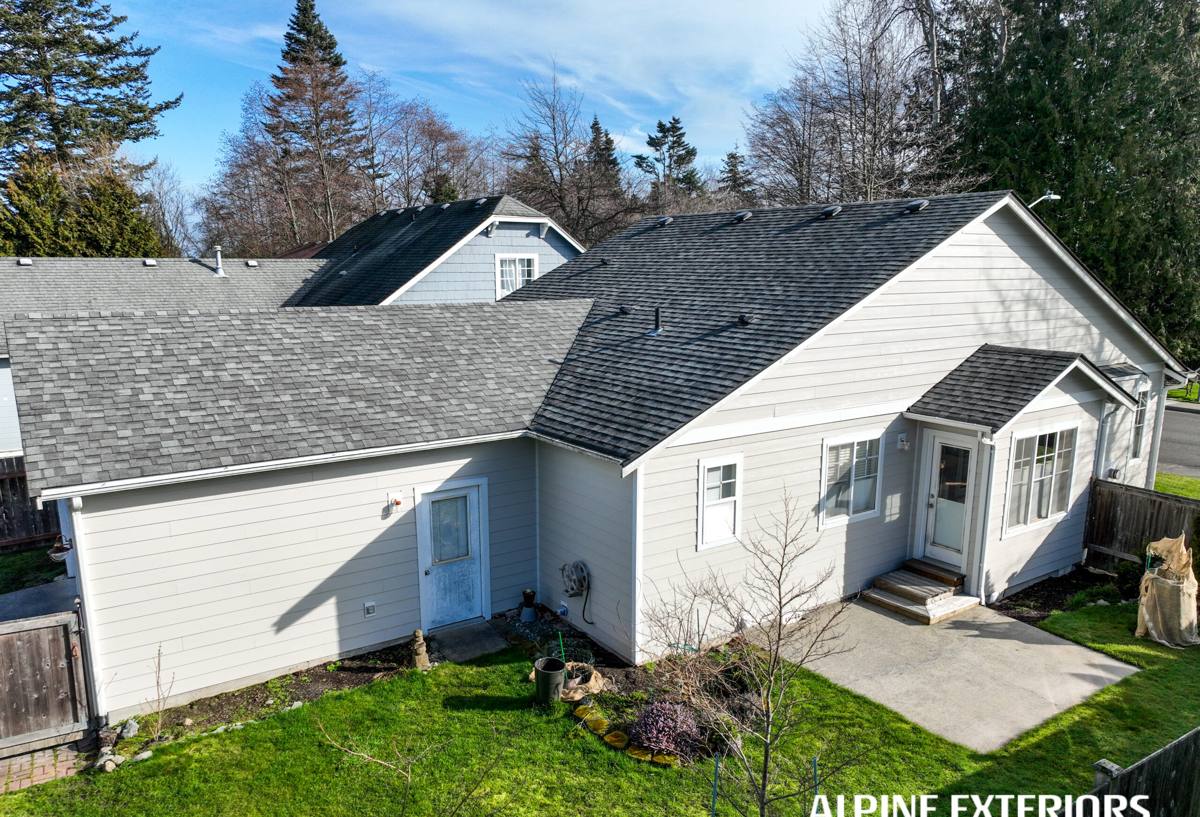
What "Correct" New Roof Installation Actually Means
A lot of roof failures in this climate aren't shingle failures at all — they're installation failures that show up years later as leaks, rot, or premature granule loss. A correct install in Deming's conditions covers a short list of things that are easy to skip and expensive to fix later:
Deck Inspection and Repair
Once the old roofing is off, the sheathing underneath has to be checked board by board. Soft spots, delamination, or water staining mean that section gets replaced, not covered over. Skipping this step is the single most common shortcut in cheap re-roofs, and it's invisible until the new roof starts sagging or leaking from underneath.
Ice-and-Water Shield and Underlayment
Given how much driving rain this area gets, the underlayment isn't a formality. Self-adhered membrane at eaves, valleys, and around every penetration gives the roof a second line of defense when wind-driven rain pushes water sideways under the shingle tabs — which happens here more than most homeowners realize.
Flashing at Every Transition
Chimneys, skylights, sidewalls, and valleys are where roofs actually fail. New step flashing, counter-flashing, and valley metal — not re-using old, corroded flashing — is standard on a correct install, not an upsell.
Ventilation That Matches the Attic
Balanced intake and exhaust ventilation keeps moisture from condensing in the attic, which matters in a climate this humid. Under-ventilated attics trap moisture that rots decking from the inside and voids most manufacturer warranties outright.
Roofing Materials That Actually Hold Up Here
There's no single "best" roofing material — there's a best fit for your roof's pitch, your budget, and how much moss and moisture exposure your specific lot gets. Here's how the common options compare for a Deming property:
| Material | Moss/Algae Resistance | Typical Lifespan | Relative Cost |
|---|---|---|---|
| 3-tab asphalt shingle | Low — flat profile holds moisture | 15-20 years | Lowest |
| Architectural (dimensional) asphalt shingle | Moderate; better with algae-resistant granules | 25-30 years | Moderate |
| Standing-seam metal | High — sheds water and debris fast, little surface for spores to grip | 40-50+ years | Higher upfront |
| Cedar shake | Low without diligent maintenance | 20-30 years with upkeep | Moderate to high |
For most Deming homes, an architectural shingle with algae-resistant (AR) granules is the practical middle ground — it holds up to moss pressure far better than a basic 3-tab and costs meaningfully less than metal. Metal earns its price on steep-pitch roofs, heavily shaded lots, or for homeowners who want to stop thinking about the roof for decades. We'll tell you honestly which one fits your roof rather than steering you toward whatever's easiest for us to install.
Our Installation Process, Start to Finish
- Inspection and estimate — we walk the roof (not just the ground), check the attic for ventilation and moisture issues, and give you a written scope before any work starts.
- Material selection — we walk through options and trade-offs based on your roof's pitch, shading, and budget, not a one-size pitch.
- Staging and protection — landscaping, siding, and gutters get protected before tear-off begins.
- Tear-off — full removal down to the deck, not a layover, so we can actually inspect what's underneath.
- Deck repair — any compromised sheathing is replaced and documented before we move forward.
- Ice-and-water shield and underlayment — installed at all vulnerable areas, not just where code minimums require it.
- Flashing and ventilation components — new flashing at every penetration and transition; intake/exhaust balanced for the attic.
- Material installation — shingles, metal, or shakes installed to manufacturer specification, which is what keeps the warranty valid.
- Cleanup and magnetic sweep — nails and debris cleared from the yard and driveway.
- Final walkthrough — we go over the finished roof with you before calling the job done.
Moss and Moisture Control Built Into the Job
Moss doesn't just sit on top of a roof — it lifts shingles, holds moisture against the surface, and works its way under tabs and flashing over time. In a climate where moss season runs most of the year, prevention has to be part of the installation, not an afterthought you deal with later.
On new installs, we install zinc or copper strips near the ridge on roofs with a history of moss growth or heavy tree cover. Rainwater running down the roof carries trace metal ions that inhibit moss and algae regrowth — it's a passive, low-maintenance approach that works with the weather instead of requiring you to get up on the roof every year with a scrub brush or chemical treatment.
We also make sure gutters and downspouts are functioning and properly pitched before we finish the job. A roof can be installed perfectly and still take on water damage at the eaves if the gutters behind it are clogged or undersized for the rainfall this area sees.
Simple Maintenance That Extends Roof Life
- Clear gutters and downspouts at least twice a year, more often on tree-heavy lots
- Trim back overhanging branches to reduce shade and debris buildup
- Rinse visible moss growth early rather than letting it establish and spread
- Check attic ventilation isn't blocked by insulation or storage
- Have the roof looked at after any major windstorm, even if nothing looks obviously wrong
What Affects the Cost of a New Roof in Deming
Every roof is priced individually, but the same handful of factors drive most of the variation homeowners see between quotes:
| Factor | Why It Matters |
|---|---|
| Roof size and number of facets | More square footage and more valleys/hips mean more material and labor |
| Pitch and access | Steep or hard-to-access roofs take longer and require more safety setup |
| Number of tear-off layers | Removing two layers of old roofing costs more than removing one |
| Deck condition | Rotted or delaminated sheathing adds material and labor to replace |
| Material choice | Metal and premium shingle lines cost more upfront than standard asphalt |
| Ventilation and flashing needs | Older homes often need ventilation upgrades or extra flashing work to meet current standards |
Be cautious of a quote that's dramatically lower than everyone else's — it usually means one of these factors is being skipped, not that the contractor found a discount. We'll walk you through exactly what's driving your number so there are no surprises mid-project.
Why a Crew That Already Works in Deming Matters
Roofing crews that mostly work in drier, milder climates tend to under-detail moisture protection because they haven't had to deal with the consequences. A crew that regularly works Whatcom County properties has already seen what happens when ice-and-water shield gets skipped, when ventilation is undersized, or when a moss-prone roof isn't treated at install — and builds around those lessons as standard practice, not extra cost.
There's also a practical side: local crews know how to work around this region's weather windows, understand permitting expectations for Whatcom County, and aren't guessing at what "normal" looks like for a roof out here. That local familiarity shows up in fewer callbacks and a roof that's actually built for the conditions it has to survive.
Signs Your Deming Home Needs a New Roof, Not a Repair
- Shingles that are cupping, curling, or missing granules across large sections
- Moss or algae that returns quickly after cleaning, especially on north-facing slopes
- Daylight visible through the attic roof boards, or damp insulation
- Multiple past repairs in different areas rather than one isolated issue
- A roof at or past 20-25 years old, even if it looks intact from the ground
- Sagging rooflines or soft spots felt when walking the roof
If you're only seeing one or two of these, a repair may still make sense. If several apply, a repair is usually just delaying a full replacement while continuing to risk interior damage.
If you're weighing a repair against a full replacement, or just want a straight answer on what your roof actually needs, we're happy to take a look. Fill out the form below for a free, no-pressure estimate on new roof installation for your Deming home.