 Sudden Valley Siding
 Why Decks Wear Out Faster in Sehome
Sehome sits close enough to Bellingham Bay that salt-laden air is a real factor in how fast exterior wood and metal age, and that's on top of the rain load every neighborhood in Whatcom County deals with. A deck here isn't just fighting moisture — it's fighting moisture that barely lets up from October through April, plus the moss and algae growth that follows any surface that stays damp and shaded for months at a time. Add in the tree cover common to older Sehome lots, and you get decks that hold shade and dew long after the rain has stopped, which is exactly the condition rot and moss both prefer.
None of that means a deck can't last. It means the details that get skipped on a budget build — flashing, fastener choice, air gaps under the boards, proper drainage away from the ledger — matter more here than they would in a dry climate. A deck built without those details might look fine for two or three years and then fail all at once, usually at the framing you can't see from the surface.
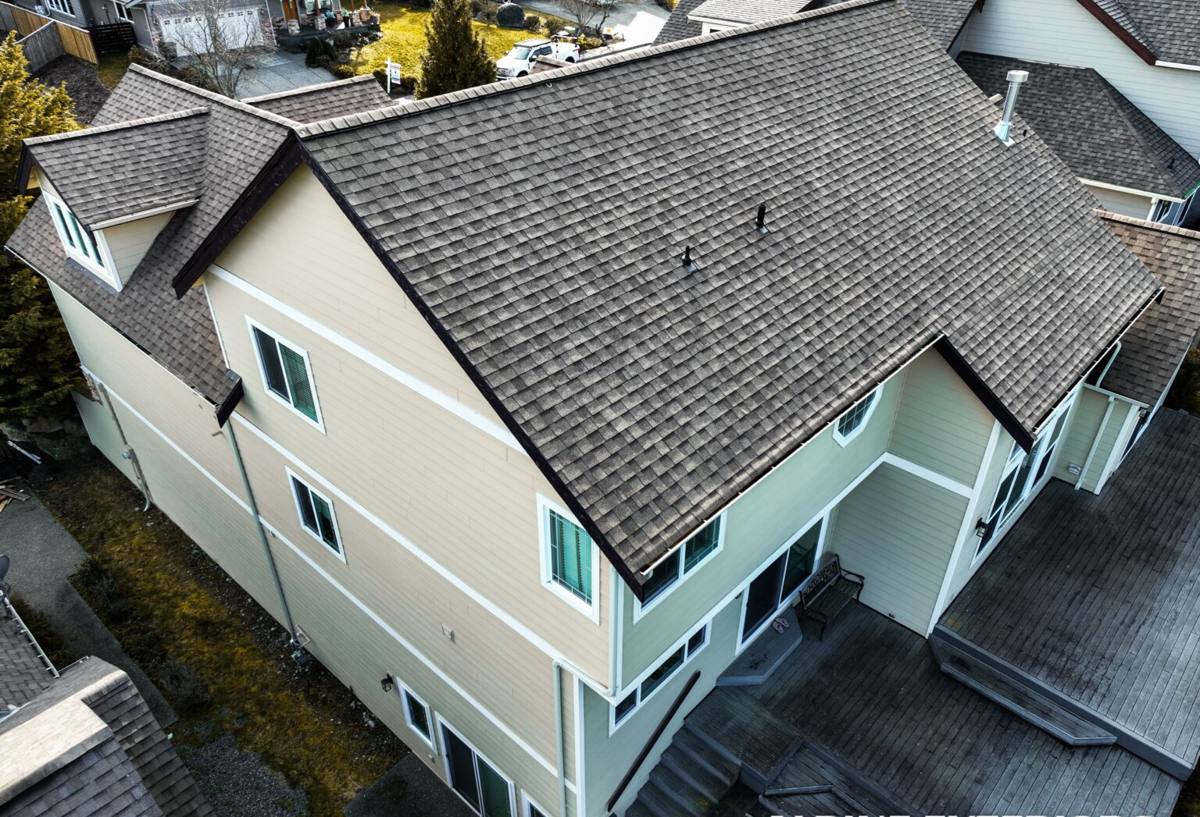
Signs a Deck Needs Replacement, Not Another Repair
Structural Red Flags
Soft or spongy decking, joists that flex noticeably when you walk near the edge, and a ledger board that's pulling away from the house are all signs the problem has moved past the surface boards and into the frame. Once framing lumber has taken on consistent moisture over multiple wet seasons, patching the deck boards on top of it just buys a little time before the same rot resurfaces.
Cosmetic Wear That's Actually Structural
Persistent black or green staining that comes back within weeks of cleaning usually means moisture is trapped underneath the boards, not just sitting on top of them. Fasteners that have rusted and streaked the wood, or nail heads that have backed out and left the board loose, both point to a fastening system that wasn't matched to a wet climate in the first place.
Quick Self-Check
- Press on deck boards near the house and near the outer edge — any give or softness is a red flag
- Check under the deck for daylight gaps at the ledger board where it meets the house
- Look for moss or dark staining that returns quickly after cleaning
- Test railing posts for wobble — loose posts often mean rotted blocking below
- Check fastener heads for rust bleed or heads that have backed out of the board
What a Correct Deck Replacement Involves
Ledger Flashing and Attachment
The ledger board — where the deck bolts to the house — is the single most common failure point on decks in wet climates, because it's the one spot where water is constantly trying to work its way behind the siding. A correct replacement includes proper flashing that directs water away from the house rather than trapping it against the ledger, and structural fasteners rated for the load rather than whatever was on hand.
Framing and Fastener Choice
Joists, beams, and posts should be rated for exterior ground contact where they touch or sit near soil, and every metal connector and fastener should be corrosion-resistant enough to hold up to salt-influenced air near the bay, not just standard interior-grade hardware. Mixing incompatible metals — the wrong screws in the wrong hangers — is a quiet cause of premature failure that isn't visible until the connection lets go.
Drainage and Airflow
Water needs somewhere to go once it's under the deck. That means grading the ground below away from the house, keeping the deck's underside ventilated so boards can dry between rain events, and, where the deck sits low to the ground, considering a drainage system that channels water off the joists entirely instead of letting it pool.
Decking Material Options for This Climate
There's no single right answer for every home — it depends on budget, how much maintenance the owner wants to do, and how the deck will be used. Here's how the common options compare for a wet, moss-prone environment like Sehome's.
| Material | Moisture Behavior | Maintenance | Typical Lifespan |
|---|---|---|---|
| Pressure-treated lumber | Resists rot when sealed regularly; absorbs water if coating lapses | Annual cleaning and re-sealing recommended | 15–20 years with upkeep |
| Cedar | Naturally decay-resistant, but greys and softens without maintenance | Periodic sealing to maintain appearance and durability | 15–20 years with upkeep |
| Composite decking | Doesn't absorb water or rot; can stay damp on the surface longer, which favors moss/algae if not kept clear of debris | Occasional washing, no sealing or staining | 25–30+ years |
| PVC decking | Fully water-resistant, least prone to moss staining | Low — occasional cleaning | 25–30+ years |
Composite and PVC decking cost more upfront but remove the yearly sealing cycle that a lot of homeowners fall behind on, which matters in a climate where a missed maintenance year does more damage than it would somewhere drier. Wood decking isn't a wrong choice — it's a choice that requires the owner to actually keep up with maintenance, and we'll say so plainly during the estimate rather than let it be a surprise later.
Our Deck Replacement Process
- On-site assessment — we inspect the existing deck, ledger, and framing (not just the visible surface) to confirm replacement is the right call and identify any hidden rot
- Demolition and disposal — full removal of the old structure, hauled off the property
- Framing and ledger work — new ledger flashing, structural framing, and corrosion-resistant hardware sized to the deck's load
- Decking installation — your chosen material installed with fastening and spacing appropriate to how it expands and contracts in wet-to-dry cycles
- Railings and finish details — code-compliant railing height and baluster spacing, stairs, and any trim or skirting
- Final walkthrough — we go over the finished deck with you, including what maintenance (if any) it needs going forward
Cost Factors for Deck Replacement
Every deck is different, so exact pricing depends on size, material, and how much of the framing needs rebuilding versus reusing. In broad terms, a straightforward deck replacement in this area tends to run somewhere in the low thousands for a small wood deck up to well into five figures for a larger composite or PVC deck with railings and stairs. The table below covers what actually moves that number.
| Factor | Why It Matters |
|---|---|
| Deck size and shape | More square footage and more corners/angles mean more material and labor |
| Decking material | Composite and PVC cost more per square foot than pressure-treated lumber upfront |
| Framing condition | If the existing frame is sound and code-compliant, reusing it lowers cost; rotted framing must be replaced regardless of decking choice |
| Height and stairs | Elevated decks need more structural support and railing; stairs add framing, treads, and railing length |
| Permit requirements | Permit fees and required inspections add time and a modest cost, but they're not optional on most replacements |
Permits and Local Code Considerations
Deck replacement in Whatcom County typically requires a building permit once the deck is attached to the house or exceeds a certain height and size, and the local jurisdiction will have specific requirements for railing height, guard spacing, and footing depth. We handle the permit process as part of the job rather than leaving it to the homeowner, and we build to the current code rather than just matching what was there before — a deck that was legal when it was built decades ago may not meet today's guard or attachment standards.
Why a Crew That Already Works in Sehome Makes a Difference
A contractor who works regularly in this part of Whatcom County already knows which ledger and flashing details actually hold up here versus what a generic installation guide assumes for a drier region. That's not a small thing — a deck built to a national average spec, without accounting for how much moisture this area sees and how long moss season runs, is a deck that's more likely to need attention again well before it should. Knowing the practical realities of building for Sehome's mix of coastal air, rain, and shaded lots means fewer callbacks and a deck that's actually sized to the climate it lives in, not just to a set of generic building plans.
Keeping Your New Deck in Good Shape
A well-built deck still benefits from a little seasonal attention, especially with the moss and algae pressure typical of this area.
- Sweep leaves and debris off the deck regularly in fall — trapped organic matter holds moisture and feeds moss growth
- Clean the deck surface at least once a year to remove algae and moss before it takes hold
- Check and clear gaps between boards so water can drain rather than pool
- Inspect railings and stair connections once a year for looseness
- If you chose wood decking, keep to a sealing schedule rather than waiting until it visibly needs it
If your deck in Sehome is showing soft spots, persistent moss, or a ledger board that looks like it's pulling away from the house, we're happy to take a look and give you a straightforward assessment of what it actually needs. Reach out for a free, no-pressure estimate using the form below.