 Sudden Valley Siding
 Window Installation Built for South Hill's Weather
South Hill homes sit in one of the wetter corners of Washington, and the windows take the brunt of it. Between the driving rain that comes off the water, the salt-tinged air, and the long stretch of the year when moss and mildew have the upper hand, a window that was installed even slightly wrong will tell on itself within a season or two — fogging between panes, soft trim, a draft you can feel with your hand held near the frame. Window installation here isn't just about picking a style and popping it into the opening. It's about managing water at every layer of the wall, because in Whatcom County the water is always trying to get in.
We install windows in South Hill and the surrounding Sudden Valley area regularly, which means we're not guessing at how this climate behaves. We know which orientations catch the worst of the wind-driven rain, which older homes were built with flashing details that don't hold up anymore, and which products actually perform here versus which ones just look good on a spec sheet in a showroom built for a drier climate.
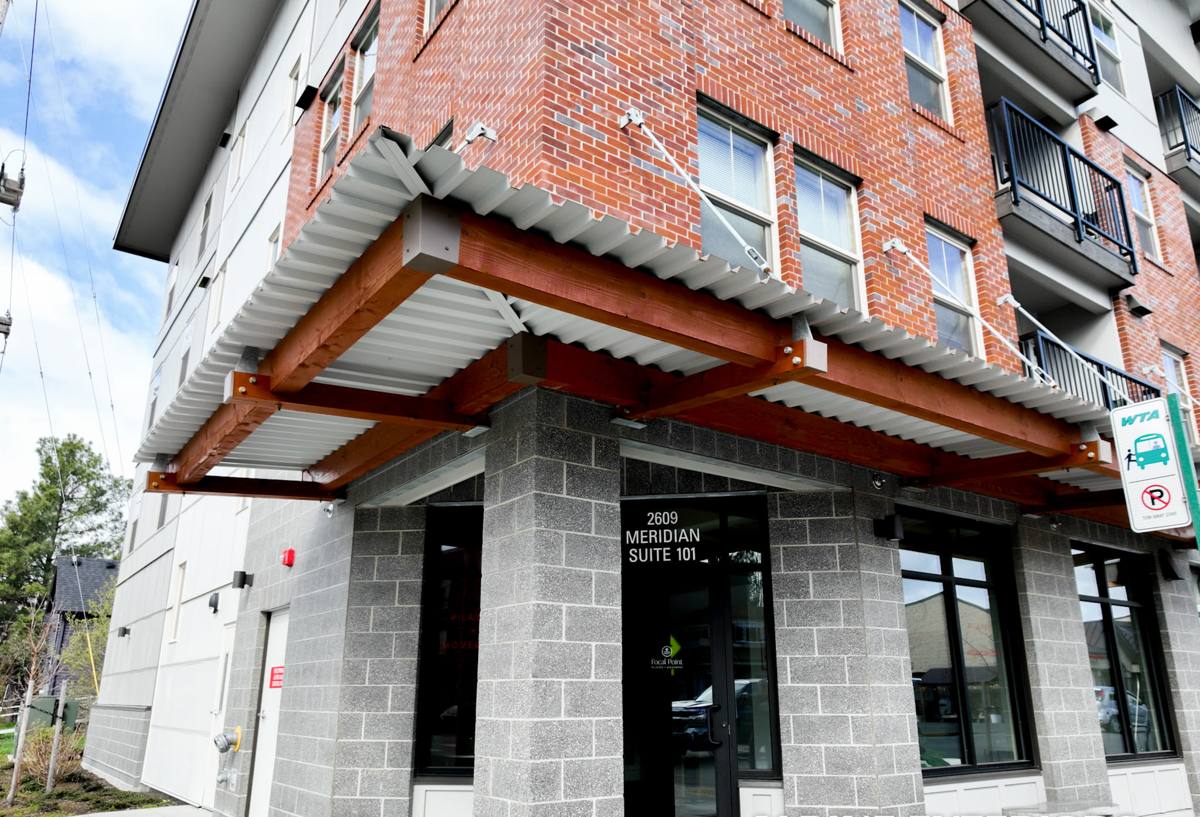
What Driving Rain, Salt Air, and Moss Actually Do to a Window
It helps to understand the mechanism, not just the symptom. Three things are working against your windows year-round in this part of Whatcom County:
Driving Rain
Rain here doesn't just fall straight down — wind pushes it sideways into wall assemblies, which means water is testing every seam, every piece of trim, and every gap around a window frame far more often than in a calmer climate. A window that would be fine in a dry region can leak in South Hill simply because it wasn't flashed to shed water sideways, not just down.
Salt Air
Being close enough to the water to pick up salt in the air accelerates corrosion on hardware, fasteners, and lower-grade metal components. Cheap screws, unprotected flashing, and some aluminum hardware degrade faster here than the manufacturer's warranty literature assumes, because that literature usually isn't written with a Pacific Northwest coastal-adjacent climate in mind.
Moss Season
For a good chunk of the year, anything horizontal or shaded holds moisture and grows moss — sills, exterior trim, and the tops of window heads especially. Moss holds water against wood and composite trim far longer than open air would, which is exactly the condition that rots sills and delaminates trim if it wasn't sealed and detailed correctly at installation.
None of these are exotic problems. They're just constant, low-grade pressure that a properly installed window shrugs off for decades and a poorly installed one fails against in a handful of years.
Signs a South Hill Home Needs New Windows
Homeowners usually notice a problem long before they know what's causing it. These are the patterns we see most often on window calls in this area:
- Visible fog or moisture trapped between panes of double-pane glass — the seal has failed and the insulating gas is gone
- Soft, spongy, or darkened wood at the sill or bottom corners of the frame
- A draft you can feel with your hand near the frame edge, even with the window fully latched
- Paint that bubbles or peels specifically around the window trim, not the rest of the wall
- Windows that are hard to open, close, or lock — frames can swell and warp from repeated moisture exposure
- Visible moss or dark streaking building up on the sill or head trim year after year
- A noticeable jump in heating costs without any other explanation
- Condensation forming on the inside of the glass regularly during cold, wet stretches
Any one of these on its own might just mean a caulk touch-up. Several of them together, especially on the same window, usually mean the unit or its flashing has reached the end of its useful life.
Choosing a Window Material for This Climate
Not every window product sold in this region is a good fit for it. Here's how the common options actually hold up under South Hill conditions:
| Material | Moisture Performance | Maintenance | Notes for This Climate |
|---|---|---|---|
| Vinyl | Very good — won't rot, low water absorption | Low — occasional cleaning | Our most common recommendation here; consistent performance without upkeep demands |
| Fiberglass | Excellent — very stable in wet/dry cycling | Low | Higher upfront cost, holds paint well if a custom color is wanted |
| Wood (unclad) | Poor without diligent upkeep | High — needs repainting/sealing on a schedule | Beautiful, but a tough match for moss season unless the homeowner is committed to maintenance |
| Wood-clad (vinyl or aluminum exterior) | Good — exterior face is protected | Moderate | Interior wood look with better weather resistance; cladding seams still need proper detailing |
| Aluminum | Fair — prone to condensation without thermal break | Low | Can corrode faster near salt air unless it's a quality thermally-broken product |
We're not going to tell a homeowner that any of these products are junk — most of them perform fine when they're matched to the right application and installed correctly. What we will say plainly is that on a wet, salt-air site like South Hill, vinyl and fiberglass carry the least ongoing maintenance burden, and unclad wood asks the most of a homeowner who wants it to last.
Our Window Installation Process
The window unit itself is maybe a third of what determines whether an installation lasts. The rest is what happens in the wall opening before the window ever goes in. Here's how we approach it:
- Remove the old window and inspect the opening. This is where hidden problems show up — rotted sheathing, old or missing flashing, framing that's shifted out of square. We deal with what we find rather than covering it over.
- Repair or replace any damaged framing or sheathing. Installing a new window into a compromised opening just hides the problem behind a new frame — it doesn't fix it.
- Install a sloped sill pan. This is one of the most important and most commonly skipped details. A sill pan directs any water that gets past the window — and some always will, eventually — back out of the wall instead of down into the framing.
- Integrate flashing with the weather-resistive barrier. Flashing tape and the house wrap need to be layered correctly, shingle-style, so water is always directed outward and downward, never trapped behind the window.
- Set the window plumb, level, and square. A window that's slightly out of square will bind, won't seal evenly, and puts uneven stress on the frame that shows up as problems years later.
- Insulate the gap around the frame properly. Too little insulation leaves drafts; overfilling with the wrong foam can bow the frame and cause it to operate poorly.
- Seal and trim the exterior. Exterior caulking and trim are the last line of defense, not the first — they matter, but they're not a substitute for the flashing and sill pan work underneath.
- Test operation and walk the job with the homeowner. Every window gets opened, closed, and locked before we consider the job finished.
The Details That Matter Most in a Wet Climate
Any competent crew can set a window plumb and square. What separates a durable installation from one that leaks in three years is almost always in the water-management details that never get seen again once the trim goes back on.
Sill Pans Aren't Optional
In a drier climate, some installers skip the sill pan and rely on caulk alone. In South Hill, where wind-driven rain regularly tests every seal, that's a shortcut that eventually costs a homeowner a rotted sill or damaged framing. We install a sloped pan on every replacement, full stop.
Flashing Sequence, Not Just Flashing Presence
It's not enough to use flashing tape — it has to be layered in the correct order relative to the house wrap so water sheds down and out rather than getting funneled behind the barrier. This is easy to get backwards, and it's invisible once the siding is back on, which is exactly why it's worth asking your contractor about directly.
Fastener and Hardware Choice
Given the salt air in this area, we pay attention to corrosion-resistant fasteners and hardware rather than whatever came standard with the cheapest window package. It's a small cost difference that pays off over the life of the window.
What Affects the Cost of a Window Installation
We don't publish flat prices because every South Hill home is different, but these are the factors that actually move the number:
| Factor | Why It Matters |
|---|---|
| Window count and size | More openings and larger units mean more material and labor |
| Material (vinyl vs. fiberglass vs. wood-clad) | Product cost and long-term maintenance trade off against upfront price |
| Condition of the existing framing | Rot or moisture damage found during tear-out adds repair scope before the new window can go in |
| Access and story height | Second-story or hard-to-reach openings take more time and equipment |
| New construction vs. replacement | Full-frame replacements involve more exterior work than insert replacements into a sound existing frame |
| Trim and finish work | Matching existing exterior trim profiles or repainting adds labor beyond the window itself |
A wide range is normal for window projects because the scope varies so much house to house. The only way to get an accurate number is to have someone look at your actual openings — which is exactly what a free estimate is for.
Why Local Experience in South Hill Actually Matters
A crew that mostly installs windows in drier parts of the state can still do fine work — but they're often applying general best practices rather than practices shaped by this specific site condition. Working regularly in South Hill and the broader Sudden Valley area means we've already seen how the wind comes across the water, which sides of a house take the worst of the driving rain, and how quickly moss reclaims a sill that wasn't detailed right the first time. That's not a marketing point — it changes real decisions on the job, like where we pay extra attention to flashing overlap or which orientation gets the more moisture-resistant trim option.
It also means we're around after the install. Window problems in this climate tend to show up gradually, not immediately, and having a local crew who stands behind the work — and who you can actually reach — matters more here than in a climate where a window installed poorly might coast along looking fine for a decade before it fails.
Keeping New Windows Performing Once They're In
A correctly installed window in this climate needs very little from a homeowner, but a little attention goes a long way:
- Rinse moss and debris off sills and horizontal trim during the wetter months rather than letting it accumulate
- Check exterior caulking annually for cracking or gaps, particularly after a hard winter
- Keep gutters and downspouts clear so roof runoff isn't dumping extra water directly onto window heads below
- Operate each window a few times a year, even ones you rarely open, so hardware doesn't seize
- Watch for early signs — a sticking sash, a new draft, a hint of fogging between panes — and address them before they become bigger repairs
None of this is high-maintenance. It's the same kind of light seasonal attention this climate asks of any exterior feature on a home.
Get a Free Estimate for Your South Hill Windows
If your windows are drafty, fogged, hard to operate, or just original to a home that's due for an upgrade, we're glad to take a look and walk you through honest options — no pressure, no sales script. Fill out the form below and we'll set up a time to assess your windows and put together a straightforward estimate for your South Hill home.