 Sudden Valley Siding
 Roofing on Yew Street: A Different Job Than Roofing Inland
Yew Street sits inside the Sudden Valley community, close enough to Lake Whatcom and the marine air moving in off the Puget Sound corridor that roofs here age differently than roofs twenty miles east. If you've owned a home in this pocket of Whatcom County for more than a few years, you've probably already noticed it: shingles that granulate faster than the warranty paperwork suggests they should, moss that comes back within a season of cleaning, and north-facing slopes that never quite dry out between October and April. None of that is unusual for this area. It's just what a roof here has to deal with, and it's why a "one-size-fits-all" install isn't the right approach for this street.
This page covers what a correctly installed new roof looks like specifically for Yew Street homes, what our process involves, and what to check for before you hire anyone to do it.
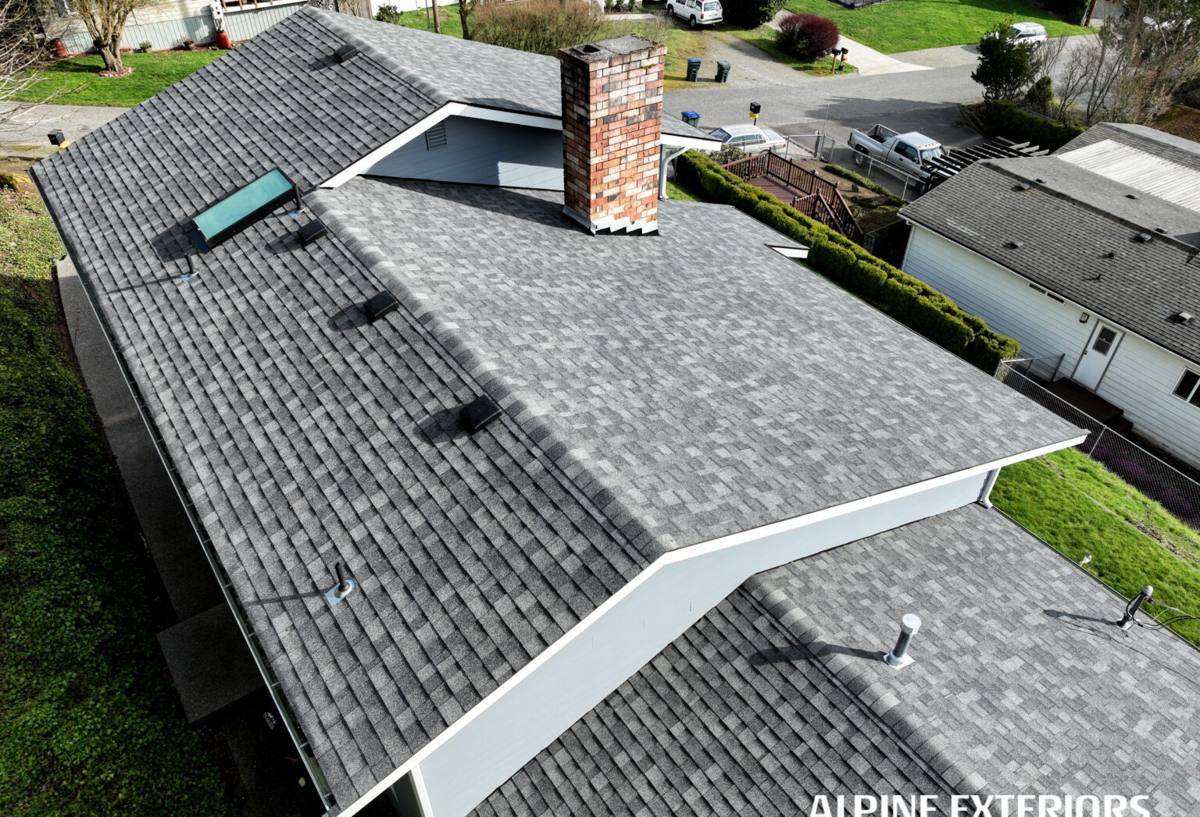
What Sudden Valley's Climate Actually Does to a Roof
Moisture That Doesn't Let Up
Whatcom County gets a long stretch of low-intensity, steady rain rather than short heavy downpours. That sounds gentler, but it's actually harder on a roof — water sits longer, underlayment stays saturated longer, and any weak point in the flashing or fastening gets more total exposure hours over a wet season than it would in a place with fewer, heavier storms.
Moss and Organic Growth
Shade from surrounding trees plus consistent moisture is a near-perfect moss environment. Moss doesn't just look bad — it holds water against the shingle surface, lifts shingle edges as it grows, and works its way under tabs where wind can then get a grip. A roof that isn't detailed to resist moss growth from day one will need moss treatment or cleaning far more often than it should.
Salt-Influenced Air
Proximity to the Sound means the air here carries more salt and moisture than a fully inland location. Metal components — flashing, fasteners, vents, gutter hardware — corrode faster if they aren't rated for it. This is one of the most commonly overlooked factors in roofing quotes: two roofs can look identical on paper and use completely different grades of metal underneath.
Wind Off the Water
Driving rain on this street usually comes with wind behind it, which pushes water sideways and uphill under shingle edges rather than letting it run straight down. That changes how underlayment, starter courses, and flashing details need to be handled — a roof built for calm-rain conditions simply won't hold up the same way here.
What a Correct New Roof Installation Involves Here
A proper install isn't just "shingles on plywood." For a Yew Street home, we treat these as non-negotiable steps, not upgrades:
- Full tear-off and deck inspection — soft, rotted, or delaminated sheathing gets replaced, never covered over
- Ice-and-water shield at eaves, valleys, and any low-slope transition, since these are the areas that stay wet longest
- Synthetic underlayment rated for extended moisture exposure, not felt paper that degrades in standing damp
- Corrosion-resistant flashing and fasteners suited to salt-influenced air, not the cheapest available grade
- Balanced attic ventilation (intake at the eaves, exhaust at the ridge) to keep the deck from staying damp from underneath
- Shingle products with algae/moss-resistant granules where the roof plan and shade conditions call for it
- Proper valley and edge detailing that accounts for wind-driven rain moving sideways, not just straight down
Skip any one of these and the roof will still look fine at handoff — the problems show up in year three or four, which is exactly why they're easy to cut corners on and hard for a homeowner to catch at inspection time.
Choosing Roofing Materials for This Location
There's no single "best" roofing material for every home — it depends on your roof's shade exposure, slope, budget, and how much long-term maintenance you're willing to take on. Here's how the common options actually perform under Sudden Valley conditions:
| Material | Moss Resistance | Moisture Tolerance | Maintenance Load | Typical Lifespan Here |
|---|---|---|---|---|
| Standard asphalt shingle | Low without added granule treatment | Good with proper underlayment | Periodic moss treatment/cleaning needed | 18–22 years |
| Algae/moss-resistant architectural shingle | Higher — copper or ceramic granules | Good | Lower, still benefits from occasional cleaning | 22–28 years |
| Standing seam metal | High — sheds moss growth medium poorly | Excellent, sheds water fast | Low, but fastener/flashing quality matters more in salt air | 40+ years |
| Cedar shake | Low — organic material feeds growth | Requires diligent maintenance in wet climate | High | Highly variable, shorter here without upkeep |
We'll walk you through which of these actually fits your roof's exposure and your budget — we're not going to push a premium material your roof doesn't need, and we're honest when a lower-cost option is the smarter call for a given slope or shade situation.
Why We're Selective About Some Products
Some roofing products marketed as "premium" are also more installation-sensitive — meaning a small install error has a bigger downstream consequence in a wet, mossy climate than it would somewhere drier. Our standard is to install products we can back with correct workmanship and clear warranty terms, and to be upfront with you about maintenance expectations before the job starts, not after.
Our Process for a Yew Street Roof Replacement
- On-site inspection. We look at the deck, current ventilation, moss/algae condition, flashing points, and how the roof has handled water so far — not just a drive-by estimate.
- Written scope and quote. You get a clear breakdown of materials, tear-off, deck repair contingencies, and warranty terms before any work starts.
- Tear-off and deck repair. Old material comes off completely; any compromised decking is replaced and documented.
- Underlayment and flashing. Ice-and-water shield, synthetic underlayment, and corrosion-rated flashing go in per the climate details above.
- Shingle or material installation. Installed to manufacturer spec plus the extra wind and moisture detailing this location needs.
- Ventilation check. Intake and exhaust balance confirmed so the new roof doesn't trap moisture against the deck.
- Final walkthrough. We go over the finished roof with you, including what maintenance (if any) to expect given your specific shade and slope conditions.
Why Local Experience on This Street Matters
A crew that's worked in Sudden Valley knows which slopes on which streets hold moisture longest, which HOA or neighborhood expectations tend to come up, and which product choices have actually held up here versus which ones look good on a spec sheet but struggle in this climate. That's different from general roofing experience — it's the difference between a crew that installs roofs and a crew that installs roofs that last in this specific pocket of Whatcom County.
It also means fewer surprises during the estimate. We're not guessing at what your roof is up against — driving rain, moss pressure, and salt-influenced air are baseline conditions we plan for on every Yew Street job, not exceptions we discover partway through.
Signs Your Roof Needs Replacing, Not Patching
- Granule loss heavy enough that shingles look patchy or the color has faded unevenly
- Moss or algae covering more than a small portion of the roof, especially on north-facing slopes
- Curling, cupping, or lifted shingle edges — a common entry point for wind-driven rain
- Soft spots or sagging when viewed from the ground or attic
- Daylight visible through the attic roof deck, or damp insulation after storms
- Repeated leak repairs in different spots rather than one isolated issue
- A roof approaching or past 20 years old with asphalt shingles, given how this climate accelerates wear
One or two of these might mean a repair is enough. Several together, especially on an older roof, usually means replacement is the more cost-effective path — a patched roof in this climate tends to develop new problems faster than a patched roof would somewhere drier.
What Affects Your Cost
Every roof is priced individually, but the main cost drivers on a Yew Street job are consistent:
| Factor | Why It Matters |
|---|---|
| Roof size and pitch | Steeper roofs and larger square footage mean more material and labor time |
| Deck condition | Rotted or delaminated sheathing found during tear-off adds repair cost |
| Material choice | Standard asphalt, algae-resistant shingle, and metal carry different material costs |
| Number of layers to remove | Tear-off of multiple old layers takes more labor than a single-layer roof |
| Ventilation upgrades needed | Adding proper intake/exhaust venting where it's currently missing or unbalanced |
| Access and site conditions | Tree cover, slope access, and staging space all affect labor time |
We give you the real number after an on-site look, not a rough guess over the phone — deck condition especially can't be assessed until the old material is off.
If your roof on Yew Street is showing its age or you just want an honest read on where it stands, we're happy to come take a look. Use the form below to request a free, no-pressure estimate.