 Sudden Valley Siding
 Deck Replacement in Edgemoor: Built for This Specific Climate
Edgemoor sits in one of the tougher spots in Whatcom County for exterior wood structures. Homes here catch salt-laden air off the water, take driving rain straight off the water's exposure, and sit under tree cover long enough each year that moss gets a real foothold on anything horizontal. A deck built to a generic spec — the kind you'd see in a drier inland climate — starts failing here years before it should. Ledger boards trap moisture against the house. Joists rot from the top down under decking that never fully dries. Fasteners corrode faster than the wood around them wears out.
We work Edgemoor and the surrounding Sudden Valley area regularly, so this isn't theoretical for us. When we replace a deck here, we're building for the specific combination of salt exposure, sustained rain, and shade-driven moss growth this neighborhood deals with every year — not just swapping old boards for new ones.
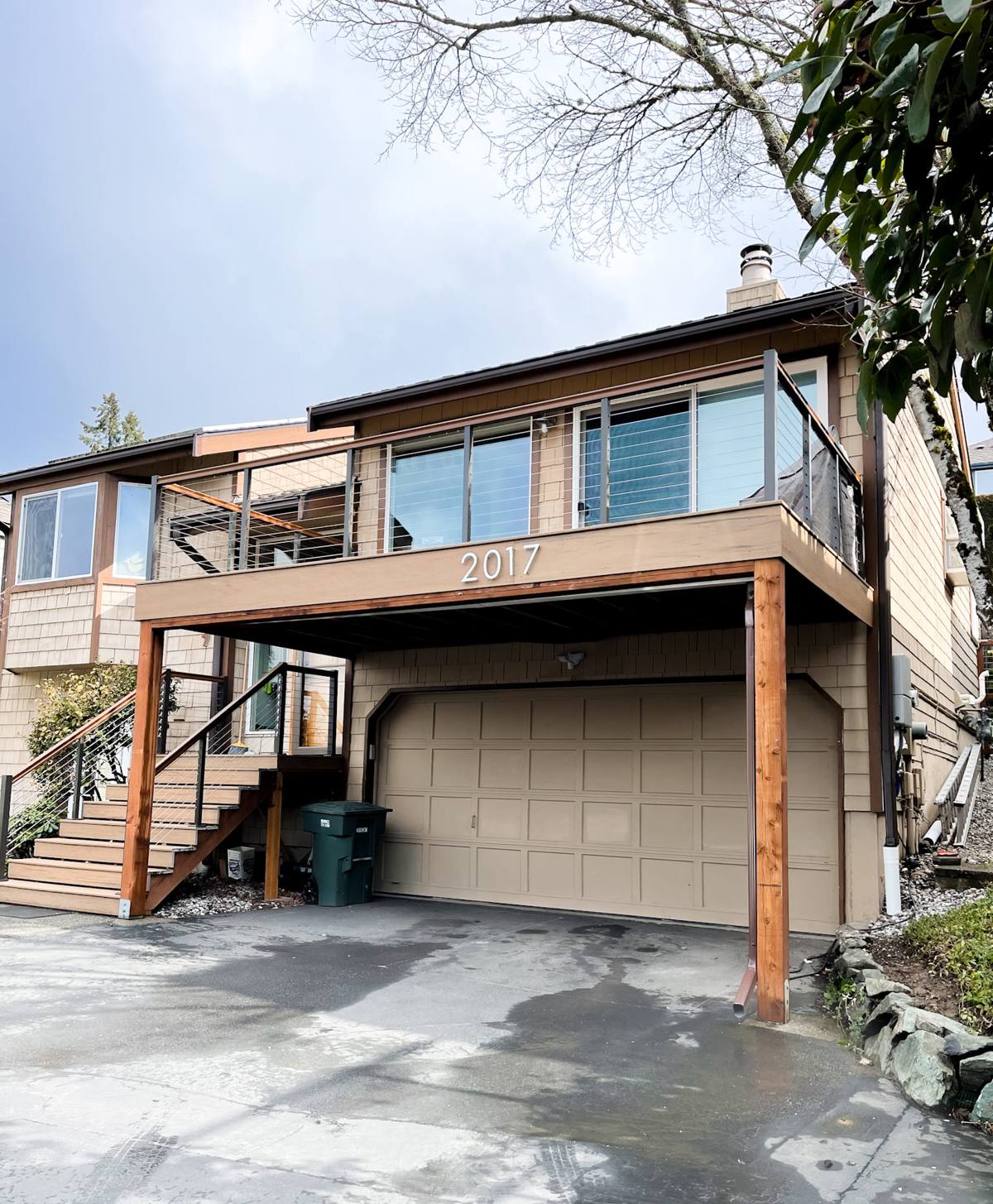
Signs Your Edgemoor Deck Has Passed the Repair Point
Not every deck problem means a full replacement. But in this climate, certain signs mean the structure underneath has already lost integrity, and patching the surface just hides the problem for another season.
- Soft or spongy spots when you walk across the decking, especially near the house or stair landings
- Visible rot, dark staining, or crumbling wood at the ledger board where the deck attaches to the house
- Persistent moss or algae growth that comes back within weeks of cleaning, on the decking or the substructure underneath
- Fasteners that are rusted, bleeding stains into the wood, or backing out on their own
- Railings that flex or feel loose at the post base, which often points to rotted post-to-frame connections
- Gaps between deck boards that have closed up or warped unevenly, trapping standing water
- A deck more than 15-20 years old built with older fastening or flashing methods that don't meet current moisture-management standards
If you're seeing two or more of these, it's worth having someone look at the framing before spending money on cosmetic fixes.
What a Correct Deck Replacement Actually Involves
The Ledger Connection
Most deck failures we see in this area start at the ledger — the board that bolts the deck to the house. If that connection isn't properly flashed to shed water away from the rim joist and wall sheathing, rain works its way behind the deck for years without any visible sign until the wood underneath is already compromised. A correct replacement means new flashing, proper standoff spacing so the ledger and decking can breathe and dry, and structural fasteners rated for exterior exposure.
Framing and Fasteners
Given the salt air common to this part of the county, we don't cut corners on hardware. Standard steel hardware corrodes faster here than it would further inland, so joist hangers, post bases, and structural screws need corrosion-resistant coatings or stainless rated for coastal exposure. Undersized or mismatched fasteners are one of the most common shortcuts we find when we tear out an old deck.
Drainage and Airflow Underneath
A deck that can't dry out between rain events grows moss and mildew no matter what decking material sits on top. Correct joist spacing, gapping between boards, and grading underneath the deck so water doesn't pool against posts all matter more here than they would in a drier climate.
Stairs and Railings
Post bases and stair stringers take the brunt of splash-back moisture and are often the first structural members to fail. We replace these to current structural standards, not just to match what was there before.
Choosing Materials for Salt Air, Rain, and Moss
There's no single "best" decking material — each comes with real trade-offs, and the right call depends on your budget, how much upkeep you want to do, and how the deck is exposed to sun and rain.
| Material | Moisture Behavior | Moss/Algae Resistance | Maintenance |
|---|---|---|---|
| Pressure-treated lumber | Absorbs and releases moisture; needs sealing to control swelling and checking | Low — needs regular cleaning to keep moss from taking hold | Annual cleaning and re-sealing recommended |
| Cedar | Naturally moisture-resistant but still needs finish maintenance | Moderate — better than untreated pine, still needs cleaning in shaded areas | Periodic staining/sealing |
| Composite decking | Doesn't absorb water like wood; won't rot | Better, but capped composites can still grow surface algae in constant shade | Occasional washing, no sealing needed |
| PVC/vinyl decking | Fully moisture-resistant; won't rot or swell | Best of the common options for algae/moss resistance | Lowest — soap and water cleaning |
For heavily shaded Edgemoor lots close to the water, we lean toward recommending composite or PVC decking for the walking surface, paired with treated or engineered framing underneath. It's not that wood decking is a bad product — it's that the maintenance burden to keep it moss-free and structurally sound in this specific climate is higher than most homeowners want to keep up with year after year.
Our Deck Replacement Process
- On-site assessment. We inspect the existing deck, ledger connection, and substructure to determine what's actually failing versus what's cosmetic.
- Written estimate. You get a clear scope covering demolition, framing, decking material, hardware, and railings — no vague allowances.
- Permitting. Most deck replacements in Whatcom County require a permit, especially when structural framing or footings are being replaced. We handle that paperwork as part of the job.
- Demolition and structural inspection. Once the old decking is off, we inspect ledger, joists, and posts before closing anything up — this is where hidden rot usually surfaces.
- Rebuild. New flashing, framing, fasteners rated for the local exposure, and the decking material you chose.
- Final walkthrough. We go over the finished deck with you, including basic maintenance guidance specific to the material installed.
Permits and Code Considerations Local to This Area
Whatcom County requires permits for most deck replacement work, particularly when the deck is elevated, attached to the house, or when footings and framing are being rebuilt rather than just resurfaced. Beyond the permit itself, inspectors here pay close attention to ledger flashing and guardrail height and spacing, since these are the components most often installed incorrectly and most responsible for both moisture damage and safety issues. We build to pass inspection the first time, not to the minimum someone might get away with.
What Affects the Cost of a Deck Replacement
| Factor | Why It Matters |
|---|---|
| Deck size and shape | More square footage and complex angles or multiple levels increase material and labor |
| Decking material | Composite and PVC cost more upfront than pressure-treated lumber but reduce long-term maintenance |
| Substructure condition | Rotted framing, posts, or footings discovered during demolition add cost to bring things up to current standards |
| Height and stairs | Elevated decks with stairs require more structural framing and railing work than ground-level decks |
| Ledger and flashing work | Proper flashing integration with existing siding sometimes requires siding repair at the connection point |
| Permit and inspection requirements | Structural rebuilds typically require permitting, which adds time and a modest fee to the project |
Full deck replacements typically fall in a broad range depending on the factors above — a small, simple ground-level deck rebuild costs meaningfully less than a large elevated deck with stairs and full structural replacement. We give you a specific written number after seeing the site, not a phone estimate.
Why It Matters That We Already Work This Area
A contractor who's replaced decks around Edgemoor and Sudden Valley knows which ledger and flashing details actually hold up against this area's combination of salt air and sustained rain, versus what looks fine on paper but fails in five years. We know which hardware grades are worth the extra cost here and which decking materials handle heavy shade and moss pressure without turning into a slip hazard. That's the difference between a deck that needs attention again in a decade and one that needs it again in three years.
We're not a national franchise cycling through crews — we're a local operation that has to stand behind the work we do in this specific neighborhood, because we're still here next year and the year after.
Get a Free, No-Pressure Estimate
If your Edgemoor deck is showing soft spots, rot at the ledger, or moss that won't quit coming back, it's worth having it looked at before another wet season goes by. Fill out the form below for a free estimate — we'll assess the structure honestly and tell you straight whether you need a repair or a full replacement, no pressure either way.