 Sudden Valley Siding
 Storm Damage Is Different in South Hill
South Hill sits up in the trees on the west side of Sudden Valley, and that location cuts both ways. The tree cover that makes the neighborhood pleasant to live in is also the single biggest source of roof damage we see here — wind-loaded fir and cedar limbs coming down on steep, wooded lots during winter storms. Add in the driving rain that rolls through Whatcom County off and on all winter, plus a moss season that never really ends on north-facing slopes, and you get roofs that take damage in more than one way at once: a hard mechanical hit from debris, followed by weeks of water finding its way into whatever that hit opened up.
That combination matters for how a repair gets done right. A roof that only gets patched for the visible hole, without anyone checking how far water travelled under the shingles or how the surrounding moss and debris are holding moisture against the deck, tends to fail again — sometimes in the same spot, sometimes a few feet away where nobody thought to look.
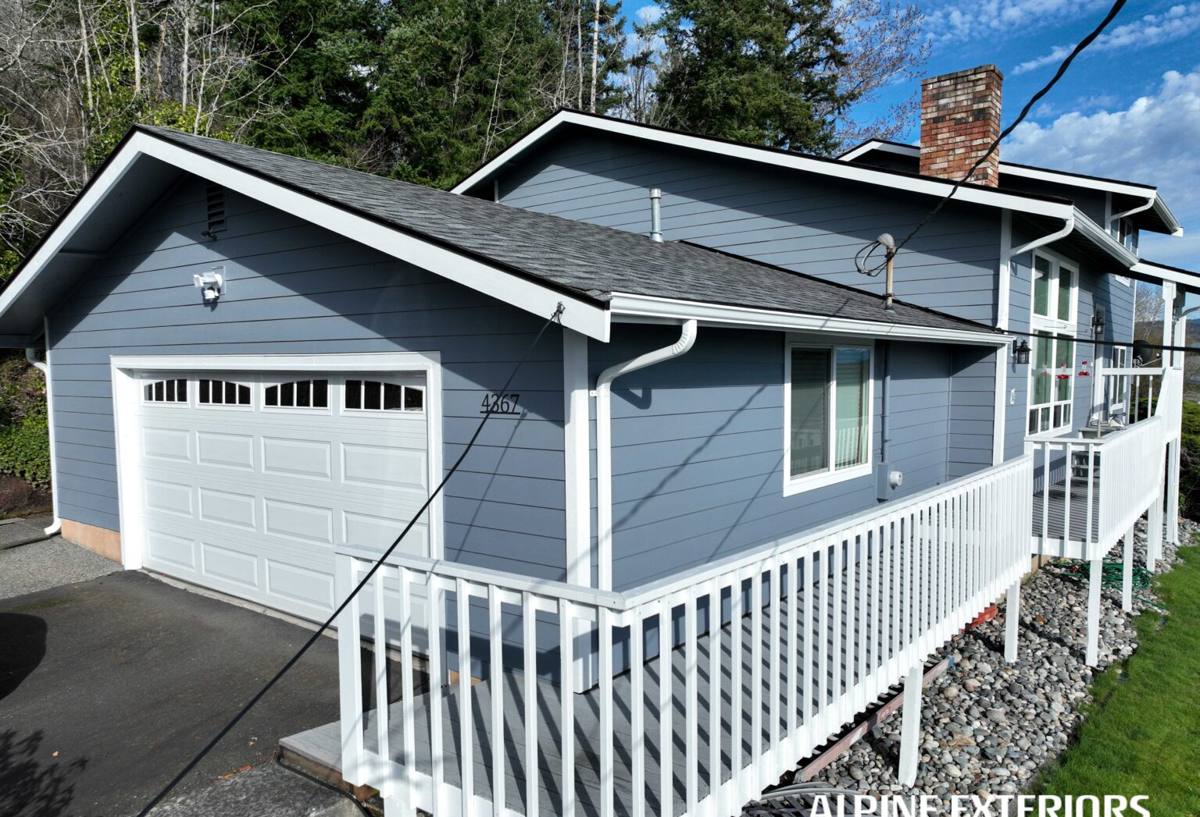
What Causes Storm Damage on South Hill Roofs
Wind and Falling Debris
Most storm calls in this part of Sudden Valley trace back to wind moving through mature trees rather than wind hitting the roof directly. A gust doesn't need to be extreme to snap a dead limb or knock loose bark and cones onto a roof plane — and on the steeper lots common up here, that debris can gather speed before it lands. The damage ranges from a few cracked or displaced shingles to punctures through the roof deck when a larger limb comes down.
Driving Rain and Wind-Driven Water
Whatcom County storms often bring rain sideways, not straight down. That matters because wind-driven rain finds weaknesses that vertical rain never would — lifted shingle tabs, marginal flashing, or a vent boot that's just starting to crack. A roof that has shed rain fine for years can suddenly leak during one storm simply because the wind direction pushed water into a spot it never reached before.
Moss and Trapped Moisture
South Hill's tree canopy keeps a lot of roof area shaded and damp for long stretches, which is exactly what moss needs. Moss itself doesn't punch holes in a roof, but it does two things that make storm damage worse: it holds water against the shingle surface longer than bare shingle would, and it can lift shingle edges enough for wind and rain to get underneath during a storm. A roof going into storm season with heavy moss buildup is more vulnerable than the same roof clean.
Reading the Damage: What We Actually Check
A proper storm damage inspection isn't a walk-by from the driveway. We get on the roof (weather permitting) or use a pole camera and ladder access when it's too wet or steep to walk safely, and we go section by section:
- Impact points from fallen limbs, cones, or debris — cracked, creased, or punctured shingles
- Lifted or missing shingle tabs, especially on the windward slopes
- Flashing around chimneys, skylights, and roof-to-wall transitions, since these are common entry points once shingles are compromised
- Vent boots and pipe collars for cracking or separation
- Gutter and eave condition, since clogged gutters back water up under the edge of the roof during heavy rain
- Attic or ceiling interior, when accessible, for staining, damp insulation, or daylight showing through the deck
- Moss coverage and buildup pattern, which tells us where the roof stays wet longest
We document what we find with photos before touching anything, which matters both for our own repair plan and for any insurance claim tied to the damage.
Temporary Protection Comes First
If a storm has left an active leak or an open puncture, the first job is stopping water from getting into the house — not scheduling the full repair for next week. That usually means a tarp-and-seal approach: securing a tarp over the damaged section, sealing exposed nail holes and edges, and making sure it's anchored well enough to survive the next round of wind rather than becoming its own hazard. This buys time to plan the permanent repair correctly instead of rushing it, and it's the difference between a roof repair and a roof-plus-ceiling-plus-insulation repair.
The Permanent Repair Process
1. Assess the Deck, Not Just the Shingles
Once the surface damage is exposed, we check the roof deck underneath for soft spots, delamination, or rot — especially if water had time to sit before the tarp went on. Shingles are cheap to replace compared to deck sheathing, but skipping this step is how a fifteen-minute patch turns into a callback a year later.
2. Match Materials, Not Just Colors
Composition shingle is the most common roofing material we see on South Hill homes, and matching isn't only about color — shingle profile, weight, and age all affect how a patch lays and seals against the surrounding roof. On older roofs where the exact shingle is no longer made, we'll talk through the honest options: a close match versus a full slope replacement if the damage and the roof's remaining life make that the better call.
3. Rebuild Flashing and Transitions Properly
Storm damage often exposes flashing that was already marginal. We don't just tuck it back in place — compromised flashing gets replaced, not reused, because reused flashing is one of the most common causes of "the roof still leaks after the repair."
4. Address the Moss Before It Comes Back
Where moss contributed to the damage or is present nearby, we clean it off the repaired section and surrounding area as part of the job, and we'll flag ongoing moss pressure so it's on your radar for maintenance rather than a surprise next storm season.
5. Final Inspection and Water Test
Before we call a repair done, we check the section for proper seal and, where practical, run water over the repair to confirm it sheds correctly under the kind of driving rain this area actually gets.
Repair vs. Replacement: How We Help You Decide
Not every storm-damaged roof needs a full replacement, and not every roof is a good candidate for another patch. The honest answer depends on a few factors we walk through with you directly rather than defaulting to the more expensive option:
| Factor | Leans Toward Repair | Leans Toward Replacement |
|---|---|---|
| Roof age | Under roughly 12–15 years, still within expected shingle life | Nearing or past typical shingle lifespan for this climate |
| Damage extent | Isolated to one section or slope | Multiple slopes affected, or damage found alongside pre-existing wear |
| Deck condition | Sheathing solid, no rot found | Soft spots or rot discovered during inspection |
| Moss/moisture history | Light to moderate, manageable with cleaning | Heavy, long-term buildup that's degraded shingle granules broadly |
| Material availability | Matching shingle still available | Discontinued profile, patch would be visibly mismatched |
Most storm calls we get in South Hill are legitimate repairs, not full replacements — but we'll tell you plainly if we think a repair is a short-term fix on a roof that's better served by replacement, rather than quoting a patch we don't expect to last.
Working With Your Insurance
Wind and falling-tree damage is typically covered under standard homeowners policies, but coverage details and deductibles vary. We provide the photo documentation and written scope of damage your adjuster will need, and we're glad to be on-site or on a call when the adjuster inspects if that's useful. We don't inflate scopes to pad a claim, and we don't advise it — an honest scope protects you if there's ever a follow-up inspection or a future sale disclosure question.
Why a Crew That Already Works South Hill Matters
South Hill's lots aren't uniform — steep driveways, limited staging space, tree cover that affects how we access certain roof planes safely, and HOA or road considerations specific to Sudden Valley. A crew that's worked this neighborhood before isn't guessing at access on the day of the job, and they've already seen how the local combination of tree debris, wind exposure, and moss plays out on roofs like yours across multiple seasons. That local pattern recognition is what separates a repair that holds up through the next storm from one that's addressing symptoms without the full picture.
Storm-Season Readiness Checklist
Between storms, a few basic checks can catch small problems before they become emergency calls:
- Walk the yard after wind events and look for new debris or broken limbs overhanging the roof
- Check gutters are clear before the heavy rain months so water isn't backing up under the eaves
- Look at north-facing and shaded slopes for moss buildup at least once a year
- Note any interior ceiling staining or musty smells, which often show up before a leak is visually obvious on the roof
- Have any roof over 10–12 years old inspected before storm season, not after damage appears
What to Do Right After a Storm
If you find damage or suspect it after a storm, avoid walking the roof yourself, especially on wet or steep sections — that's how a roof problem turns into a fall injury. Photograph what you can see safely from the ground or a window, check the attic if you can access it without climbing, and get a professional inspection scheduled before the next weather system moves through. Waiting on a known leak, even a small one, almost always costs more than addressing it promptly.
If a recent storm has left your South Hill roof damaged — or you just want an honest look before the next one hits — we're happy to come out for a free, no-pressure estimate. Use the form below and we'll get a time on the calendar.