 Sudden Valley Siding
 Why Window Replacement in Sunnyland Is Its Own Job
Sunnyland sits close enough to the water that homes here take a different kind of beating than houses ten or fifteen miles inland. The same air that makes this part of Whatcom County beautiful — the marine layer, the damp winters, the salt carried in off the bay — is steadily working on every window frame, sash, and sill in the neighborhood. Window replacement here isn't just a cosmetic upgrade or an energy-bill fix. It's a maintenance decision driven by how fast this climate finds and exploits weak points in a window system.
We work Sunnyland regularly, which means we're not guessing at how a window will hold up here — we're replacing windows that failed for predictable, repeatable reasons and installing ones that won't fail the same way.
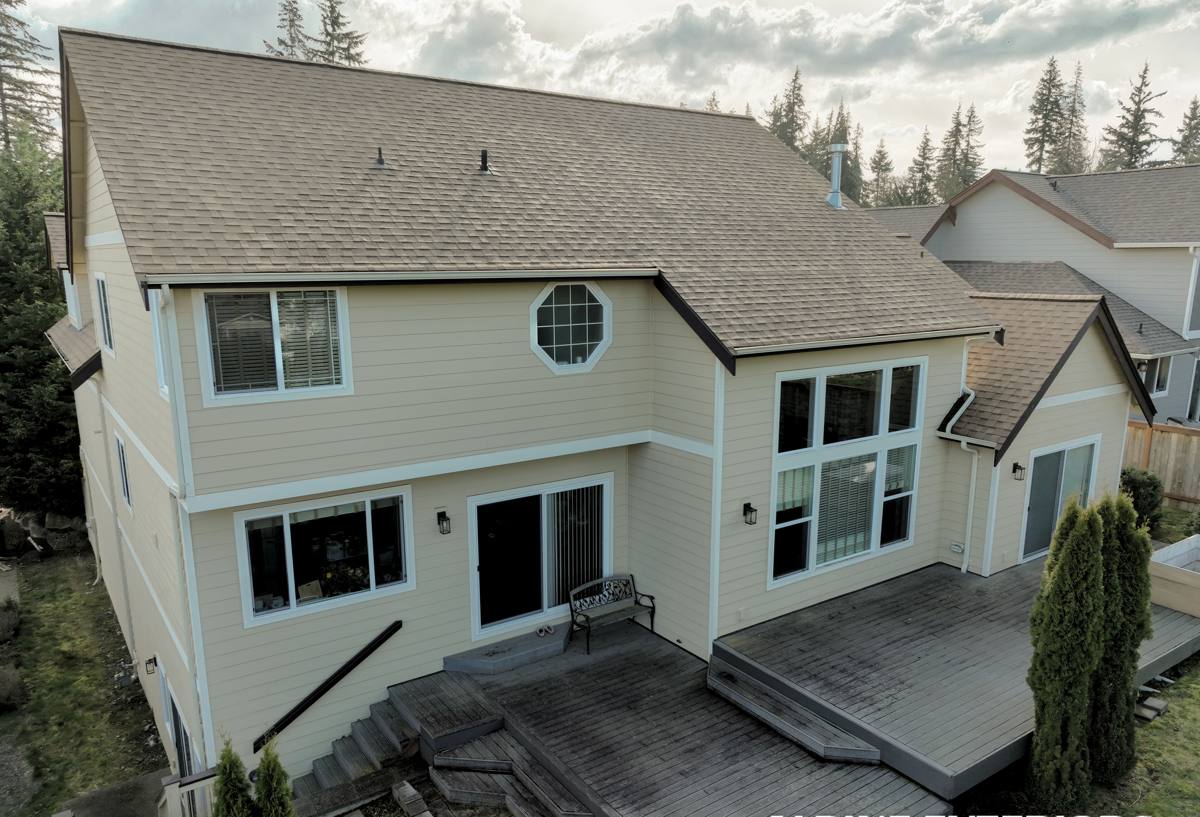
What Whatcom County Weather Does to Windows
Salt Air and Metal Fatigue
Salt-laden air corrodes aluminum hardware, screws, and cladding fasteners faster than most manufacturers' warranty language accounts for. Balances stick, locks stiffen, and cladding starts pitting years before the glass itself shows any wear. If your windows are original to a build from a couple decades back, hardware corrosion is often the first real sign of trouble — before you ever notice a draft.
Driving Rain and Wind-Driven Water
Rain here rarely falls straight down. Storms off the water push it sideways into west- and southwest-facing walls, which means window flashing, sill pans, and sealant joints are doing real work every single storm season — not just during the occasional downpour. A window that was installed correctly but flashed poorly will leak long before the sash itself wears out.
Moss Season and Sustained Moisture
Whatcom County's long moss season isn't just a roof and siding problem. Moss and organic buildup around window trim and sills hold moisture against wood and painted surfaces for months at a stretch. That sustained dampness is what turns a small paint failure into rot, and it's why window trim in Sunnyland often needs attention years before the sash or glass does.
Signs a Sunnyland Home Needs Window Replacement
Some of these show up gradually, others all at once after a hard winter. Worth checking before you decide whether you need repair, re-caulking, or full replacement:
- Visible gaps between the sash and frame, or daylight around the edges when the window is closed
- Soft, spongy, or discolored wood at the sill or bottom corners of the frame
- Fogging or a permanent haze between panes of double-pane glass — a sign the seal has failed
- Hardware (locks, cranks, balances) that binds, sticks, or no longer holds the sash shut tight
- Paint that keeps failing at the same spot no matter how often it's touched up
- Noticeable draft or a cold radiating feeling near the window even with it fully closed
- Condensation forming consistently on the interior glass or frame in cooler months
- Visible corrosion on aluminum hardware, screws, or cladding
One or two of these can often be repaired. Several at once — especially rot at the sill combined with failed seals — usually means the window has reached the point where replacement costs less over time than continuing to patch it.
What a Correct Window Replacement Job Actually Involves
A lot of window problems we see in Sunnyland aren't product failures — they're installation shortcuts from a previous job. The window itself may be fine; the flashing, sealant, or sill pan around it wasn't done right, and in this climate that shows up fast. Here's what we consider non-negotiable on every install:
Removal Without Hidden Damage
We pull the old window and check the rough opening before anything new goes in. If there's rot in the framing or sill, that gets addressed first — installing a new window into a compromised opening just resets the clock on the same failure.
Sill Pan and Flashing
Given how much wind-driven rain this area sees, we treat sill pan flashing as mandatory, not optional. It gives water a path out of the opening if it ever gets past the exterior seal, instead of letting it pool against the framing.
Proper Sealant and Backer Rod
Sealant only works when it's backed and sized correctly. We use backer rod where gaps call for it and apply sealant in a continuous bead — gaps or thin spots are exactly where driving rain finds its way in over a wet winter.
Shimming and Level Setting
A window that's out of square binds at the hardware and stresses the seals at the corners — often the first place failure shows up. We shim and check level and plumb before final fastening, not just at the start.
Interior and Exterior Trim
Trim gets resealed and, where wood trim is staying, primed and finished properly so moss and moisture don't get an early foothold the way they did on the old window.
Choosing Window Materials for This Climate
There's no single "best" window material — the right choice depends on your home's exposure, your budget, and how much upkeep you want to take on. Here's how the common options actually perform in Sunnyland's conditions:
| Material | Salt Air / Corrosion Resistance | Moisture Handling | Maintenance |
|---|---|---|---|
| Vinyl | Very good — no metal to corrode | Good, with quality weatherstripping | Low — no painting, occasional cleaning |
| Fiberglass | Excellent — very stable material | Excellent, minimal expansion/contraction | Low — durable finish, rarely needs attention |
| Wood-Clad | Depends on cladding quality; interior wood needs protection | Good if maintained; vulnerable if paint/seal fails | Higher — periodic painting and seal checks |
| Aluminum | Weakest in this climate — prone to pitting and hardware corrosion | Poor — thermal bridging and condensation risk | Moderate to high |
Our default recommendation for most Sunnyland homes is vinyl or fiberglass, specifically because neither has bare metal exposed to salt air and both tolerate the area's sustained damp season without the ongoing paint and seal maintenance that wood-clad or aluminum windows demand. We're not against wood-clad windows — they can look great — but we're honest with clients about the maintenance commitment that comes with them here, especially on west- or southwest-facing walls that catch the worst of the driving rain.
Our Window Replacement Process
- On-site assessment. We look at your current windows, check for rot or hidden damage around the openings, and talk through which rooms or elevations are the priority.
- Product selection. We walk through material, glass package, and style options based on your home's exposure and budget — no upselling toward the most expensive option if it isn't the right fit.
- Written estimate. Clear pricing, no surprise add-ons buried in fine print.
- Scheduling around weather. We plan installs to minimize how long an opening sits exposed, which matters more here than in drier climates.
- Removal and opening inspection. Old windows come out, and we check the framing before anything new goes in.
- Installation with proper flashing and sealant. Sill pans, backer rod, sealant, and shimming as described above — every window, every time.
- Interior and exterior finish work. Trim, caulking, and touch-up so the job looks finished, not just functional.
- Final walkthrough. We check operation on every window with you before we consider the job done.
What Affects the Cost of Window Replacement
Every home is different, but these are the main factors that move the price up or down on a Sunnyland project:
| Factor | Why It Matters |
|---|---|
| Number and size of windows | The most direct driver — larger openings and more windows mean more material and labor |
| Material (vinyl, fiberglass, wood-clad) | Fiberglass and wood-clad generally cost more upfront than vinyl |
| Glass package | Double-pane vs. upgraded low-E or gas-filled glass affects both cost and long-term energy performance |
| Condition of the rough opening | Rot or framing damage found during removal adds repair work before the new window goes in |
| Exposure and elevation | West- and southwest-facing walls exposed to driving rain may call for more robust flashing detail |
| Trim and finish scope | Full trim replacement costs more than resealing and reusing sound existing trim |
We give straightforward ranges once we've actually seen the windows in question — we don't quote sight-unseen numbers that fall apart once we open a wall and find rot nobody knew was there.
Energy Performance and Moisture Control
New windows do lower energy bills, but in Sunnyland the bigger win is often moisture control. A properly sealed, correctly flashed window keeps the damp Whatcom County air out of your wall cavity — which protects framing, insulation, and interior finishes, not just your heating bill. Older, failing windows are one of the more common places we find hidden moisture damage during other siding or trim work, precisely because a slow leak around a window can go unnoticed for a long time before it shows up as visible damage inside.
Why Local Experience Matters for This Job
Window replacement done by a crew unfamiliar with this specific microclimate often looks fine for the first year or two and then starts leaking or corroding faster than it should. We've replaced enough windows in and around Sunnyland to know which elevations take the worst of the driving rain, which older installs commonly skipped sill pan flashing, and where moss and sustained moisture tend to cause the most trim damage. That local pattern recognition is part of what you're paying for — it's the difference between a window that's installed and a window that's installed correctly for where it actually sits.
Ready for a No-Pressure Estimate
If your windows are showing any of the signs above — sticking hardware, fogged glass, drafts, or trim that won't hold paint — it's worth having a local crew take a look before winter's driving rain finds the gaps. Fill out the form below for a free estimate, and we'll give you an honest read on whether repair or replacement makes sense for your home.